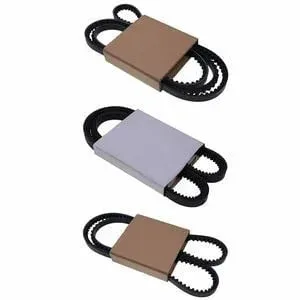
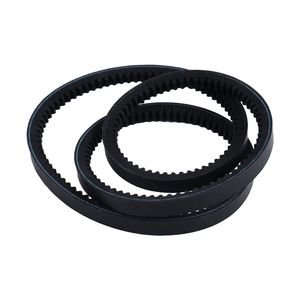
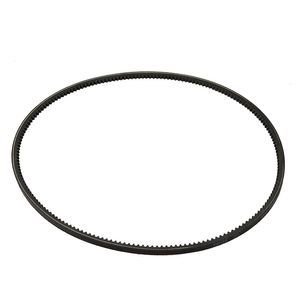
Matched System Sets — Belt, tensioner, and pulley components verified against engine serial variant before dispatch.
Technical Specifications
| Parameter |
Value |
| Part Number |
REMF-1345 |
| Product Type |
Belt |
| Cross-Reference |
REMF1345 (reference only) |
| Part Name |
Aftermarket Mitsuboshi Fan Belt |
| Condition |
New Aftermarket |
| Material |
Precision-molded rubber compounding with reinforced cord structure |
| Assembly State |
Individual belt |
| Machine Fitment |
Excavators, Tractors, Mowers |
| Brand Fitment |
Multiple Brands |
| Warranty |
3-12 months against manufacturing defects |
| Manufacturing Standard |
ISO-certified manufacturing |
Application Suitability
| Engine System |
Related Components |
| Engine Cooling Drive |
Cooling fan, water pump pulley, fan clutch assembly |
| Belt Tensioning Circuit |
Automatic or manual tensioner, idler pulley bearings |
| Front End Accessory Drive |
Alternator pulley, crankshaft damper |
| Thermal Management |
Radiator, thermostat housing, coolant hoses |
Why the Same Fan Belt Fails Again Within Weeks
A snapped belt is often a symptom, not the cause — the root fault usually sits in the tensioner or pulley alignment.
Replacing a fan belt engine replacement REMF-1345 without inspecting the tensioner spring force, idler bearing play, and pulley runout leaves the underlying misalignment or under-tensioning uncorrected. The new belt then absorbs the same cyclic shock loads and degrades on an accelerated timeline. In my years running parts support across Central Asian job sites and European distributor channels, I have walked through too many bays where a freshly installed fan belt showed cord exposure and edge fraying after only a few hundred operating hours — the tensioner arm was seized, the idler wobbled off-axis, or a previous rebuild left the water pump pulley sitting slightly proud of the crank centerline [NEED_CITE: belt drive alignment tolerances for industrial diesel engines].

The Belt Drive System as One Working Unit
The fan belt sits inside a network of rotating components — crankshaft pulley, tensioner, idler, water pump pulley, and the fan itself — and every element shares load. When any single bearing develops radial play or any pulley drifts out of plane, the belt absorbs that energy as heat and lateral flex. Sourcing a fan belt engine replacement REMF-1345 as a standalone item ignores the system context and invites a repeat teardown. A complete belt drive service means verifying tensioner travel range, checking idler spin-down time, and measuring pulley face runout before the new belt goes on.
Engine Serial Variants and the Fitment Trap
Across production runs of the same excavator or tractor model, engine builders sometimes shift pulley spacing or change the fan hub diameter, which changes the required belt effective length. A part number that fits early-build engines may ride too tight or too loose on later serial ranges. Confirming the correct fan belt engine replacement REMF-1345 variant requires the engine serial number, not just the machine model badge — and this applies especially to units that have been through a prior in-frame overhaul where a non-standard fan hub or aftermarket tensioner may already be in place [NEED_CITE: engine serial variant differences in belt drive geometry].
Reading the Specification Sheet for What Matters
The reinforced cord structure inside this belt carries the tensile load — it resists the cyclic stretching that causes ordinary rubber belts to lose tracking and slip off the pulley groove under sudden fan clutch engagement. The precision-molded rubber compounding is formulated for continuous exposure to engine bay heat, oil mist, and abrasive dust that infiltrates every seal gap on a working excavator or tractor. Dimensional tolerances on the belt cross-section control how deeply the belt seats into the pulley groove; a belt that rides too high increases wedge slip and generates heat at the sidewalls, while one that seats too deeply pinches and accelerates cord fatigue. These three parameters — cord tensile capacity, compound heat and chemical resistance, and cross-section tolerance — together determine whether the belt survives a full service interval or comes apart midway through a digging season.
The Hidden Cost of Skipping the System Check
When a workshop swaps only the belt and sends the machine back to the face, the unresolved misalignment or seized tensioner attacks the replacement within days. Edge wear appears first, then cord separation, then a second belt failure — this time possibly mid-shift, with the engine overheating before the operator notices the temperature climb. That second failure costs a full day of lost production plus a second teardown, and if the overheating event warped the cylinder head or blew a head gasket, the repair scope just expanded from a belt change to a top-end overhaul. The pattern repeats across fleets where preventive maintenance is limited to swapping visible wear items without diagnosing the surrounding circuit [NEED_CITE: secondary engine damage from cooling system belt failure].
Why Source This Belt Through XUNPO
Our production lines and qualified partner facilities both run under the same QC protocol and warranty terms, so whether your fan belt comes from our own belt molding line or a certified partner, the inspection standard is identical. We carry eight core categories under one account, meaning you can bundle this belt with the matching tensioner, idler, coolant filters, and seal kits in a single consignment — no second order, no split freight. Minimum order is one piece, so a single emergency replacement ships without MOQ friction. Our technical team cross-references superseded part numbers and verifies fitment against engine serial ranges before dispatch, reducing the risk of a variant mismatch. Sample supply is available for fitment confirmation before you commit to a bulk stocking order.
Documentation & Verification
- Commercial invoice listing each belt variant with engine serial cross-reference
- Compatibility and cross-reference sheet marked reference only for OEM numbers
- Dimensional inspection record covering belt length, width, and cross-section profile
- Warranty terms document specifying coverage period and defect claim procedure
- Packing photographs showing belt condition and protective wrapping before crate closure
- HS code and export classification support for customs clearance at destination
Installation & Rebuild Sequence
- Verify tensioner arm travel and idler bearing spin-down before removing the old belt
- Inspect all pulley faces for groove wear, nicks, and runout exceeding specification limits
- Route the new REMF-1345 belt following the manufacturer diagram to avoid mis-threading around the tensioner
- Apply tension per the specified deflection method and rotate the engine two full revolutions by hand
- Re-check tension after initial run-in and again after the first operating shift
Requesting a Fitment-Verified Quote
Send us your engine model and serial number so we can confirm the correct belt length and width variant for your specific build. If the nameplate is worn or painted over, a clear photograph of the engine block casting numbers and the existing belt routing is usually enough for our team to identify the platform. For fleet orders, include your standard maintenance interval and current tensioner part number so we can bundle a matched service kit.
Frequently Asked Questions
Q: What other components should I replace when changing the fan belt?
A: Inspect the tensioner arm and spring, idler pulley bearings, and all driven pulley faces during every belt service. If the tensioner shows reduced travel or the idler has axial play, replace them as a set with the new belt. Bundling these items prevents a second teardown caused by a component that was already near failure.
Q: How do I confirm the correct belt variant for my engine serial number?
A: Provide the full engine serial number — not just the machine model — so we can check the belt length and width against the specific production build. Engine serial variants sometimes use different pulley spacings, and a belt that fits one range may not tension correctly on another.
Q: Why did my last belt fail prematurely and what should I check?
A: Premature belt failure usually traces back to a seized or weak tensioner, misaligned pulleys, or a worn pulley groove that lets the belt ride incorrectly. Check tensioner spring force, measure pulley runout, and inspect bearing play on every idler before installing the replacement.
Q: Can I order a matched belt and tensioner set together?
A: Yes. We bundle the belt with the corresponding tensioner, idler, and any required hardware in a single shipment. Provide your engine model and serial number, and our technical team will assemble a matched set verified against your specific engine build.
Q: How do I identify the engine model when the nameplate is worn?
A: Send a photograph of the engine block casting numbers, the old belt routing, and any visible stamps on the cylinder head or oil pan. These casting references often survive paint and wear and allow our team to identify the engine platform and confirm the correct belt specification.