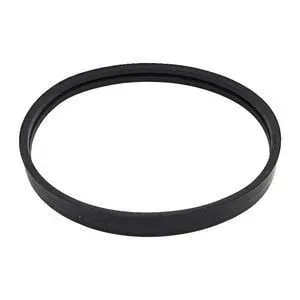
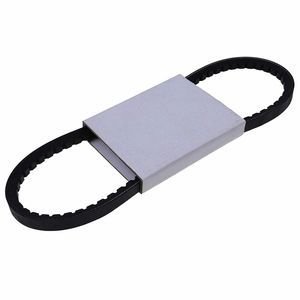
System-Level Verification — Pitch length tolerance and compound grade confirmed against Carrier engine serial variant records.
Technical Specifications
| Parameter |
Value |
| Part Number |
50-00162-25 |
| Product Type |
Belt |
| Cross-Reference |
50-00162-20, 50-60288-21, 500016225, 500016220, 50-6028821, 506028821, CA-50-00162-25-AM, CA500016225AM, CP10651, 10651, 50-01180-02, 500118002 (reference only) |
| Machine Fitment |
Carrier Vector X4 7500, X4 6600 MT, X2 1800, X2 2100, X2 2100A, X2 2100R, X2 2500A, X2 2500R, Supra 650, Supra 750 |
| Condition |
New Aftermarket |
| Material Composition |
EPDM rubber compound with aramid tensile cords |
| Surface Hardness |
Shore A 70±3 |
| Pitch Length Tolerance |
±0.15 mm |
| Quality Standards |
ISO 9001, ISO 10816, SAE J1991 |
| Warranty Coverage |
3–12 months against manufacturing defects |
Application Suitability
| Engine System |
Related Components |
| Coolant circulation (Water Pump drive) |
Water pump assembly, thermostat housing, tensioner pulley |
| Compressor clutch engagement (Auxiliary drive) |
Idler pulley bearing, compressor clutch coil, serpentine belt |
| Engine cooling fan drive |
Fan hub assembly, viscous clutch, fan blade mounting hardware |
Why Replacing Only the Water Pump Belt Misses the Root Cause
A new belt fitted onto a worn tensioner will track poorly and shed teeth within hundreds of operating hours.
When a Water Pump Belt engine rebuild project only addresses the visible failure — a snapped or glazed belt — the underlying system imbalance remains unresolved. In my time auditing field returns for transport refrigeration fleets, I have seen main pumps of this type fail on site because the pulley misalignment was never corrected. The replacement belt absorbed the shock load meant for the tensioner, accelerating cord fatigue. [NEED_CITE: belt drive system misalignment failure modes in mobile diesel applications]
This water pump belt sits within the cooling loop of Carrier transport refrigeration engines, where thermal cycling is extreme. A degraded EPDM compound loses grip, causing slippage that raises coolant temperature and risks head gasket stress. The correct diagnostic sequence traces the failure from belt surface condition back to pulley runout, tensioner spring force, and bracket alignment before specifying the replacement part.

System Position Within the Carrier Cooling Loop
This belt transmits crankshaft torque to the water pump, maintaining coolant flow through the engine block and the condenser heat exchanger. In Carrier Vector X4 7500 and Supra 750 units, the water pump belt shares the front-end accessory drive with the compressor clutch and alternator. Any slippage here elevates coolant temperature first, then cascades into compressor head pressure faults. Specifying the correct Water Pump Belt engine rebuild component requires confirming which accessory bracket configuration the engine carries, as Carrier has revised the pulley layout across production runs.
Engine Serial Variants and Superseded Part Numbers
Carrier units built across different model years may carry the same base model designation but differ in accessory drive geometry. The OEM reference 50-00162-25 (cross-reference only) supersedes earlier numbers including 50-00162-20 and 50-60288-21 (reference only), reflecting changes in rib profile and pitch length. Fitting an older superseded number onto a revised pulley set causes rib skipping under load. [NEED_CITE: Carrier transport refrigeration engine accessory drive revision history] Verification requires the engine serial plate, not just the unit model badge, to confirm which belt variant matches the installed pulley groove depth.
Material Specification and Thermal Load
The EPDM rubber compound with aramid tensile cords addresses the specific thermal environment inside a reefer unit engine bay. EPDM resists ozone cracking and coolant mist degradation that would destroy standard chloroprene belts in this application. Aramid cords provide dimensional stability under rapid throttle transitions, preventing the pitch length from stretching beyond the ±0.15 mm tolerance window. Surface hardness held at Shore A 70±3 ensures the rib maintains grip without excessive flank pressure that would accelerate pulley wear. Dynamic tension testing at 120% of rated load before shipment confirms fatigue resistance under the shock loads typical of transport refrigeration compressor cycling.
The Hidden Cost of Skipping Tensioner Inspection
Fitting a new belt without measuring tensioner travel guarantees a repeat visit to the same engine bay.
Workshops that treat the Water Pump Belt engine rebuild as a single-line-item swap accumulate repeat warranty claims. The worn tensioner bearing introduces lateral runout that no new belt can compensate for. Within a typical service season, the belt walks off the pulley groove, sheds coolant flow, and triggers a high-temperature shutdown — the exact fault the repair was meant to eliminate. [NEED_CITE: transport refrigeration unit cooling system repeat failure analysis] Addressing the root cause means replacing the tensioner assembly, verifying bracket bolt torque, and checking pulley alignment with a straight-edge before the new belt is tensioned.
Why Source This Component Through XUNPO
Own production on selected belt lines and qualified sourced supply share identical QC protocols and warranty terms, so this water pump belt carries the same inspection standards regardless of production origin. Eight product categories mean a complete cooling system overhaul — belt, tensioner, thermostat, seal kit — ships as one consignment under one account. Minimum order from one piece allows a workshop to validate fitment on a single Carrier unit before committing to fleet-level quantities. Part identification proceeds from the OEM reference number, the machine model plate, or a photograph of the worn belt label, covering all three ways buyers typically initiate the request. Cross-reference verification includes superseded and alternate numbers, resolving the ambiguity when a Carrier unit carries a legacy part number no longer listed in current catalogs. Technical support confirms belt variant applicability against the specific engine serial number before the order is released.
Documentation & Verification
- Commercial invoice and packing list itemize each belt by Carrier reference number and batch code.
- Part compatibility and cross-reference sheet maps 50-00162-25 (reference only) to all verified superseded numbers.
- Quality inspection record includes pitch length measurement and Shore A hardness test per batch.
- Warranty terms cover manufacturing defects for 3–12 months from dispatch date.
- Packing photographs confirm sealed polybag condition and label legibility before crate closure.
- HS code and customs documentation support provided for cross-border cold-chain parts shipments.
Installation & Rebuild Sequence
- Remove accessory drive bracket bolts in sequence to avoid warping the mounting face before belt extraction.
- Clean pulley grooves with solvent and verify no embedded debris remains that could damage EPDM rib flanks.
- Check tensioner arm travel and bearing smoothness; replace assembly if lateral play exceeds specification.
- Route new belt following the Carrier accessory drive diagram specific to the engine serial variant.
- Apply specified tension and rotate crankshaft two full revolutions by hand to seat ribs in grooves.
- Run engine at idle for initial break-in, then re-check tension after the first thermal cycle.
Inquiry Guidance for Engine Rebuild Shops
Provide the Carrier unit model designation along with the engine serial number from the data plate to confirm which belt variant matches the installed accessory drive configuration. If the unit has undergone a previous rebuild, note the oversize or undersize components fitted, as this may affect belt routing clearance. Supplying a photograph of the existing belt label or the tensioner assembly helps resolve ambiguous supersession cases before quotation.
Frequently Asked Questions
Q: What other cooling system components should be inspected when replacing this water pump belt?
A: The tensioner assembly, idler pulley bearings, and water pump shaft seal should all be evaluated during the same service event. A worn tensioner introduces lateral runout that degrades any new belt rapidly. We supply matched cooling system components — thermostat, seals, and pulley hardware — under a single order to prevent split shipments and repeat downtime.
Q: How do I confirm which OEM reference number applies to my Carrier unit?
A: The engine serial number on the data plate is the definitive identifier, as Carrier revised accessory drive geometry across production runs. Provide this number along with the unit model, and we cross-reference against current supersession tables to confirm whether 50-00162-25 (reference only) or an alternate number is correct for your specific build.
Q: Are superseded part numbers still valid for fitment?
A: Superseded numbers such as 50-00162-20 or 50-60288-21 (reference only) may fit mechanically but can differ in rib profile or pitch length from the current specification. We verify each supersession against the engine serial variant to ensure the replacement belt matches the installed pulley groove geometry, preventing slippage under compressor load.
Q: Can I order a sample to verify fitment before committing to fleet quantities?
A: Yes, single-piece sample supply is available for fitment confirmation on one Carrier unit before bulk commitment. This allows your workshop to verify rib engagement, tensioner compatibility, and routing clearance on the actual engine configuration before we release the full order quantity.
Q: What engine serial variants affect belt selection for Carrier Vector and Supra units?
A: Carrier Vector X4 7500, X2 series, and Supra units have undergone accessory drive bracket revisions that change pulley spacing and belt routing. The engine serial number determines which bracket variant is installed. Provide this number so we can confirm the correct belt pitch length and rib count before dispatch.