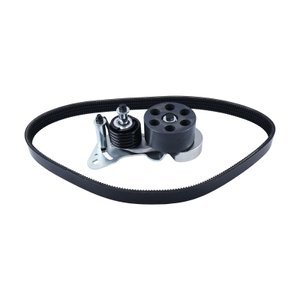
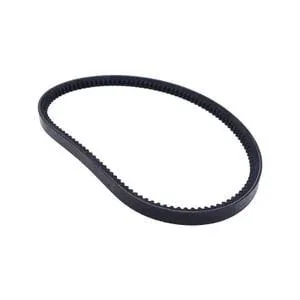
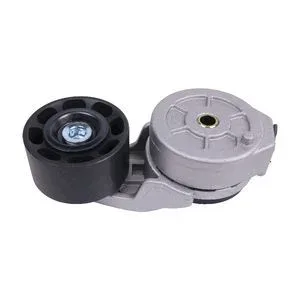
Matched Assembly Verified — Drive Belt & Tensioner Assembly for Bobcat S510-T595 shipped as a verified set with engine serial confirmation.
Technical Specifications
| Parameter |
Value |
| Product Type |
Belt & Belt Tensioner Assembly |
| Cross-Reference |
7257359 (reference only), 7273503 (reference only), 7274780 (reference only), 7167165 (reference only), 3GM12110 (reference only), 59CM835 (reference only), 7CM12140 (reference only), 7196910 (reference only), 7201887 (reference only), 7273604 (reference only), 6564692 (reference only), 7152658 (reference only), 53DM12 (reference only), 7145358 (reference only) |
| Machine Fitment |
S510, S530, S550, S560, S570, S590, S595, T550, T590, T595 |
| Material |
EPDM rubber with aramid fiber reinforcement |
| Condition |
New aftermarket |
| Warranty |
3–12 months against manufacturing defects |
| MOQ |
1 piece |
| Standard |
ISO 9001 |
Application Suitability
| Engine System |
Related Components |
| Accessory Drive System |
Fan pulley, idler pulley, water pump |
| Cooling System |
Radiator hoses, thermostat, coolant seals |
| Front Cover & Sealing |
Front crankshaft seal, timing cover gasket |
Why the Accessory Drive Demands System-Level Attention
A single belt swap rarely fixes the root cause of repeat drive failures.
In my time working around skid steers and compact track loaders, I have seen tensioner bearing wear misdiagnosed as a belt quality issue, leading to the second teardown within weeks. The accessory drive system on these machines operates under sustained thermal load, and when one component degrades, the adjacent parts follow quickly. Addressing the Drive Belt & Tensioner Assembly as part of a broader system check prevents these costly comebacks [NEED_CITE: accessory drive system thermal degradation in compact loaders].

The Role of This Assembly in the Engine Ecosystem
The belt drive system is the engine's primary interface with the cooling and charging circuits. When a Drive Belt & Tensioner Assembly begins to slip or bind, the immediate consequence is often found elsewhere — elevated coolant temperatures, reduced alternator output, or hydraulic pump cavitation. Replacing the belt and tensioner as a matched set ensures the correct pivot geometry and belt profile work together from day one, maintaining proper tension across all driven accessories.
Engine Serial Variants and Tensioner Bracket Differences
Across the S510 through T595 range, the base engine configuration has undergone several revisions that affect tensioner bracket mounting and belt routing. I once pulled a Bobcat S510 tensioner from a general catalog, only to find the bracket bolt pattern was offset by a few millimeters due to a mid-production engine variant. That machine sat for days while the correct assembly was sourced. Always confirm the engine serial number against the applicable cross-reference number to ensure the tensioner arm variant matches the specific build.
EPDM and Aramid Reinforcement: Addressing the Real Failure Mode
The EPDM compound used in this assembly addresses the primary failure mechanism in high-heat environments: rubber hardening and micro-cracking along the belt ribs. Standard compounds degrade noticeably faster when exposed to continuous exhaust manifold radiation. The aramid fiber reinforcement cord maintains dimensional stability under tensile load, resisting the elongation that causes slippage on the fan and alternator pulleys. This material pairing is specifically suited for asphalt paving, quarry loading, and demolition cycles where ambient temperatures compound the thermal load already present under the engine cowling [NEED_CITE: EPDM thermal stability in mobile equipment engine compartments].
The Hidden Cost of Partial System Replacement
Replacing only the belt while leaving a worn tensioner bearing in place creates an immediate imbalance. The new belt follows the path of least resistance, which now includes the eccentric rotation of the degraded tensioner pulley. This results in uneven rib wear, accelerated edge fraying, and a repeat failure that technicians often blame on belt quality. Similarly, failing to inspect the idler pulley and front crankshaft seal during the same teardown misses components that share the same thermal and mechanical history [NEED_CITE: correlated failure patterns in engine accessory drive components].
Why XUNPO for Engine System Supply
This assembly ships under the same warranty terms whether it originates from our own production line or a qualified manufacturing partner. The technical team confirms engine serial applicability before dispatch, eliminating the variant mismatch that causes installation failures. Cross-reference verification covers superseded and alternate numbers across the Bobcat range, so a worn nameplate or painted-over number does not block part identification. Sample supply is available for fitment confirmation before committing to bulk engine overhaul kits.
Documentation & Verification
- Commercial invoice listing matched belt and tensioner set with applicable cross-reference numbers
- Part compatibility sheet confirming engine serial range for each shipped assembly
- Quality inspection record including belt tension measurement and pulley runout check
- Warranty terms specifying coverage period against manufacturing defects
- Packing photographs showing industrial-grade anti-vibration packaging
Installation & Rebuild Sequence
- Verify tensioner arm pivot tolerance and pulley surface finish against service manual specifications before installation
- Inspect front crankshaft seal and timing cover gasket for signs of oil migration that would contaminate the new belt
- Confirm belt routing against the engine-specific diagram, noting that some serial variants use a different idler position
- Torque tensioner bracket fasteners to specification and check belt deflection at the longest free span
Requesting a Matched Set for Your Engine Build
To ensure the correct Drive Belt & Tensioner Assembly reaches your workshop, provide the engine model, serial number, and any known rebuild history. If the nameplate is worn or missing, a photograph of the existing tensioner bracket and belt routing will allow the technical team to cross-reference the correct variant. For complete engine overhauls, submit the full component list so matching gaskets, seals, and rotating assemblies can be quoted as a consolidated kit.
Frequently Asked Questions
Q: What other engine components should be replaced together with the belt and tensioner during an overhaul?
A: The idler pulley, fan pulley, and front crankshaft seal share the same service exposure and should be inspected or replaced as a set. Thermostat and radiator hoses are often addressed during the same teardown since the cooling system is already drained. This prevents a second disassembly when an adjacent component reaches its failure point weeks later.
Q: My engine serial number falls in a transition range — which cross-reference number applies?
A: Transition serial numbers often correspond to mid-production revisions in bracket mounting or belt length. Provide the complete engine serial number and, if possible, a photograph of the existing tensioner bracket. The technical team will cross-reference the applicable number to confirm which variant matches your specific engine build before shipment.
Q: Can the belt and tensioner be ordered separately, or must they be replaced as a matched assembly?
A: While individual components can be supplied, replacing them as a matched assembly eliminates profile mismatch and ensures correct tensioner arm geometry for the specific belt. Separate replacement also means the second component may fail shortly after, requiring another teardown and additional downtime.
Q: What root-cause checks should be done before installing a new belt to prevent repeat failure?
A: Inspect all driven accessories — alternator, water pump, fan hub — for bearing play or drag that would overload the belt. Check for oil or coolant leaks onto the belt path, and verify that the tensioner mounting surface is flat and free of corrosion. Addressing these underlying issues prevents the new assembly from inheriting the previous failure mode.