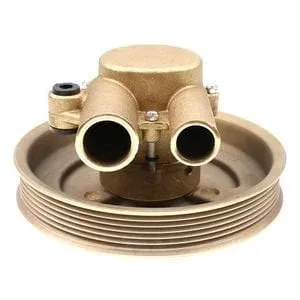
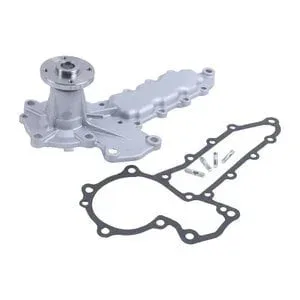
Engine Sequence Variants Verified — Cross-reference 21212799 and 3812519 mapped to specific GL, GXi, and OSi engine serial ranges to confirm port orientation and pulley alignment before dispatch.
Technical Specifications
| Parameter |
Value |
| Product Type |
Water Pump |
| Part Number |
21212799 3812519 |
| Cross-Reference |
21212799 (reference only), 3812519 (reference only) |
| Engine Compatibility |
4.3L, 5.0L, 5.7L Volvo Penta marine engines |
| Machine Fitment |
4.3GL-G, 4.3GXi-225-R, 5.0GXi-270-R, 5.7GXi-320-R, V6-225-A, V8-300-A, and 80+ additional variants |
| Condition |
New Aftermarket |
| Warranty |
3-12 months against manufacturing defects |
| Certification |
ISO 9001 |
Application Suitability
| Engine System |
Related Components |
| Raw-water cooling loop |
Impeller service kit, drive belt, sacrificial anodes |
| Closed cooling circuit |
Thermostat assembly, coolant hoses, hose clamps |
| Heat exchanger interface |
Heat exchanger gaskets, exhaust manifold cooling passages |
| Overhaul preparation |
Full gasket set, shaft seal, mounting hardware |
Why the Same Sea Water Pump Part Number Ships in Multiple Variants
Confirming the exact engine series and serial number prevents port orientation mismatch on otherwise identical displacements.
A sea water pump engine cooling replacement ordered by displacement alone often arrives with ports rotated or pulley offset wrong for the specific GL, GXi, or OSi variant on the block. In Nigerian mining marine applications, I have seen Volvo Penta 4.3L engines brought down by cooling failures traced to a pump that physically bolted on but routed water incorrectly through the heat exchanger. The root cause was not the pump quality but a variant mismatch carried forward from an inaccurate cross-reference table [NEED_CITE: marine engine cooling system variant identification standards]. Ordering a sea water pump engine cooling replacement without verifying the engine serial range against the manufacturer service manual invites this exact failure pattern.

The Raw-Water Side of Your Cooling System
This pump operates on the raw-water side of either an open or closed cooling loop, drawing seawater or freshwater through the heat exchanger before routing it to exhaust manifold cooling passages. It interacts directly with the thermostat housing, impeller, and sacrificial anodes. When a sea water pump engine cooling replacement fails prematurely, the fault often originates upstream — debris ingestion from a degraded intake hose or cavitation from a restricted raw-water strainer damages the new pump shaft seal within the first hundred hours.
Engine Serial Variants and Rebuild History Awareness
Volvo Penta 4.3L, 5.0L, and 5.7L engines span GL, GXi, OSi, and GiC series, each introducing variations in port orientation, pulley alignment, and mounting pattern. A previous rebuild may have swapped components between series, leaving the engine block with mismatched accessory interfaces [NEED_CITE: Volvo Penta engine serial variant documentation for marine applications]. Confirming the engine serial number against the cross-reference sheet ensures the replacement pump matches the actual block configuration, not just the displacement stamped on the nameplate.
Flow Rate and Pressure Bench Testing Explained
The pump must deliver adequate raw-water flow across the engine operating RPM range to maintain heat exchanger efficiency. Insufficient flow at higher RPM causes localized boiling in exhaust manifold passages, while excessive pressure can rupture aging coolant hoses. Bench testing verifies the impeller clearance and shaft seal integrity under load. For marine environments with high sediment or salt concentration, verifying the shaft seal material compatibility with the operating medium prevents early weep-hole leakage.
The Hidden Cost of Skipping Root-Cause Inspection
Replacing a failed pump without inspecting the intake hose, raw-water strainer, and thermostat means the same debris or restriction that destroyed the first unit attacks the replacement. On marine workboats operating in silty coastal waters, I have watched a new pump fail within weeks because corroded hose interiors were shedding particles into the raw-water stream. The cost is not just the second pump — it is the second haul-out, the second round of labor, and the vessel sitting idle while the correct diagnosis finally gets made [NEED_CITE: marine cooling system root-cause failure analysis methodology].
Why Source This Component Through Our Engine System Supply
Our own production lines and qualified sourced partners carry the same warranty terms under one account, so your cooling system overhaul ships as a single consignment. Part identification works from the engine serial number, a photograph of the worn nameplate, or the old pump itself — eliminating guesswork on variant selection. The technical team confirms port orientation and grade compatibility before dispatch. Guangzhou warehouse stock on common marine pump configurations allows fast turnaround. Cross-reference verification covers superseded numbers across GL, GXi, and OSi generations.
Documentation & Verification
- Commercial invoice listing each cooling component with individual HS codes
- Part compatibility sheet marking cross-reference numbers as reference only
- Flow rate and pressure bench test record included with each pump
- Warranty terms covering manufacturing defects for the stated period
- Packing photographs showing protective packaging for impeller and ports
- Customs documentation support with correct marine equipment classification
Installation & Rebuild Sequence
- Flush raw-water hoses and inspect strainer before fitting the new pump to prevent debris ingestion
- Verify drive belt alignment and tension against the pulley groove pattern on this specific variant
- Torque mounting bolts to specification and confirm gasket seating before introducing coolant
- Run the engine at idle and check the weep hole for leaks during the initial break-in period
Request a Matched Cooling System Quote
Provide your engine model, serial number, and any rebuild history so we can confirm the correct pump variant and recommend matched thermostat, hose, and impeller components for a complete system overhaul in one shipment.
Frequently Asked Questions
Q: What other cooling system parts should I replace alongside this pump?
A: During a raw-water pump replacement, we recommend inspecting the thermostat and gasket, drive belt, sacrificial anodes, and coolant hose clamps. If the previous pump failed from debris ingestion, the raw-water strainer and intake hose should be checked for internal corrosion. Ordering these as a matched set ensures all weak points are addressed in one overhaul cycle.
Q: How do I confirm the correct pump variant for my GL, GXi, or OSi engine?
A: Provide the full engine serial number from the nameplate or service record. The GL, GXi, and OSi series within the same displacement can differ in port orientation and pulley alignment. Our technical team cross-references your serial number against the variant table to confirm the exact mounting pattern before dispatch.
Q: What causes repeated sea water pump failure shortly after replacement?
A: Premature repeat failure typically traces to debris from degraded intake hoses, a clogged raw-water strainer, or a stuck thermostat creating localized overheating. Without addressing the root cause upstream, the new pump shaft seal and impeller face the same destructive conditions. A full system inspection prevents this cycle.
Q: How do I confirm my engine model if the nameplate is worn or painted over?
A: Send a photograph of the engine block casting numbers, the existing pump mounting pattern, or any legible identification marks. Our team uses these visual references along with displacement and series information to narrow down the exact engine variant and confirm the correct pump configuration.