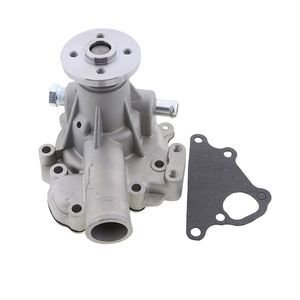
System-Matched Cooling Components — Verified fitment for N844 series variants including turbocharged and intercooled builds, confirmed by engine serial cross-reference.
Technical Specifications
| Parameter |
Value |
| Part Number |
SBA145017721 |
| Product Type |
Water Pump |
| Cross-Reference |
SBA145017721 (reference only) |
| Engine Fitment |
Shibaura ISM N844, N843-C, N843-H, N844L-C, N844LT-C, N844T |
| Machine Fitment |
New Holland TC25, TC25D, TC29, TC29D, TC29DA, TC30, TC31DA, TC33, TC33D, TC33DA, TC34DA, TC35, TC35A, TC35D, TC35DA, TC40, TC40A, TC40D, TC40DA, TC45, TC45A, TC45D, TC45DA, TC48DA, TC55DA, T1510, T1520, T1530, T2210, T2220, T2310, T2320, T2330, T2410, T2420; Ford 1720, 1920, 2120, 3415; Shibaura D23F, D28F, S455 |
| Housing Material |
Precision-cast aluminum alloy (A380) |
| Shaft Material |
Hardened 40Cr steel (HRC 52–56) |
| Shaft Tolerance |
±0.01 mm |
| Mechanical Seal |
Carbon/ceramic faces rated for 150,000+ cycles |
| Coolant Compatibility |
Ethylene glycol-based coolants |
| Surface Treatment |
Chromate conversion coating |
| Operating Temperature Range |
-20°C to +50°C |
| Maximum Engine Speed |
2,800 RPM |
| Condition |
New Aftermarket |
| Warranty |
6-month standard warranty against manufacturing defects |
| Standards |
ISO 9001 |
Application Suitability
| Engine System |
Related Components |
| Primary Coolant Circulation |
Thermostat, radiator hoses, coolant temperature sensor |
| Cylinder Head Thermal Management |
Head gasket, cylinder head bolts, valve cover gasket |
| Block and Internal Cooling |
Core plugs, block heater elements, bypass tubes |
| Emission and Exhaust Thermal Control |
EGR cooler (if equipped), exhaust manifold gaskets |
| Lubrication Interface |
Oil cooler seals, front crankshaft seal |
Why Overheating Returns After a Water Pump Replacement
Replacing the pump without diagnosing the root cause of the original failure is a predictable path to a second teardown.
I spent years in repair bays across the Yangtze River Delta, and the pattern was consistent: a Shibaura ISM N844 comes in overheating, the water pump SBA145017721 gets swapped, and the machine is back on the line. Two weeks later, it is back in the bay with the same symptom or worse — a scored cylinder wall from sustained thermal stress. [NEED_CITE: diesel engine cylinder scoring mechanisms under thermal overload] The issue is rarely the replacement part itself. The thermostat may be stuck partially closed, a radiator tube may be blocked with scale, or the previous coolant mixture was out of specification, causing the old pump seal to degrade prematurely. A water pump engine rebuild parts supplier who only ships the pump is setting up the next failure. The system logic must be addressed as a whole.

The Cooling Circuit as a Connected System
This water pump sits at the center of a closed-loop system on the N844 platform. Coolant exits the pump housing under pressure, routes through the block passages around the cylinder liners, rises into the head, and then flows to the radiator or through the thermostat bypass during warm-up. Every connection point — the inlet hose from the radiator bottom tank, the outlet to the block, the weep hole on the pump body — must maintain integrity. If the thermostat housing is corroded or the bypass tube is restricted, the new pump operates against abnormal back-pressure, accelerating seal wear from day one. Water pump engine rebuild parts only solve the problem if the rest of the circuit is verified.
Matching Seal Materials to Coolant Chemistry
The carbon/ceramic mechanical seal faces in this unit are specified for ethylene glycol-based coolants. Extended-life organic acid technology (OAT) formulations and hybrid organic acid technology (HOAT) coolants have different additive packages that affect seal face lubrication and corrosion behavior on the aluminum A380 housing. [NEED_CITE: coolant formulation compatibility with mechanical seal face materials in diesel engines] When an engine is being rebuilt, the coolant type that will be used at commissioning should be confirmed before the pump is installed. A mismatch does not cause immediate failure, but it shortens seal life in ways that show up as a slow weep at the inspection hole, often after the machine has been back in service long enough to make the root cause difficult to trace.
Tolerance Stack and Shaft Bearing Alignment
The hardened 40Cr steel shaft runs at a ±0.01 mm tolerance, which directly governs how the impeller sits relative to the volute inside the housing. On the N844T turbocharged variant, sustained operation near the 2,800 RPM ceiling means shaft deflection under load must remain within that envelope. If the shaft bearing preload was incorrect on a previous rebuild — or if the block mating surface was machined without accounting for the resulting change in pump mounting depth — the impeller can contact the housing at operating temperature. This is not a manufacturing defect in the pump. It is a system tolerance issue that only shows up when all mating components are considered together. [NEED_CITE: shaft alignment tolerance requirements for centrifugal coolant pumps in compact diesel applications]

What Happens When the System Is Not Rebuilt as a System
The hidden cost is never the price of the second pump. It is the second teardown — the labor hours pulling the radiator, draining the system again, removing the belts, and pulling the pump a second time while the machine sits non-productive. On a New Holland TC45DA working a construction site, that downtime cascades into missed deadlines and idle operators. Worse, if the root cause was a blocked radiator or a failed thermostat, the first pump may have been running cavitating or dead-headed for an unknown period before it was pulled, meaning the new pump went into a system that was already compromised. Rebuild shops that replace the pump without pressure-testing the radiator and verifying thermostat opening temperature are effectively guaranteeing a return visit.
Why Source the Cooling System From One Account
The production lines that machine the A380 housing and grind the 40Cr shaft to ±0.01 mm operate under the same ISO 9001 quality management system as the sourced components in the same shipment — thermostats, hose sets, seal kits, and gaskets arrive under one warranty and one accountability line. Part identification does not require a readable nameplate; a photograph of the old pump, the machine model, or the engine serial plate is sufficient for the technical team to confirm the correct variant across the N844, N844L-C, N844LT-C, and N844T range. Cross-reference verification covers superseded numbers so that an older reference on a worn tag does not result in the wrong unit shipping. Samples are available for fitment confirmation before a fleet order commits. Minimum order is one piece, so a single emergency rebuild is not blocked by quantity thresholds.
Documentation & Verification
- Commercial invoice listing each cooling system component by engine serial variant for customs clearance.
- Cross-reference sheet mapping SBA145017721 (reference only) against superseded and alternate part numbers.
- Dimensional inspection record covering shaft runout, housing port spacing, and impeller clearance.
- Warranty terms document specifying the 6-month coverage scope and claim procedure.
- Packing photographs showing anti-rust coating and protective foam placement before carton sealing.
- HS code classification support for mixed cooling system component shipments.
Installation & Rebuild Sequence
- Clean the block mating surface to bare metal and verify flatness before mounting the new pump housing.
- Confirm shaft rotates freely by hand with no binding or radial play before belt installation.
- Install new gaskets and O-rings at all coolant passages; reuse of old seals voids warranty coverage.
- Torque mounting fasteners in the specified cross-pattern sequence to the engine manual value.
- Fill with confirmed-compatible ethylene glycol coolant and bleed the system at all high-point vents.
- Run the engine to thermostat-opening temperature and verify no weep at the pump inspection hole.
Request a System-Level Quote
Provide the engine model and serial number from the nameplate, along with any previous rebuild history and the coolant type currently in use or planned for the refill. If the engine serial plate is unreadable, a photograph of the old pump and the machine data tag is sufficient to confirm fitment across the N844 variant range. This information allows the technical team to verify the correct water pump engine rebuild parts and recommend matched thermostat, hose, and seal components for a complete cooling system overhaul.
Frequently Asked Questions
Q: What other cooling system components should be replaced when installing this water pump during an overhaul?
A: The thermostat, all coolant hoses connected to the pump and radiator, the thermostat housing gasket, and the block core plugs should be replaced as a set. Reusing aged hoses or a thermostat of unknown history introduces failure points that will bring the machine back into the shop shortly after the rebuild is completed.
Q: How do I confirm which N844 variant my engine is before ordering?
A: The engine serial number on the nameplate identifies the specific variant — N844, N844L-C, N844LT-C, or N844T. If the plate is worn or painted over, a photograph of the old pump mounting pattern and the machine model plate allows the technical team to verify the correct unit and cross-reference any superseded part numbers.
Q: Is this pump compatible with extended-life organic acid coolant formulations?
A: The carbon/ceramic seal faces are rated for standard ethylene glycol-based coolants. Before using an OAT or HOAT extended-life formulation, confirm compatibility with the seal material specification. The technical team can verify whether the planned coolant chemistry is suitable or whether an alternative seal configuration is needed.
Q: What typically causes water pump failure on these engines beyond normal wear?
A: Premature failure usually traces to a system-level cause: incorrect coolant concentration degrading the seal faces, a stuck thermostat causing sustained over-temperature, radiator blockage creating abnormal back-pressure, or a previous rebuild where shaft bearing preload was set incorrectly. Identifying the root cause prevents the replacement pump from failing early.