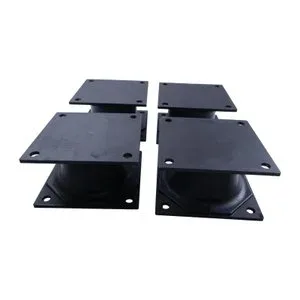
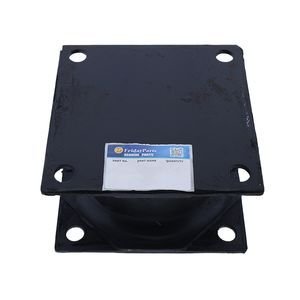
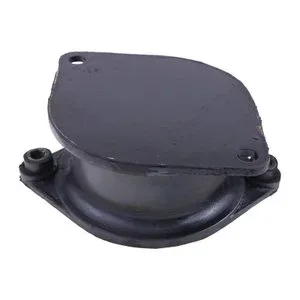
Matched set dispatch — Four cushion dampers ship together with verified cross-reference data so every mounting point on your compactor receives uniform isolation from day one.
Technical Specifications
| Parameter |
Value |
| Part Number |
TRSA000008038 |
| Product Type |
Cushion Damper |
| Cross-Reference |
TRSA000008038 (reference only), SW-180100 (reference only), SW180100 (reference only) |
| Machine Fitment |
Stanley HS6000, HS6019, HS6100, HSX6, HS8000, HS11000, HSX11, Bobcat PCF64, Doosan vibratory plate compactors |
| Material |
Natural rubber compound |
| Shore A Hardness |
55±3 |
| Quantity per Set |
4 pieces |
| Dimensional Tolerance |
±0.2 mm |
| Vibration Absorption Frequency Range |
15–60 Hz |
| Condition |
New aftermarket |
| Warranty |
6 months against manufacturing defects |
| MOQ |
1 piece |
| Standards |
ISO 9001, ISO 22762-2 |
Application Suitability
| Engine System |
Related Components |
| Engine mounting and vibration isolation |
Engine mount brackets, mounting bolts, alignment shims |
| Powertrain protection during compaction cycles |
Hydraulic pump couplings, drive belt tensioners, auxiliary drive pulleys |
| Compactor frame-to-engine interface |
Frame gussets, fastener sets, adjacent seal rings |
| Scheduled overhaul of vibratory plate compactors |
Complete engine gasket sets, crankshaft seals, oil pan gaskets |
Root Causes Behind Repeat Cushion Damper Failures in Compactor Engines
The failed isolator is usually the symptom, not the disease.
In Latin American mining and road construction sites, I have seen vibratory plate compactors return to the bench within weeks of a cushion damper replacement. The pattern is consistent: the new rubber isolator shock mounts absorb vibration correctly at first, but an underlying system fault — misaligned mounting brackets, oil contamination from a degraded adjacent seal, or uneven load distribution from replacing only two of four mounts — destroys the new set prematurely. Field reports across compaction fleets confirm that isolated component swaps without system-level inspection produce repeat failures at a rate that meaningfully exceeds planned overhaul cycles [NEED_CITE: vibratory compactor engine mount failure recurrence patterns]. Addressing the root cause during the same teardown avoids the second machine-down event.

Engine Auxiliary System Position and Adjacent Component Mapping
These cushion dampers sit at the critical junction between the compactor's engine block and the main frame, absorbing the high-cycle vibration energy generated during plate compaction operation. In the engine auxiliary system hierarchy, they protect not only the engine block itself but also the hydraulic pump coupling, belt drive tensioners, and electronic control modules mounted nearby. A rubber isolator shock mount engine auxiliary rebuild replacement therefore requires examining every adjacent component that transfers load or vibration to the same mounting plane. Missing a worn bracket or a hardened seal during this inspection reintroduces the exact stress profile that destroyed the previous set.
Matched Set Supply and Rebuild History Verification
When rebuilding vibratory plate compactors that have already undergone one or more overhauls, the Shore A hardness of the original cushion damper specification may no longer match what is currently installed. Previous rebuilds sometimes substitute synthetic rubber compounds with different damping characteristics, altering the vibration transfer behavior across the entire engine auxiliary system. Supplying these isolators as a verified 4-piece matched set ensures uniform load distribution across all mounting points [NEED_CITE: matched set engine mount load distribution standards for vibratory equipment]. Asymmetric stiffness between new and remaining old isolators accelerates fatigue cracking on the softer units, producing staggered failures that mimic premature wear but actually stem from mismatched material grades.
Material Behavior Under Compaction Vibration Cycles
The natural rubber compound specified for this cushion damper delivers sustained energy absorption across the 15–60 Hz frequency range typical of vibratory plate compactor operation. Shore A hardness at 55±3 positions the isolator in the mid-range stiffness band, balancing vibration isolation against engine stability under load. The dimensional tolerance of ±0.2 mm ensures consistent compression height across all four mounting points, preventing the torsional stress concentrations that arise when one corner sits higher than the rest. Natural rubber was selected over synthetic alternatives for its hysteresis characteristics in continuous high-cycle applications, where heat buildup inside the elastomer body degrades damping performance over time. ISO 22762-2 compliance governs the testing methodology for these vibration isolators under dynamic loading conditions.
The Cost of Overlooking System-Level Faults During Rebuild
Replacing cushion dampers without inspecting the engine mount bracket flatness, fastener torque condition, and adjacent oil seal integrity produces a predictable outcome: the new set inherits the same asymmetric loading or chemical exposure that destroyed the originals. In compactors operating on mining haul roads and pipeline bedding sites, oil contamination from a failed crankshaft seal softens the rubber compound and collapses the isolator body within a fraction of the expected service interval. The machine returns to the shop, the teardown repeats, and the real fault remains unaddressed. Shops that add a system-level inspection checklist to every rubber isolator shock mount engine auxiliary rebuild replacement eliminate this loop [NEED_CITE: engine auxiliary inspection protocols for vibratory compactor overhaul].
Why Procurement Through This Channel
Selected cushion damper lines are produced in our own facility, while the remainder is sourced from qualified ISO-certified manufacturing partners — both carry identical quality control and warranty terms. Eight product categories mean a complete compactor engine overhaul kit, including gaskets, seals, and fastener sets, ships under one account and one warranty. The minimum order starts at one piece, so a single emergency replacement does not require padding a purchase order. Guangzhou warehouse stock enables fast dispatch on common cushion damper configurations. Part identification works from an OEM number, a machine model plate, or a photograph of the worn isolator when the nameplate is illegible. Cross-reference verification covers superseded and alternate numbers, including those generated across different Stanley, Bobcat, and Doosan compactor generations. Technical support is available to confirm compatibility and hardness grade against your machine's specific rebuild history before you commit to bulk quantities.
Documentation & Verification
- Commercial invoice and packing list referencing TRSA000008038 and matched set quantity
- Part compatibility and cross-reference sheet for Stanley, Bobcat, and Doosan compactors marked reference only
- Quality inspection record covering dimensional tolerance and Shore A hardness verification
- Warranty terms document specifying six-month coverage against manufacturing defects
- Packing photographs showing matched 4-piece set condition before crate sealing
- HS code and customs documentation support for Latin American and global import routes
Installation & Rebuild Sequence
- Clean mounting surfaces to bare metal before installing cushion dampers to ensure full contact and uniform compression across all four points
- Verify bracket flatness with a straight edge, correcting any distortion that would load one isolator harder than the rest
- Torque mounting fasteners to specification in a cross-pattern sequence to prevent torsional preload on the rubber compound
- Inspect adjacent oil seals and hydraulic fittings for leaks that could contaminate the natural rubber body during operation
- Run the compactor at idle for an initial break-in cycle, then recheck fastener torque after the first heat cycle
Requesting a Compatibility Confirmation
Provide your compactor model, engine serial number, and any known rebuild history so we can verify the correct Shore A hardness grade and mounting pattern. Photographs of the existing cushion damper and mounting bracket help when part numbers are worn or superseded. Include the machine hour reading and typical operating conditions to support a system-level recommendation on adjacent components.
Frequently Asked Questions
Q: What other engine auxiliary components should be inspected when replacing these cushion dampers?
A: Inspect engine mount brackets for flatness and fatigue cracking, check adjacent crankshaft and hydraulic pump seals for oil leakage that degrades rubber, verify mounting fastener condition, and examine belt drive tensioners and hydraulic pump couplings that share the same vibration environment. Any fault found should be corrected during the same teardown to prevent repeat isolator failure.
Q: Are these isolators sold as a matched 4-piece set or individually?
A: They are supplied as a matched 4-piece set to ensure uniform Shore A hardness and dimensional tolerance across all mounting points. Replacing only one or two isolators alongside older units creates asymmetric load distribution, which accelerates fatigue failure on the softer positions and produces staggered downtime events.
Q: How do I confirm the correct hardness grade for my compactor's rebuild history?
A: Share your compactor model, engine serial number, and details of any previous overhauls. Prior rebuilds may have substituted synthetic compounds with different damping behavior. We cross-reference your machine generation against the original specification and verify whether the 55±3 Shore A grade remains appropriate or requires adjustment.
Q: What system-level faults cause premature shock mount failure beyond the part itself?
A: Common root causes include misaligned engine mount brackets, uneven mounting surface flatness, oil contamination from degraded adjacent seals, and loose fasteners that allow impact loading. Each of these transfers abnormal stress into the rubber compound, collapsing the isolator well before the expected service interval.
Q: Can I request a sample for fitment verification before committing to a bulk rebuild order?
A: Yes. Sample supply is available for fitment confirmation before you commit to fleet-level quantities. This allows your rebuild shop to verify mounting pattern, bolt spacing, and compression height against the specific compactor model on the bench, eliminating trial-fitment risks across a bulk order.