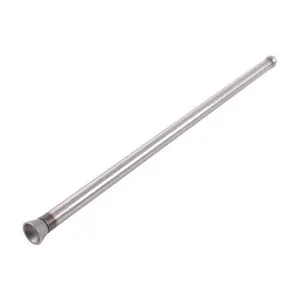
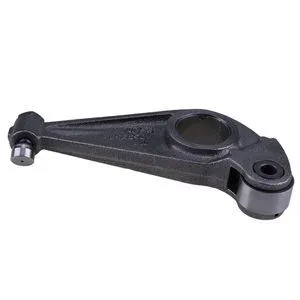
Matched Sets for Rebuild — every push rod ships with verified tappet and rocker arm compatibility data based on your engine serial variant.
Technical Specifications
| Parameter |
Value |
| Part Number |
8-97071673-0 |
| Product Type |
Push Rod |
| Cross-Reference (reference only) |
8-97071673-0, 8970716730, 8-94143202-0, 8941432020, 8-97071673-1, 8970716731 |
| Engine Fitment |
4JA1, 4JB1, 4JC1, 4JG1, 4JG2, 4JH1, UM4JA1, UM4JB1, UM4JG1 |
| Machine Fitment |
NHR, NKR, NKR55, NKR66, NKR69, NKR71, NKR77, NLR, NLR55, NLR71, NLR77, NLR85, NMR, NMR55, NMR71, NMR77, NMR85, NPR, NQR, QKR, TFR, TFS, UBS, UCS |
| Material |
Forged high-carbon steel |
| Surface Treatment |
Surface hardening (HRC 52–56), Black oxide coating |
| Parallelism |
±0.02 mm |
| Condition |
New Aftermarket |
| Warranty |
6 months against manufacturing defects |
| MOQ |
1 piece |
| Standards |
ISO 9001 |
Application Suitability
| Engine System |
Related Components |
| Valve Train – Overhead |
Tappet (cam follower), rocker arm, valve spring |
| Cylinder Head Assembly |
Valve stem seals, valve cover gasket, manifold gaskets |
| Bottom End during Overhaul |
Piston rings, main and con-rod bearings, crankshaft seals |
| Timing Drive Interface |
Camshaft lobes, timing gears or chain |
Why One Failed Push Rod Demands a Full Valve Train Inspection
A single bent rod almost always signals upstream wear that a parts swap alone cannot cure.
When a workshop pulls a cylinder head on an Isuzu 4JH1 and finds one deformed push rod, the natural move is to order a replacement and reassemble. In practice, the cam lobe that drives that rod often shows measurable wear, the corresponding tappet face has developed a concave profile, and the valve spring has lost preload from heat cycling. Fitting a new rod into that worn geometry simply transfers the bending load to the next weakest link. [NEED_CITE: valve train wear progression patterns in medium-duty diesel engines] A systematic Push Rod engine rebuild means inspecting every contact surface in the load path before any component goes back into the block.
System Context: Where This Push Rod Sits in the Valve Train
The push rod for Isuzu 4JA1 and 4JH1 engines acts as the mechanical link between the cam-driven tappet seated in the block and the rocker arm pivoting on the cylinder head. During a Push Rod engine rebuild, all three contact surfaces — tappet cup, push rod tips, and rocker arm pad — must be evaluated together. Replacing only one element while the other two carry wear patterns from thousands of hours of operation introduces point loading that shortens service life across the entire set.
Prior Rebuild History and Dimensional Match
Engines that have already been through one or more overhauls present a complication that standard replacement catalogs do not address. If the cylinder head was resurfaced or the block deck was machined during a previous rebuild, the installed height between cam and rocker changes, which alters the effective operating length of the push rod. Supplying standard-length rods into a block that has been decked can result in valve lash that cannot be adjusted out, or worse, valve-to-piston interference at operating temperature. [NEED_CITE: effects of deck resurfacing on valve train geometry in pushrod diesel engines] We confirm engine serial and variant — for example, distinguishing a 4JH1-TC from a naturally aspirated 4JH1 — before shipping, because valve train geometry can differ between variants sharing the same base engine family.
Material and Hardness: What the Specs Mean for Service Life
The forged high-carbon steel construction provides the core strength needed to transmit cam lift forces without buckling under cylinder pressure peaks common in the 4JB1 and 4JG2 platforms. Surface hardening to HRC 52–56 at the contact tips resists the localized wear that develops where the rod interfaces with the tappet cup and rocker arm pad — the two points that experience the highest Hertzian contact stress. Parallelism held to ±0.02 mm matters because even slight deviation from straightness causes the rod to bend under load rather than transmit force axially, which accelerates wear at both ends. The black oxide coating provides corrosion protection during storage and initial run-in before oil splash fully coats the valve train gallery.

The Cost of Skipping Root-Cause Diagnosis
Workshops that replace a bent push rod without tracing the failure back to its origin commonly see the new rod fail within the first few hundred hours. The underlying cause — whether a worn cam lobe, a seized valve stem from carbon buildup, or excessive spring preload from an incorrect spring — remains active and simply transfers load to the fresh component. [NEED_CITE: diagnostic approach to repeat valve train failures in light commercial diesel engines] This pattern of repeat failure is what we encounter most often when customers come to us after an unsatisfactory repair. A Push Rod engine rebuild done correctly requires addressing the fault that broke the original part, not just the broken part itself.
Why Source Valve Train Components Through This Channel
Our own production lines and qualified sourced supply carry identical quality control and warranty terms under one account, so whether this push rod comes from our facility or a partner plant, the inspection standard is the same. Eight product categories mean that matched tappets, rocker arms, gasket sets, and valve stem seals for a 4JA1 or 4JH1 overhaul consolidate into a single consignment rather than arriving from multiple suppliers on mismatched schedules. Orders from one piece upward are accepted, which supports both single-machine emergency repairs and distributor restocking. Cross-reference verification covers superseded numbers such as the earlier 8-94143202-0 series and later 8-97071673-1 revisions, so identification holds even when the original engine build sheet references a discontinued number. Technical staff confirm dimensional compatibility and grade selection against the engine serial before dispatch. [NEED_CITE: aftermarket valve train component cross-reference verification standards]
Documentation & Verification
- Commercial invoice and packing list itemizing each push rod and matched component by part number
- Cross-reference sheet mapping OEM numbers (reference only) to supplied aftermarket equivalents
- Dimensional inspection record covering length, parallelism, and tip hardness
- Warranty terms covering manufacturing defects for six months from delivery
- Packing photographs showing individual anti-rust packaging and foam cushioning
- HS code and customs documentation support for international clearance
Installation & Rebuild Sequence
- Inspect each tappet face for concavity before fitting new push rods; replace any worn followers as a matched set.
- Verify valve spring installed height and preload against engine build specifications during reassembly.
- Set valve lash to cold clearance values specified for the engine variant — 4JH1-TC differs from naturally aspirated 4JH1.
- Run the engine at low idle for the initial break-in period to allow oil splash to coat all push rod contact surfaces.
Request a Quotation
Provide the full engine model, serial number, and any known rebuild history such as head resurfacing or block machining. If the engine nameplate is worn or painted over, send a photograph of the block casting number or the existing push rod alongside a ruler for scale. This information allows us to confirm the correct variant, verify dimensional compatibility, and assemble a matched valve train component list for a complete Push Rod engine rebuild.
Frequently Asked Questions
Q: What else should be replaced when changing push rods on a 4JH1?
A: At minimum, inspect and typically replace the corresponding tappets and check rocker arm pad wear. Valve stem seals, the valve cover gasket, and intake and exhaust manifold gaskets should also be renewed during a head-off service. If any cam lobe shows measurable wear beyond specification, address it before fitting new rods to prevent repeat bending within the first service interval.
Q: Does a prior head resurfacing change which push rod I need?
A: Yes. Machining the cylinder head deck or block deck reduces installed height, which changes the effective operating length required. Standard-length push rods may then result in uncorrectable valve lash or interference risk. Confirm whether the head or block has been machined and by how much before ordering, so we can verify the correct dimensional grade for your specific engine build.
Q: How do I confirm my engine variant before ordering valve train parts?
A: The engine serial number is the most reliable identifier, as variants such as 4JH1-TC and naturally aspirated 4JH1 can differ in valve train geometry. If the nameplate is unreadable, the block casting number, cylinder head casting number, or even a photograph of the existing components can help us cross-reference the correct specification for your engine.
Q: Is this push rod included in your overhaul gasket kit, or sold separately?
A: Push rods are sold as individual components or in complete engine sets, separate from gasket kits. However, we recommend sourcing them together with gaskets, valve stem seals, and any matched tappets under one order to ensure compatibility and consolidated dispatch for the complete rebuild.
Q: What causes repeated push rod failure even after replacement?
A: Common root causes include worn cam lobes, excessive valve spring preload from incorrect springs, carbon seizure on valve stems restricting movement, and incorrect valve lash settings from a prior rebuild. Replacing the rod without resolving the upstream fault simply transfers the failure load to the new component, resulting in repeat bending within a short service period.