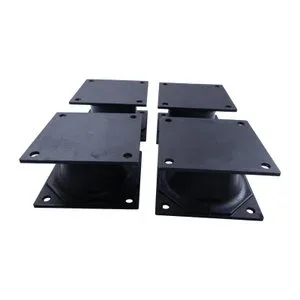
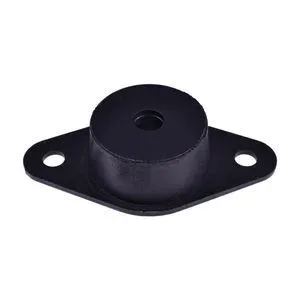
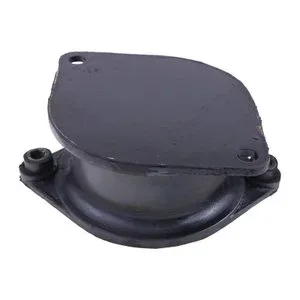
Matched Set Dispatch — four cushion dampers ship as one verified set with hardness and deflection records for balanced engine-to-frame isolation.
Technical Specifications
| Parameter |
Value |
| Part Number |
TRSA000008038 |
| Product Type |
Cushion Damper |
| Cross-Reference |
SW-180100, SW180100 (reference only) |
| Machine Fitment |
Stanley HS6000, HS6019, HS6100, HSX6, HS8000, HS11000, HSX11; Bobcat PCF64; Doosan vibratory plate compactors |
| Material |
Natural rubber compound with carbon black and sulfur-cure accelerators |
| Hardness |
Shore A 60±3 |
| Compression Deflection |
12–15 mm at 1,200 N load |
| Thread Size |
M10 threaded studs, 1.5 mm pitch |
| Quantity per Set |
4 pieces |
| Dimensional Standard |
ISO 2768-mK |
| Condition |
New aftermarket |
| Warranty |
6-month warranty against manufacturing defects |
Application Suitability
| Engine System |
Related Components |
| Engine-to-frame vibration isolation |
Engine mounting brackets, frame welds, fastener sets |
| Fuel system vibration protection |
Fuel lines, injector connections, fuel filter mounts |
| Exhaust system resonance control |
Exhaust manifold gaskets, muffler hangers, heat shields |
| Auxiliary drive component protection |
Alternator brackets, belt tensioners, coolant hose connections |
Why Vibration Isolation Failure Destroys Fresh Engine Rebuilds
A failed rubber isolator shock mount transmits destructive resonance directly into the engine block, undoing weeks of rebuild work.
Early in my career sourcing for European and Central Asian distributor channels, I watched a freshly overhauled Stanley HS6000 engine return to the teardown bench within a season. The rebuild was sound—new bearings, honed cylinders, matched piston sets. What nobody had replaced were the degraded cushion dampers sitting between the engine and the compactor frame. The old mounts had lost their damping characteristics, and the resulting torsional vibration accelerated bearing wear and fatigued fuel line connections [NEED_CITE: vibration-induced fatigue failure in small diesel engine auxiliary systems]. Replacing the rubber isolator shock mount as a matched set, rather than swapping individual units, would have prevented that second teardown entirely.

The Engine Auxiliary System This Damper Belongs To
This cushion damper sits at the interface between the engine assembly and the compactor chassis. In vibratory plate compactors operating at high vibration frequencies, the engine-to-frame isolation system carries a dual load: it must absorb the compactor's own operating vibration while also containing the engine's internal reciprocating forces. When one mount in the set degrades faster than the others, the remaining units absorb uneven loads, shifting the engine's center of gravity and creating torsional stress on auxiliary connections. The rubber isolator shock mount set must be evaluated as a complete system during any engine service event.
Matched Set Replacement and Serial Variant Awareness
Replacing individual mounts while leaving aged units in place creates a stiffness imbalance across the engine cradle. The new units compress more readily under load, shifting weight onto the old mounts and accelerating their failure. For Stanley HS6100 and HSX11 series machines, the M10 stud configuration remains consistent, but mounting hole patterns on the engine subframe shifted across production runs [NEED_CITE: compactor engine mount pattern revisions across serial ranges]. Always verify the stud orientation and mounting point geometry against the specific machine serial range before committing to a bulk order. Durometer consistency across all four units—held to Shore A 60±3—ensures that each corner of the engine cradle rebounds uniformly under the compactor's operating frequency.
How Material Hardness and Deflection Shape Isolation Performance
The Shore A 60±3 hardness specification places this natural rubber compound in the medium-soft range, chosen specifically for the vibration frequency profile of plate compactors. A harder compound would transmit more high-frequency vibration into the engine block, stressing fuel injector lines and alternator brackets. A softer compound would allow excessive engine movement under load, pulling on exhaust connections and coolant hoses. The 12–15 mm compression deflection at 1,200 N load defines the working range where the mount absorbs peak冲击 energy without bottoming out. Carbon black reinforcement in the rubber compound provides resistance to ozone cracking and oil contamination—two common degradation accelerants in compactor engine bays [NEED_CITE: elastomer degradation mechanisms in construction equipment engine compartments]. The sulfur-cure system ensures consistent cross-linking density, which maintains deflection characteristics across the expected service temperature range.
The Hidden Cost of Ignoring Root Cause During Mount Replacement
Pulling out four cracked mounts and pressing in new ones without investigating why they failed early guarantees a repeat visit. Oil weeping from a valve cover gasket will saturate the rubber compound in adjacent mounts, causing them to swell and lose damping capacity within months. Exhaust heat shielding that has shifted or degraded will bake the nearest mount, hardening the rubber past its designed durometer and turning it into a vibration conductor rather than an absorber [NEED_CITE: thermal degradation effects on natural rubber engine mounts]. Addressing these upstream causes during the replacement event is what separates a lasting repair from a recurring failure cycle.
What This Supply Channel Brings to Your Rebuild Bench
Our selected production lines and qualified sourcing partners operate under one account and one warranty structure, so cushion damper sets and adjacent engine auxiliary components ship under unified quality terms. Guangzhou warehouse inventory on common compactor mount configurations supports rapid dispatch when a machine is already down. Part identification works from the OEM reference number, the machine model plate, or a photograph of the old mount—covering situations where nameplates are worn or painted over. Cross-reference verification catches superseded numbers and variant differences before the order ships. Sample sets are available for fitment confirmation before you commit to fleet quantities. The technical team confirms stud pitch, mounting pattern, and durometer suitability against your specific engine serial range.
Documentation & Verification
- Commercial invoice listing matched set quantities and part cross-reference for customs
- Compatibility sheet confirming M10 stud pitch and machine serial range fitment
- Quality inspection record covering Shore A hardness and compression deflection test results
- Warranty terms document specifying coverage scope for manufacturing defects
- Packing photographs showing set completeness and protective packaging before crate closure
- HS code classification support for elastomeric vibration isolation components
Installation & Rebuild Sequence
- Inspect engine subframe mounting surfaces for oil contamination or heat damage before pressing in new cushion dampers
- Verify M10 stud thread engagement depth and apply specified torque to prevent stud pull-out under vibration
- Check adjacent fuel lines, exhaust hangers, and alternator brackets for resonance fatigue cracks during mount replacement
- Confirm all four rubber isolator shock mount units show uniform gap measurement under static engine weight
- Run engine at idle through operating RPM range and observe for abnormal harmonic transfer before returning to service
Request a Fitment-Verified Quote
Provide the compactor model designation, engine serial number, and any prior rebuild history so we can confirm the correct stud configuration and mounting variant. If the nameplate is illegible, send a photograph of the old mount alongside a ruler for dimensional reference. Include the quantity of machines in your fleet to discuss matched set supply planning.
Frequently Asked Questions
Q: Should all four cushion damper mounts be replaced simultaneously or can individual units be swapped?
A: Replacing the full matched set is strongly recommended. Mixed-age mounts create uneven stiffness across the engine cradle, shifting load onto older units and accelerating their failure. Uniform Shore A hardness across all four positions ensures balanced compression deflection and prevents torsional misalignment that stresses auxiliary engine connections.
Q: What other engine auxiliary components should I inspect when mounts show premature failure?
A: Check for oil leaks from valve cover gaskets and crankshaft seals that could saturate the rubber compound. Inspect exhaust heat shielding for gaps or displacement that expose mounts to thermal degradation. Review fuel line routing and alternator bracket fasteners for signs of resonance-induced fatigue cracking.
Q: How do I confirm the correct mount variant for my compactor's engine serial range?
A: Provide the machine model and serial number so we can cross-reference the mounting pattern and stud orientation. Production revisions across Stanley and Doosan compactor generations introduced subtle differences in subframe geometry. A photograph of the existing mount and mounting surface helps verify fitment when plates are worn.
Q: What causes premature cushion damper failure beyond normal operational wear?
A: Oil contamination from engine leaks causes rubber swelling and loss of damping capacity. Proximity to unshielded exhaust components hardens the compound through thermal degradation. Operating the compactor with one or already-degraded mounts in the set shifts excessive load onto remaining units, accelerating their breakdown cycle.
Q: Can I order a sample set to verify fitment before committing to fleet quantities?
A: Sample sets are available for fitment trials on a single machine before you place a bulk order. This confirms stud engagement, mounting pattern alignment, and compression behavior under your specific engine weight. Contact us with your machine model to arrange sample supply.