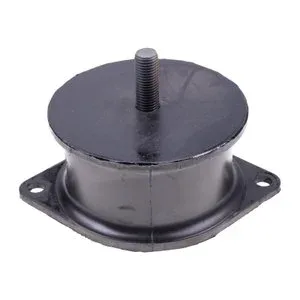
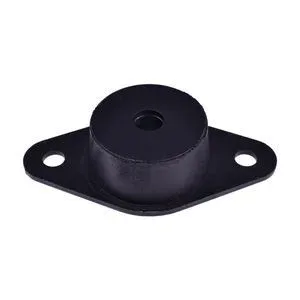
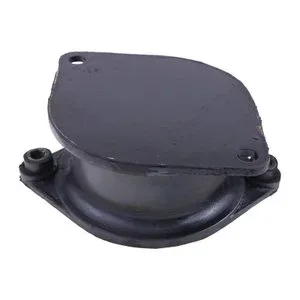
Engine System Matching — Buffers matched by hardness and dimension to the specific Bomag BW engine serial variant before dispatch.
Technical Specifications
| Parameter |
Value |
| Part Number |
06129902, 06129901 |
| Product Type |
Cushion Damper |
| Cross-Reference |
06129901 (reference only), 06129902 (reference only) |
| Machine Fitment |
Bomag BW90, BW100, BW120, BW124, BW141, BW145, BW151, BW160, BW161 AC-4, BW166, BW174, BW177, BW177PHD-3, BW179, BW180, BW184, BW202, BW203, BW211, BW212, BW212D, BW212D-3, BW213, BW213D-3, BW214, BW214D-3, BW216, BW216D-3, BW216D-4, BW217D, BW218, BW219, BW219DH-3, BW219DH-4, BW220, BW225, BW225D-3, BW226, BW266 AD, BW278 AD, BW284 |
| Material |
High-density synthetic rubber compound |
| Shore Hardness |
65±5 durometer |
| Dimensional Tolerance |
±0.2mm |
| Condition |
New Aftermarket |
| Warranty |
3-12 months against manufacturing defects |
| Minimum Order |
1 piece |
| Manufacturing Standard |
ISO 9001 referenced for manufacturing partners |
Application Suitability
| Engine System |
Related Components |
| Vibratory drum isolation assembly |
Engine mounts, vibration exciter bearings, eccentric shaft seals |
| Engine-to-frame vibration damping |
Retaining bolts, isolation bushings, adjacent cushion dampers |
| Vibratory system overhaul |
Complete buffer sets, drum bearings, drive coupling elements |
| Scheduled compaction roller rebuild |
Full engine auxiliary hardware kits, seal sets, fastener assortments |
When One Failed Buffer Signals a System Problem
A single torn cushion damper usually means the remaining buffers are absorbing uneven loads and will follow soon.
In African mining sites where Bomag BW216 rollers operate on abrasive, high-cycle compaction duties, I have repeatedly seen workshops replace only the visibly failed rubber buffer while ignoring the degraded shore hardness on the surrounding set. Within weeks, the new component takes disproportionate vibration energy and splits along the same failure path [NEED_CITE: vibration isolation system degradation patterns in heavy compaction equipment]. The root cause is rarely the buffer itself — it is the accumulated imbalance across the entire vibratory drum isolation assembly, including mating mounts that have compressed beyond their elastic recovery point.
Addressing the cushion damper as part of a system-level overhaul prevents the cycle of repeat failures that keeps machines down longer than a single planned teardown would require.

The Buffer's Position Within the Vibratory Isolation System
The cushion damper sits between the vibratory drum assembly and the roller frame, absorbing high-frequency oscillation before it transmits into structural welds and engine mounts. During a complete rebuild of the vibratory system, these rubber buffers must be evaluated alongside every adjacent isolation component to maintain balanced dampening across the drum axis. Replacing a single unit without verifying the condition of surrounding mounts introduces asymmetric vibration transfer that accelerates wear on the new part and adjacent engine auxiliary components.
Matched Sets and the Cost of Partial Replacement
When one cushion damper in a set has exceeded its service life, the remaining units in that assembly have absorbed comparable vibration cycles and are approaching their own failure threshold. Installing a matched set ensures uniform Shore hardness distribution across all mounting points, preventing the load concentration that causes premature cracking on newer, stiffer buffers [NEED_CITE: elastomeric vibration isolator aging and hardness drift in compaction machinery]. A complete system replacement during scheduled downtime avoids the cascading failures that arise from mixing fresh and fatigued components in the same isolation circuit.
Material Properties and Dimensional Verification
The high-density synthetic rubber compound used in this cushion damper formulation is selected for sustained energy absorption under continuous vibratory loading typical of road construction and mining compaction operations. The specified Shore hardness range of 65±5 durometer balances flexibility for vibration isolation with structural resistance against compression set under static machine weight. Dimensional tolerance held to ±0.2mm ensures the buffer seats properly within the mounting pocket without excessive preload or free play, both of which create failure modes distinct from normal material fatigue.
The Hidden Cost of Skipping the Adjacent Inspection
Replacing the cushion damper without measuring the flatness of the mounting surface or checking the retaining hardware for fatigue cracks leaves the underlying failure cause unaddressed. I have documented cases where a Bomag BW216D-4 returned to the workshop within a month of buffer replacement because the installation surface had developed a distortion pattern that concentrated stress on one edge of the new component [NEED_CITE: vibration-induced structural distortion in roller frame mounting points]. The second teardown costs the same as the first and still fails to resolve the problem if the root cause remains embedded in the surrounding assembly.
Why Procurement Support Matters for System Components
Our production lines and qualified sourced partners operate under unified warranty terms, so whether your cushion damper order includes engine auxiliary items, hydraulic seals, or undercarriage parts, the same quality documentation and coverage applies. We consolidate a complete vibratory system overhaul list into a single shipment under one account, eliminating the coordination burden of multiple suppliers delivering on mismatched schedules. Our technical team confirms buffer variant selection against your specific Bomag serial number and build configuration, cross-referencing superseded numbers to ensure the component you receive matches your machine's actual assembly rather than a catalog generalization.
Documentation & Verification
- Commercial invoice listing each cushion damper variant with corresponding Bomag BW model compatibility
- Cross-reference sheet confirming 06129901 and 06129902 interchange applicability (reference only)
- Dimensional inspection record including Shore hardness verification per production batch
- Warranty terms specifying coverage scope for elastomeric material and bonding integrity
- Packing photographs documenting buffer condition and protective packaging before crate closure
- HS code classification support for customs clearance of rubber vibration isolation components
Installation & Rebuild Sequence
- Clean mounting pockets thoroughly; residual debris creates point loading that cracks the cushion damper edge within operating hours
- Verify mounting surface flatness before installation; distortion from prior vibration damage causes uneven buffer compression
- Install matched buffer sets simultaneously to maintain uniform dampening across the vibratory drum assembly
- Torque retaining hardware to specification; over-tightening preloads the rubber and accelerates compression set failure
- Run initial vibration test at reduced amplitude to confirm balanced isolation before returning to full operational parameters
Technical Inquiry Guidance
To confirm the correct cushion damper variant for your Bomag roller, provide the complete machine model designation, serial number, and any build plate details available. If you are planning a full vibratory system overhaul, share the complete component list so we can verify compatibility across all engine auxiliary items and consolidate them into a single matched shipment.
Frequently Asked Questions
Q: What other components should I inspect or replace alongside the rubber buffer?
A: Inspect all adjacent engine mounts, retaining bolts, and isolation bushings within the vibratory drum assembly. Check mounting surface flatness for distortion caused by prolonged vibration exposure. Replace the complete cushion damper set as a matched group to maintain uniform Shore hardness distribution and prevent asymmetric load transfer that accelerates failure on individual units.
Q: Are both 06129901 and 06129902 needed, or does one supersede the other?
A: These numbers serve as cross-references for identification purposes and may represent different production runs or superseded designations across Bomag BW model generations. Confirm your specific machine serial number and build configuration with our technical team to verify which reference applies to your application before ordering.
Q: How do I confirm the correct buffer variant for my specific Bomag BW sub-model?
A: Provide your machine's complete model designation including the suffix variant, serial number, and photographs of the existing component if the identification plate is legible. Our team cross-references this information against build records to confirm dimensional profile and hardness specification match your machine's original isolation system design.
Q: What system-level conditions cause premature buffer failure?
A: Asymmetric wear across the buffer set, distorted mounting surfaces, fatigued retaining hardware, and imbalance in the vibratory drum assembly all concentrate stress on individual cushion damper units. Addressing only the visibly failed component without investigating these underlying conditions results in repeat failure within a shortened service interval.
Q: Can I receive a matched set with all associated mounts and hardware in one shipment?
A: Yes. We consolidate the complete cushion damper set alongside mating mounts, fasteners, seals, and any additional engine auxiliary components your overhaul requires into a single consignment. This eliminates split deliveries and ensures all system components arrive together with matched documentation and unified warranty coverage.