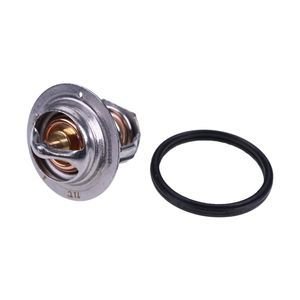
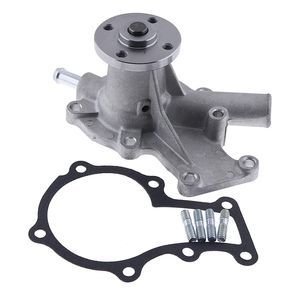
Engine Serial Variants Confirmed — Thermostat 6680512 matched to Kubota D1105 build records and cooling circuit tolerances before dispatch.
Technical Specifications
| Parameter |
Value |
| Part Number |
6680512 |
| Product Type |
Thermostat |
| Cross-Reference |
6674172, 6653948, 3918235 (reference only) |
| Machine Fitment |
Kubota D902, D1105, D1105T, D1305, D1402, V1505, V1703 Tier I, V1902, V2003T Tier I, V2203 Tier I; Bobcat 463, 553, 643, 645, 743, 751, 753, 763, 773, 7753, S150, S160, S175, S185, T190, 337, 341, 425, 428, E25, E26, E27, E27Z, L23, L28, 5600, 1600 |
| Material |
Brass housing, high-temperature silicone rubber seal, precision-calibrated wax element |
| Opening Temperature |
82°C ±1.5°C |
| Pressure Resistance |
up to 1.2 bar |
| Cycle Endurance |
10,000+ open/close cycles |
| Dimensional Tolerance |
±0.1 mm |
| Condition |
New Aftermarket |
| Warranty |
6 months against manufacturing defects |
| MOQ |
1 piece |
| Standards |
ISO 9001 |
Application Suitability
| Engine System |
Related Components |
| Engine Cooling Circuit (Kubota D1105, D1305) |
Water pump, radiator hoses, thermostat housing gasket, coolant temperature sensor |
| Engine Cooling Circuit (Bobcat 753, S185) |
Thermostat housing, upper and lower radiator hoses, coolant expansion cap |
| Overhaul Refresh (Kubota V1505, V2203 Tier I) |
Complete gasket set, water pump assembly, drive belt, coolant |
| Preventive Maintenance (Bobcat E26, E27Z, T190) |
Coolant filter, hose clamps, housing seal, radiator cap |
Why the Thermostat Fails Again Right After a Rebuild
Replacing the thermostat without tracing the root cause of overheating invites a second teardown.
I once watched a workshop in Southeast Asia spend two weeks chasing a repeat overheat on a rebuilt Kubota D1105. The pistons and liners had been matched perfectly, but the cooling passages were still packed with casting sand from the original block. A new Thermostat for Kubota D1105 engine rebuild had been installed, yet the wax element could not respond fast enough to the restricted flow. The failure was not the part — it was the system around it [NEED_CITE: cooling system flush procedures during diesel engine overhaul]. When the thermostat is treated as a standalone fix rather than a symptom point, the same fault returns before the break-in period ends.
Cooling System as an Interconnected Loop
A thermostat sits at the junction between the engine block and the radiator. In Kubota D-series and Bobcat V-series engines, the wax element modulates flow based on coolant temperature, and any restriction upstream or downstream shifts the operating point. When you install a Thermostat for Kubota D1105 engine rebuild, the water pump impeller condition, the radiator core cleanliness, and the hose integrity all determine whether the 82°C ±1.5°C opening point actually holds under load. System-level thinking during an overhaul prevents the scenario where a new thermostat is blamed for a failure that belongs to a collapsed hose or a worn pump impeller.
Dimensional Grades and Prior Rebuild History
Engines that have been through one or more overhauls may carry non-standard clearances in the thermostat housing bore. Previous machining can enlarge the seat, causing a standard-dimension thermostat to sit loose and leak coolant past the flange. Before ordering, check the housing bore diameter against the original specification. The ±0.1 mm dimensional tolerance on this unit assumes a housing that has not been machined beyond factory limits. If the bore has been opened up during a previous repair, an adapter sleeve or housing replacement may be necessary to restore the correct interference fit [NEED_CITE: thermostat housing bore wear limits in small diesel engines].
Interpreting the Specification Sheet
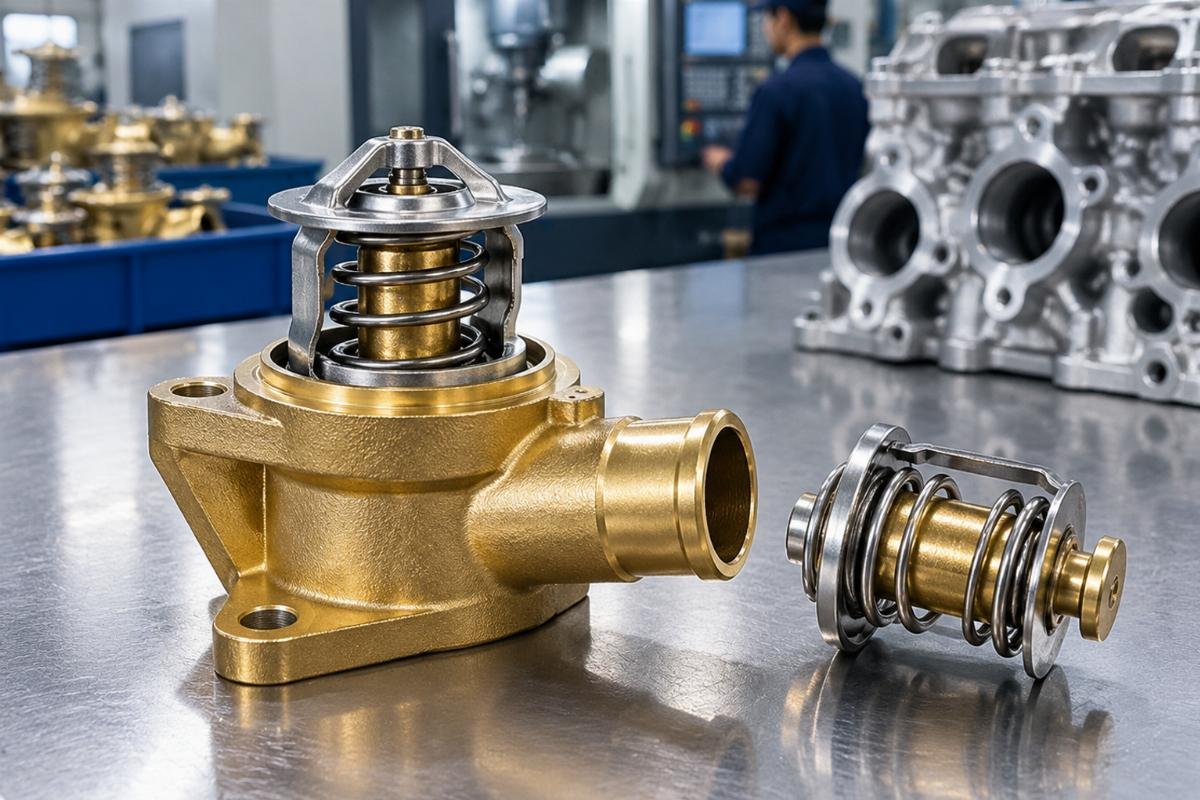
The 82°C ±1.5°C opening temperature is calibrated for the thermal profile of Kubota D902 through V2203 Tier I engines during break-in and steady-state operation. A thermostat that opens too early prevents the engine from reaching efficient combustion temperature, increasing soot loading and oil dilution. One that opens too late risks localized boiling in the cylinder head. The brass housing provides thermal conductivity that allows the wax element to respond to coolant temperature changes without the lag that plastic housings introduce. The high-durometer silicone seal maintains integrity at system pressures up to 1.2 bar across the full operating temperature range, resisting the compression set that causes seepage at the housing joint.
The Cost of Skipping the Root-Cause Check
When a thermostat fails early after installation, the temptation is to blame the part. More often, the underlying cause — a blocked radiator, a slipping drive belt, air trapped in the cooling circuit — was never addressed. The engine runs hot, the replacement thermostat cycles beyond its design endurance, and the workshop faces a second disassembly. This pattern repeats across fleets where overhaul checklists stop at the block and ignore the cooling loop. Diagnosing the failure mode before reassembly saves the cost of a second teardown and the credibility loss that comes with it [NEED_CITE: diesel engine overheating root cause analysis methodology].
What Sets This Supply Source Apart
Production on selected cooling-system lines and qualified sourcing on the remainder means every Thermostat 6680512 ships under the same quality control and six-month warranty. Eight product categories — engine, hydraulic, electrical, undercarriage, cabin, seals, tools, and general spares — allow a complete overhaul list to consolidate under one account. Minimum order is one piece, so a single emergency replacement does not force a bulk commitment. Cross-reference verification covers superseded numbers like 6674172 and 6653948, catching interchange errors that copied tables carry forward. A technical team confirms engine serial variants before dispatch, so a D1105T turbocharged variant is not shipped the same thermostat as a naturally aspirated D1105 without verification.
Documentation & Verification
- Commercial invoice listing part number 6680512 with cross-reference 6674172, 6653948, 3918235 noted as reference only
- Compatibility sheet mapping engine serial ranges to thermostat housing configuration
- Quality inspection record showing opening temperature test and seal pressure result at 1.2 bar
- Warranty terms covering manufacturing defects for six months from dispatch
- Packing photographs confirming individual blister pack and protective foam insert condition
Installation & Rebuild Sequence
- Clean thermostat housing bore to bare metal; verify bore diameter has not exceeded ±0.1 mm tolerance from original spec
- Seat the silicone seal evenly in the housing groove — no stretching or twisting that creates a leak path
- Torque housing fasteners in cross-pattern to manufacturer specification; overtightening distorts the brass flange
- Fill cooling system slowly, bleed air at the highest point, then run to operating temperature and verify thermostat opens at 82°C
- Pressure-test the full cooling circuit to 1.2 bar after cool-down; check for seepage at the housing joint

Request a System-Matched Quote
Send your engine model, serial number, and any prior rebuild history — bore oversizes, housing replacements, or non-standard modifications — so the correct dimensional grade and variant can be confirmed. If you are quoting a full cooling-system overhaul, include the water pump and hose list for matched dispatch.
Frequently Asked Questions
Q: What other cooling-system parts should be replaced when the thermostat fails?
A: Replace the thermostat housing gasket and inspect the housing bore for wear. Check the water pump impeller for erosion, test the radiator cap pressure relief, and flush all hoses. A matched cooling-system kit eliminates the risk of mismatched components arriving from separate suppliers on different lead times.
Q: My engine has been rebuilt once — does the thermostat spec change with an oversized bore?
A: The thermostat itself does not change, but the housing bore may have been machined during a previous rebuild. Measure the bore diameter and compare it to the original specification. If the bore is enlarged, an adapter sleeve or new housing is required to maintain the ±0.1 mm interference fit and prevent coolant bypass.
Q: Do different Kubota D1105 serial ranges use the same thermostat?
A: Serial ranges can differ in housing configuration and coolant passage routing. The D1105T turbocharged variant, for example, may have a different housing port orientation than the naturally aspirated D1105. Provide the full engine serial number so the correct variant is confirmed before dispatch, avoiding a fitment mismatch on the bench.
Q: What caused the original thermostat to fail — how do I prevent repeat failure after rebuild?
A: Common root causes include coolant contamination, air pockets from improper bleeding, and a restricted radiator core. Flush the entire cooling circuit, verify flow through the radiator, and bleed the system at the highest point after refill. Addressing the cause rather than only the symptom prevents a second teardown within the break-in period.