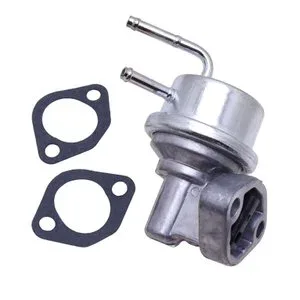
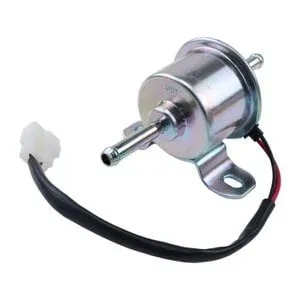
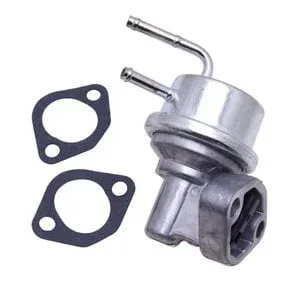
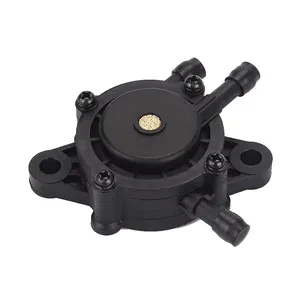
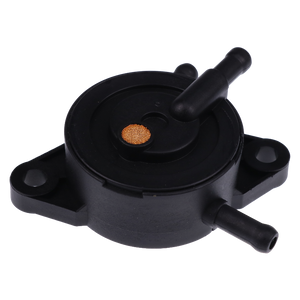
Matched Set Dispatch — Fuel pump, filter, and carburetor gasket verified against the same engine serial variant before shipping.
Technical Specifications
| Parameter |
Value |
| Part Number |
AM132715 |
| Product Type |
Fuel Pump |
| Cross-Reference |
AM132715 (reference only) |
| Machine Fitment |
John Deere 240, 245, 260, 265, 285, 320, 325, 335, 345, GX345, LX172, LX173, LX176, LX178, LX186, LX188, LX277, LX279, LX289, 2243, F725 |
| Condition |
New Aftermarket |
| Housing Material |
Die-cast aluminum |
| Diaphragm Material |
Nitrile rubber (NBR) |
| Fuel Compatibility |
Ethanol-blended fuels up to E15 |
| Operating Temperature Range |
-10°C to +55°C |
| MOQ |
1 piece |
| Standards |
ISO 9001 |
Application Suitability
| Engine System |
Related Components |
| Fuel Delivery (Kawasaki FD501V, FD590V, FD611V) |
Fuel filter, fuel lines, carburetor gasket, tank vent valve |
| Carburetor Feed System |
In-line fuel filter, pulse line, intake manifold gasket |
| Engine Overhaul Fuel Refresh |
Complete gasket set, fuel shut-off solenoid, primer bulb |
Addressing the Root Cause of Fuel Starvation Failures
Replacing only the failed component while leaving degraded lines, clogged filters, or a restricted tank vent in place is a common reason for repeat breakdowns. A systematic review of the entire fuel path is required.
On commercial landscaping sites, a machine returning to service with a new pump often fails again within weeks because the original failure was a symptom, not the source. The diaphragm may have ruptured due to excessive vacuum from a blocked vent, or debris from crumbling fuel lines may have scored the new pump's internal seals shortly after installation [NEED_CITE: fuel system diagnostic procedures for small engines]. Treating the AM132715 Fuel Pump engine rebuild replacement as a single-line item on a repair order ignores the interconnected nature of the delivery system.

The Pump's Role Within the Kawasaki FD Fuel Circuit
This mechanical pump operates on crankcase pressure pulses delivered through a dedicated hose. Its primary function is to draw fuel from the tank and deliver it at a low, consistent pressure to the carburetor float bowl. For the AM132715 Fuel Pump engine rebuild replacement, this means its health is directly tied to the integrity of that pulse line and the condition of the fuel it is moving. If the pulse line is cracked or leaking, the pump receives an inconsistent signal, leading to lean running conditions or flooding that are often misdiagnosed as carburetor issues.
Matching the Kit to the Engine's Service History
Engines that have undergone previous rebuilds or have accumulated significant hours often present hidden variables. The ethanol compatibility of this pump is rated for blends up to E15, but older fuel lines and tank seals installed years ago may have been designed for lower ethanol content and may now be degrading internally. Supplying this pump without verifying the condition of those adjacent components risks introducing particulate contamination directly into the new unit [NEED_CITE: ethanol fuel degradation effects on elastomers]. Our approach is to map the service history to the parts list, ensuring the entire fuel path from the tank pickup to the carburetor bowl is addressed simultaneously.
Interpreting Diaphragm and Sealing Specifications for Field Use
The diaphragm is the critical wear component, and its Nitrile rubber (NBR) construction is selected for its balance of flexibility and resistance to petroleum-based fuels. The operating temperature range of -10°C to +55°C reflects the environmental envelope for typical turf and grounds maintenance equipment. The die-cast aluminum housing provides dimensional stability and heat dissipation, but its sealing surface flatness is paramount; any warping or scoring on the mating surfaces will lead to internal leakage between the fuel and pulse chambers, a failure mode that is invisible externally but results in immediate performance loss. These material and tolerance choices directly dictate the pump's ability to maintain consistent fuel delivery under the cyclic loading of engine operation.
The Cost of Overlooking Systemic Fuel Contamination
Installing a new pump onto an engine with a fuel tank full of varnish deposits or microbial growth guarantees a premature callback. The 120 μm inlet filter mesh on this unit will quickly clog if introduced to a contaminated system, causing fuel starvation that mimics a defective pump [NEED_CITE: microbial contamination in gasoline fuel storage]. The diagnostic time spent chasing this secondary failure, followed by the labor to remove and replace the pump a second time, far exceeds the cost and effort of a comprehensive fuel system flush and filter replacement during the initial repair.
Supply Chain Rationale for System-Level Procurement
We maintain production control on selected component lines and source the remainder from qualified manufacturing partners, with both streams carrying identical QC and warranty terms. For this fuel pump, that means the NBR diaphragm formulation and housing casting are verified against the same performance criteria. Our eight-category inventory allows a complete engine overhaul kit—including this pump, matching gaskets, and filtration components—to ship under a single account with consolidated documentation. Technical support is available to confirm the exact engine serial variant, ensuring the mounting pattern and port orientation match your specific Kawasaki or John Deere application before the order is finalized.
Documentation & Verification
- Commercial invoice and packing list detailing pump and all associated fuel system components.
- Part compatibility sheet confirming engine serial variant fitment (reference only for OEM cross-reference).
- Quality inspection record covering diaphragm flex cycle verification and housing flatness check.
- Warranty terms specific to manufacturing defects for the fuel pump and related items.
- Packing photographs showing anti-static foam cushioning and retail box condition prior to dispatch.
Installation & Rebuild Sequence
- Verify pulse line integrity and crankcase port condition before connecting the new AM132715 pump.
- Flush fuel tank and replace all flexible fuel lines if internal degradation is suspected.
- Confirm mounting bolt center-to-center distance aligns with the engine block flange.
- Prime the system and check for leaks at all connections before installing the air cleaner assembly.
- Run the engine at idle to verify consistent fuel delivery before applying load.
Requesting a Complete System Quote
To ensure accurate fitment and avoid delays from variant mismatches, please provide the full engine model and serial number from the identification tag. If the tag is unreadable, a clear photograph of the old pump's casting and port orientation, along with the machine model, allows our technical team to verify the correct configuration. We can then generate a consolidated quote for the pump, matching gaskets, filters, and any other fuel system components required for your specific engine build.
Frequently Asked Questions
Q: What other fuel system components should be replaced together with this pump?
A: For a reliable repair, the fuel filter, all flexible fuel lines, and the carburetor mounting gasket should be replaced concurrently. The pulse hose connecting the pump to the crankcase is also a common failure point that causes symptoms identical to a faulty pump. Addressing these items as a single kit prevents secondary failures and repeat labor costs from degraded components contaminating or starving the new unit.
Q: Do different engine serial numbers within the same model family use different pump variants?
A: Yes, mounting configurations and port orientations can change between production runs of the same engine model family. Providing the complete engine serial number, not just the model designation, is essential. This allows us to cross-reference the specific casting and port layout to ensure the replacement pump physically aligns with your engine block without requiring modification to the fuel lines.
Q: Can ethanol-blended fuel cause premature pump failure if other seals are not upgraded?
A: Ethanol-blended fuels can accelerate the degradation of older elastomers not formulated for such blends. While this pump's NBR diaphragm is compatible up to E15, the fuel lines, tank seals, and carburetor gaskets must be rated to the same standard. If the rest of the system is not updated, crumbling seals will introduce debris that rapidly clogs the new pump's inlet filter and damages the diaphragm.
Q: How do I confirm the pump is the actual failure point versus a clogged filter or venting issue?
A: Before replacement, disconnect the fuel line at the carburetor and crank the engine; a strong, pulsing stream indicates the pump is functional. A weak or absent stream points to a faulty pump, a clogged in-line filter, or a restricted tank vent. Always verify the pulse hose is intact and delivering crankcase pressure, as a leak here will prevent the pump from operating correctly, mimicking an internal failure.