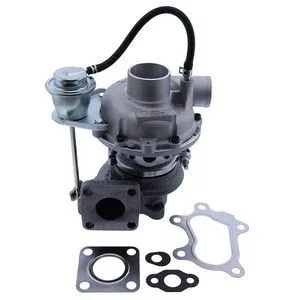
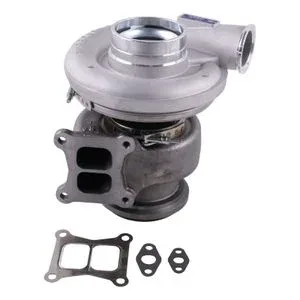
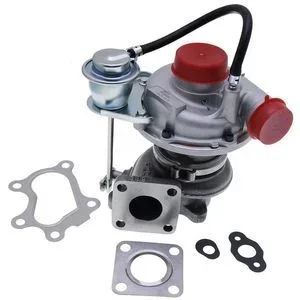
Complete Overhaul Kit — Turbocharger, oil-feed seals, and exhaust gaskets ship together so a D34 rebuild stays a one-time job.
Technical Specifications
| Parameter |
Value |
| Part Number |
7256748 |
| Product Type |
Turbocharger |
| Cross-Reference |
7256748REM, 150105-00344 series, 5303-970/988 series (for identification purposes) |
| Machine Fitment |
Bobcat A770, S740, S750, S770, S850, T740, T750, T770, T870 |
| Turbo Model |
K03 |
| Engine Compatibility |
Doosan D34 (74-100 HP) |
| Condition |
New Aftermarket |
| Warranty |
3-12 months against manufacturing defects |
| Manufacturing Standard |
ISO-certified production |
Application Suitability
| Engine System |
Related Components |
| Intake and Forced Induction |
Intake manifold gaskets, air filter element, boost pressure sensor |
| Lubrication Feed to Turbo |
Oil supply line, oil return hose, crankcase breather, oil filter |
| Exhaust Upstream of Turbo |
Exhaust manifold gasket, heat shield fasteners, exhaust clamp |
| Emission After-Treatment |
DPF differential pressure sensor, exhaust temperature sensor |
Why a Turbo Failure Is Rarely Just a Turbo Failure
Replacing the K03 7256748 without diagnosing the oil-feed circuit almost guarantees a repeat failure.
In the workshop I worked in around the Pearl River Delta, the most frustrating comeback was a Doosan D34 that burned through a fresh turbo within weeks. The root cause was never the turbo itself — it was carbon buildup in the oil supply line and a cracked exhaust manifold flange that let hot gas wash over the bearing housing. The Turbocharger K03 7256748 sits at the convergence of three systems: pressurized oil feed, high-temperature exhaust gas, and filtered intake air. A fault in any one of those systems will destroy a new unit regardless of build quality. [NEED_CITE: common turbo failure root causes in mid-range diesel engines]
When an engine rebuild shop receives a failed K03 unit, the first step is reading the failure signature. Shaft play with blue discoloration on the bearing housing points to oil starvation. Compressor wheel erosion with intact bearings suggests an intake leak upstream. Turbine-side carbon packing with a scored journal indicates exhaust back-pressure or a blocked oil return. Each pattern demands a different set of companion parts, which is why sourcing the turbocharger as part of a system-level kit matters far more than the turbo unit alone.

The System This Turbocharger Lives Inside
The Doosan D34 is a compact four-cylinder diesel that runs high combustion pressures in a small displacement block. The K03 turbocharger is sized to deliver boost across a narrow operating band, which means the turbine and compressor wheels spin at sustained high RPM whenever the engine is under load. This Turbocharger K03 7256748 engine rebuild replacement must match the original port orientation, oil-line connector type, and exhaust flange bolt pattern specific to the D34 variant installed in Bobcat loaders and skid steers.
The oil-feed circuit deserves particular attention during any D34 turbo replacement. The supply line runs from the engine block gallery through a restrictor orifice before reaching the turbo bearing housing. That orifice can become partially blocked by sludge or metallic debris from normal engine wear. A restricted oil feed starves the floating bearing at high shaft speed, generating the heat that warps the shaft and scores the journal surface. Shops that replace the turbo without flushing the oil gallery and swapping the supply line are leaving the original failure mechanism in place.
Engine Serial Variants and Why the Same Number Fits Differently
Doosan produced the D34 across multiple build generations, and the turbo mounting interface shifted between early and late serial ranges. The exhaust manifold flange may carry a four-bolt or five-bolt pattern depending on production year. The oil return port orientation can rotate between horizontal and angled configurations. These differences are not captured in the part number alone — the cross-reference list including 150105-00344C, 150105-00344E, and 150105-00344G reflects variant supersessions that correspond to physical interface changes.
When sourcing this turbocharger for an engine rebuild, confirming the D34 engine serial number is the single most important step before committing to an order. A serial number allows verification of the port layout and bolt pattern against build records. Without that confirmation, the risk is receiving a unit that bolts to the manifold but has the oil return pointing downward instead of outward, forcing a field modification that compromises the gasket seal. [NEED_CITE: engine serial variant identification for turbocharger fitment verification]
Compressor Balance, Bearing Specification, and Thermal Load
The K03 turbocharger in this application uses a journal bearing design where the shaft floats on a film of pressurized oil. Balancing the compressor and turbine wheels to tight tolerances is essential because even minor imbalance at the operating speeds of a D34 turbo creates harmonic vibration that accelerates bearing wear. Each Turbocharger K03 7256748 we supply undergoes component balancing and assembly-level verification before packing.
The exhaust gas temperature on a loaded D34 running in a Bobcat S750 or T770 can sustain levels that challenge standard bearing materials. The bearing specification in this unit is matched to those continuous thermal loads, using materials rated for the temperature envelope measured at the turbine housing inlet. The turbine wheel itself is cast from a high-nickel alloy selected to resist thermal fatigue cracking under repeated heat-up and cool-down cycles typical of loader duty, where the engine swings between idle and full boost many times per hour.
The Cost of Skipping the System Check
Every rebuild shop has seen the pattern: a fresh turbo installed on a D34 with a coked oil return line. The new unit runs clean for a few hundred hours, then the restricted return causes oil to pool in the bearing housing, leaking past the turbine seal and into the exhaust. The machine comes back with blue smoke and a warranty dispute. The labor to remove and reinstall the turbo a second time typically exceeds the cost of the oil line, gaskets, and seal kit that would have prevented the problem.
Shops that treat the turbocharger as an isolated component rather than a system node accumulate hidden costs through repeat teardowns, customer frustration, and eroded reputation. The parts cost difference between a bare turbo and a turbo plus matched installation kit is marginal compared to a second round of diagnostic labor, oil refill, and machine downtime. [NEED_CITE: total cost of repeat turbo replacement versus system-level overhaul approach]
How This Supply Chain Supports a Complete Rebuild
Our selected production lines and qualified sourced partners operate under the same QC protocol and warranty terms, so whether the turbocharger or the companion gaskets come from our own facility or a certified partner, the coverage is identical. Eight product categories under one account means the K03 turbo, exhaust manifold gasket, oil-feed line seals, and boost sensor all travel on a single commercial invoice with one freight consignment.
Minimum order starts at one piece for emergency rebuilds, yet volume pricing applies when stocking for a fleet service department. The Guangzhou warehouse holds common D34 turbocharger assemblies for immediate dispatch, while less common serial variants are identified from engine plate photographs when the original nameplate is painted over or illegible. Cross-reference verification covers the full supersession chain from 7256748 through the 5303-970 and 5303-988 series, catching errors that copied reference tables tend to carry forward.
Documentation & Verification
- Commercial invoice listing turbocharger, gasket set, and seal kit as one line-item group
- Cross-reference sheet mapping 7256748 to all superseded numbers, marked reference only
- Balance test record confirming compressor and turbine wheel assembly verification
- Pre-shipment dimensional check on exhaust flange bolt pattern and oil port orientation
- Warranty terms covering manufacturing defects with installation-consequence provisions
- Packing photographs showing turbo unit and companion kit sealed together before dispatch
Installation & Rebuild Sequence
- Flush the D34 oil gallery and replace the turbo supply line before mounting the K03 unit
- Verify oil return port orientation against the engine block casting before tightening flange bolts
- Torque exhaust manifold nuts to specification in sequence to avoid flange distortion
- Prime the turbo bearing housing with clean oil through the feed port before first engine start
- Run the D34 at idle for several minutes to establish full oil pressure before applying load
- Check boost pressure and inspect for exhaust leaks at the turbine flange during initial warm-up
Requesting a Matched Kit for Your D34 Rebuild
Send the D34 engine serial number along with any previous rebuild history so we can confirm the correct flange pattern and port configuration. If the engine plate is missing or unreadable, a photograph of the existing turbo mounting face and oil return connection is usually sufficient for identification. Tell us whether you need the turbocharger alone or the complete installation kit with gaskets, oil-feed seals, and exhaust hardware, and we will confirm the matched component list for your specific D34 build.
Frequently Asked Questions
Q: What other engine components should be inspected when replacing the K03 turbocharger?
A: The oil supply line and return hose should be replaced or flushed, the exhaust manifold gasket must be checked for leaks, and the crankcase breather should be inspected for restriction. Air filter condition and boost pressure sensor accuracy also affect turbo longevity. Addressing these together prevents the upstream fault from destroying the new unit.
Q: Does my D34 engine serial variant require a specific turbo port configuration?
A: Yes. Doosan D34 production spanned multiple build generations with changes to the exhaust flange bolt pattern and oil return port angle. Providing the engine serial number allows us to confirm whether your variant uses the early or late mounting configuration before shipment.
Q: Can I order the turbocharger together with gaskets and oil-line seals as one kit?
A: We supply the K03 turbocharger alongside matched exhaust manifold gaskets, oil-feed line seals, and installation hardware in a single consignment. This system-level approach ensures all components arrive together and share the same warranty coverage under one account.
Q: How do I verify which cross-reference number applies to my machine?
A: The numbers 150105-00344 and 5303-970/988 series represent supersessions and variant designations. Send your existing turbo part number, engine serial, or a photograph of the data plate, and we cross-check against build records to confirm the correct match for your specific Bobcat loader.
Q: What testing documentation confirms the turbo passed quality checks?
A: Each unit ships with a balance test record and a dimensional inspection report covering flange bolt pattern, port orientation, and shaft end-play measurement. These documents confirm the turbocharger met performance and fitment standards before packing for dispatch.