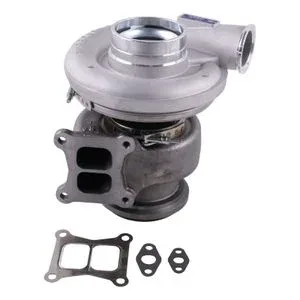
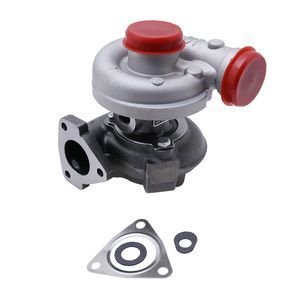
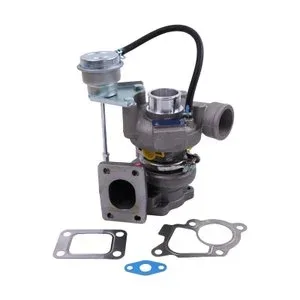
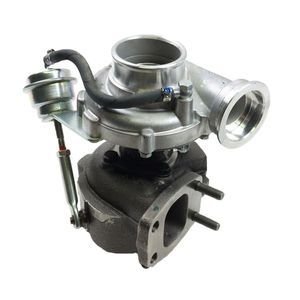
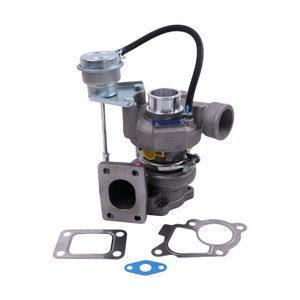
Engine Serial Variants Confirmed — Every HX55 turbocharger 3590044 for Cummins M11 ISM engine rebuild is matched against your specific engine serial and prior overhaul history before dispatch.
Technical Specifications
| Parameter |
Value |
| Part Number |
3590044 |
| Product Type |
Turbocharger |
| Cross-Reference (reference only) |
3536995, 3536996, 590045, 4033813, 178923, 2834419, 4046031, 4033813H, 3803938NX, 178923R, 2080237R, 478923, OTR2080237R |
| Machine Fitment |
2007-2012 Truck, Bus with ISM, ISME, M11 Engine; 1999-2009 Truck Bus, Truck Delta Alpha Plus with M11 Engine |
| Turbo Model |
HX55-E9861L/H22E11D, HX55, S400, HX55-D98K66RL/C86L90PH22EX |
| Condition |
New Aftermarket |
| Warranty |
12-Month |
| Maximum Exhaust Temperature |
900°C |
| Quality Standard |
ISO 9001 |
Application Suitability
| Engine System |
Related Components |
| Intake and Exhaust |
Manifold gaskets, exhaust studs, intake boots, air filter elements |
| Lubrication Feed |
Oil supply line, oil drain gasket, turbo bearing feed restrictor |
| Boost Control |
Wastegate actuator, boost pressure sensor, charge air cooler seals |
| Emission Management |
EGR cooler gaskets, exhaust temperature sensors, DPF differential pressure lines |
Why Turbo Swaps Fail Months After an M11 or ISM Rebuild
A replacement turbo that ignores the root cause of the previous failure turns a planned overhaul into a repeat teardown.
In mining and heavy-haul operations, I have pulled HX55 turbos off Cummins M11 and ISM engines with carbon-coked bearing housings and heat-blued compressor wheels, engines that had fresh turbos installed barely a season earlier. The pattern is almost always systemic: contaminated oil feed lines, restricted drain paths, or exhaust backpressure from a failing DPF that the initial repair never addressed [NEED_CITE: common root causes of premature turbocharger failure in heavy-duty diesel engines]. When the HX55 turbocharger 3590044 for Cummins M11 ISM engine rebuild goes in without a full intake-exhaust-lubrication audit, the new unit inherits the same hostile environment that destroyed the last one. The cost is not just a second turbo; it is the second teardown, the second set of gaskets, the second round of machine downtime.

Matching the Turbo to Your Exact Engine Build Variant
The Cummins M11, ISM, and ISME families share displacement but differ in calibration, exhaust routing, and boost targets across production years. A turbo cartridge calibrated for an early M11 mechanical fuel system may physically bolt to a later ISM with CM870 electronics yet deliver incorrect boost pressure, triggering derate codes or excessive exhaust gas temperatures. Before confirming an order, the engine serial number and any prior rebuild records must be cross-checked so the correct HX55 variant ships, one that aligns with your engine's wastegate crack pressure and compressor map.
Addressing the Oil Circuit and Exhaust Backpressure Together
Turbo bearing life depends on clean oil at adequate volume and unrestricted exhaust flow downstream. On site, I have seen ISM engines where the oil supply line had internal varnish buildup starving the center bearing, and others where a partially blocked DPF pushed exhaust backpressure high enough to choke the turbine [NEED_CITE: relationship between exhaust backpressure and turbocharger bearing load in diesel engines]. Replacing the turbo without renewing the oil feed line, checking the drain path, and measuring post-turbine backpressure leaves the root fault active. The overhaul plan should treat the HX55 turbocharger 3590044 for Cummins M11 ISM engine rebuild as one node in a connected system, pairing it with fresh gaskets, a verified oil line, and a confirmed exhaust path.
Reading the Specification Sheet for Real Operating Conditions
The listed 900°C maximum exhaust temperature defines the thermal ceiling the turbine housing and center bearing can tolerate before material degradation accelerates. In long-haul trucking or continuous mining duty, exhaust temperatures can approach this limit during sustained high-load operation, making it essential that the charge air system, fuel injection timing, and coolant circuit all function within specification [NEED_CITE: diesel engine exhaust temperature management under continuous heavy load]. The HX55 model variants listed carry different compressor wheel trim and turbine A/R ratios; selecting the correct variant ensures the compressor operates near its peak efficiency island at your typical engine speed and load, rather than running in surge or choke margins that shorten bearing and seal life.
The Hidden Cost of Skipping the System Check
When a workshop installs a new turbo and reuses the old oil supply line, carbon particles already lodged in that line feed directly into the fresh bearing within the first hours of operation. The result is scoring that mimics a warranty defect but actually stems from the unaddressed circuit. Repeat failures also erode distributor credibility when the end customer blames the part rather than the process. A system-level approach, replacing the oil line, verifying drain flow, and confirming exhaust integrity, eliminates this cycle and protects both the component and the business relationship [NEED_CITE: best practice checklist for turbocharger installation on heavy-duty diesel engines].
How Sourcing Here Supports a System-Level Overhaul
Production on selected turbocharger lines happens within our own facility, while sourced units from qualified ISO 9001 partners carry identical quality control and 12-month warranty terms, so one account covers the entire engine job. Eight product categories mean the HX55 turbocharger 3590044 for Cummins M11 ISM engine rebuild ships alongside the manifold gaskets, oil lines, seal kits, and filters the job requires in a single consignment. Minimum order is one piece for emergency rebuilds, and Guangzhou warehouse stock enables fast dispatch on common variants. Part identification works from a number, a machine model, or a photograph of a worn nameplate, and cross-reference verification covers superseded and alternate numbers across the M11-to-ISM transition. A sample unit can be supplied for fitment confirmation before a fleet commits to bulk quantities.
Documentation & Verification
- Commercial invoice listing each turbo variant with corresponding engine serial range for customs clearance.
- Cross-reference sheet mapping OEM interchange numbers (reference only) to the shipped turbo model.
- Dimensional inspection record covering flange bolt pattern, oil port orientation, and turbine housing A/R.
- Twelve-month warranty terms documented per serial-numbered unit.
- Packing photographs showing internal desiccant and impact protection before crate closure.
- HS code and export documentation support for destination-country compliance.
Installation & Rebuild Sequence
- Flush oil supply and drain lines before connecting to the new HX55 center bearing to prevent startup scoring.
- Verify manifold stud condition and replace if stretched, ensuring even gasket clamping across all ports.
- Pre-lube the turbo bearing with clean engine oil and crank the engine without firing to build oil pressure.
- Check wastegate actuator rod length and crack pressure against the engine calibration specification.
- Run the engine at idle for several minutes post-install to stabilize oil temperature before loading.
What We Need to Match Your Engine Precisely
Provide the engine model designation, serial number, and any known rebuild history including bore oversize or prior turbo replacements. If the nameplate is illegible, a photograph of the existing turbo data plate or the engine block casting numbers allows our technical team to confirm the correct variant and the associated gasket and line components your overhaul requires.
Frequently Asked Questions
Q: What other engine components should be replaced when installing a new turbocharger?
A: Oil supply lines, drain gaskets, manifold studs, and intake boots should be renewed during every turbo swap on M11 and ISM engines. Reusing old lines risks contaminating the fresh bearing within hours. We supply these components alongside the turbocharger so the entire intake-exhaust-lubrication circuit is addressed in one shipment.
Q: How do engine serial variants affect turbocharger fitment on M11 vs ISM?
A: The M11 and ISM families share displacement but differ in boost calibration, wastegate settings, and exhaust routing across production years. A turbo built for an early mechanical M11 may physically mount on a later ISM yet deliver incorrect boost. We verify your engine serial against the variant table to ship the correct configuration.
Q: What system faults cause premature turbocharger failure after rebuild?
A: Restricted oil feed lines, clogged drain paths, excessive exhaust backpressure from a failing DPF, and contaminated charge air are the most common root causes. Replacing the turbo without diagnosing these faults exposes the new unit to the same destructive conditions that killed the previous one.
Q: Does the overhaul kit include all gaskets and fasteners for turbo installation?
A: Kit contents vary by engine variant and rebuild scope. We provide a detailed contents list before you commit, and can add any missing gaskets, studs, or seal rings to the same consignment so nothing arrives late from a second supplier.
Q: How to confirm engine model and serial number when the nameplate is worn?
A: Send a photograph of the engine block casting numbers, the existing turbo data plate, or the vehicle chassis plate. Our technical team cross-references these against production records to identify the correct engine variant and turbo model, even when the original nameplate is painted over or corroded beyond reading.