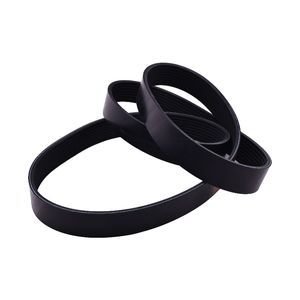
Matched Set Shipment — every CVT belt dispatch verified against KAF620 variant and paired with adjacent clutch components when requested.
Technical Specifications
| Parameter |
Value |
| Part Number |
59011-1077 |
| Product Type |
Belt |
| Cross-Reference |
59011-1077 (reference only), 590111077 (reference only), 59011-1053 (reference only), 590111053 (reference only) |
| Machine Fitment |
Kawasaki Mule 2010 KAF540, Mule 2020 KAF540, Mule 2030 KAF540E, Mule 3000 KAF620G, Mule 3010 KAF620E 4x4, Mule 3020 KAF620F, Mule 3010 KAF620H 4x4, Mule 3010 KAF620J 4x4 Trans, Mule 4000 KAF620P9F/PAF, Mule 4010 4x4 KAF620M9F/MAF, Mule 4010 Trans4x4 KAF620RAFA/SAF, Mule 4000 KAF620PBF, Mule 4010 4x4 KAF620MBF, Mule 4010 Trans4x4 KAF620RBF/RBFA, Mule 4010 4x4 KAF620MCF, Mule 4010 Trans4x4 KAF620RCF/RCFA, Mule 4010 4x4 KAF620MDF, Mule 4010 Trans4x4 KAF620RDF/RDFA, Mule 4000 KAF620PEF, Mule 4010 4x4 KAF620MEF, Mule 4010 Trans4x4 KAF620REF/REFA/SEF, Mule 4000 KAF620PFF, Mule 4010 4x4 KAF620MFF, Mule 4010 Trans4x4 KAF620RFF/SFF, Mule 4000 KAF620PGF, Mule 4010 4x4 KAF620MGF/TGF, Mule 4010 Trans4x4 KAF620RGF/SGF/VGF, Mule 4000 KAF620PHF, Mule 4010 4x4 KAF620MHF/THF, Mule 4010 Trans4x4 KAF620RHF/SHF/VHF, Mule 4000 KAF620PJF, Mule 4010 Trans4x4 KAF620RJF/XJF/SJF/VJF, Mule 4000 Trans KAF620WKF, Mule 4010 4x4 KAF620MKF, Mule 4000 KAF620PLF/WLF, Mule 4010 4x4 KAF620MLF, Mule 4010 Trans4x4 KAF620RLS/SLF/SLS, Mule 4000 KAF620PMFNN/WMFNN, Mule 4010 4x4 KAF620ZMFNN, Mule 4010 Trans4x4 KAF622AMFNN/SMFNN, Mule 4000 KAF620PNFNN, Mule 4010 4x4 KAF620MNFNN/ZNFNN, Mule 4010 Trans4x4 KAT620BNFNN/CNFNN/DNFNN, Mule 4000 KAF620PPFNN, Mule 4010 4x4 KAF620MPFNN/ZPFNN, Mule 4010 Trans4x4 KAT620BPFNN/CPFNN/DPFNN |
| Condition |
New Aftermarket |
| Warranty |
3–12 months against manufacturing defects |
| Sourcing Standard |
ISO-certified factory sourcing |
Application Suitability
| Engine System |
Related Components |
| CVT primary drive |
Primary clutch sheave, drive clutch rebuild kit, sheave bushings |
| CVT secondary driven |
Secondary clutch assembly, driven sheave bearings, return spring |
| Engine-to-transmission coupling |
Engine mounts, alignment shims, crankshaft output seal |
| Cooling and ventilation |
CVT cooling duct, intake filter, clutch housing ventilation screen |
| Preventive maintenance cycle |
Tension inspection gauge, clutch puller tool, system service seals |
Why the Engine System Dictates Belt Life, Not Just Mileage
A CVT belt fails because something else in the drivetrain failed first.
In mining camps across Latin America, I pulled apart dozens of UTVs where the owner swore the belt just "snapped." Almost every time, the real story was hidden in the clutch sheaves or the engine mount bolts. The Drive Belt 59011-1077 engine CVT belt replacement sits at the center of a system that transfers crankshaft output through variable-ratio sheaves to the final drive. When a sheave face wears unevenly or an engine mount sags, the belt tracks off-center and sheds material within hours. Replacing only the belt without addressing root causes means the next failure is already counting down [NEED_CITE: CVT system root-cause failure analysis methodology for utility vehicles].
CVT Belt Interaction with KAF620 Engine Variants
The KAF540 and KAF620 engine families use different primary clutch geometries, which means belt width and profile must match the sheave groove dimensions of your specific variant. A belt that rides too high in the sheave will slip under load, while one that seats too deep creates excessive friction heat at low RPM. This Drive Belt 59011-1077 engine CVT belt replacement is dimensioned for the KAF620-series primary and secondary clutch assemblies across Mule 3000, 3010, 4000, and 4010 platforms.
Superseded Numbers and Production-Year Variants
The reference number 59011-1053 (cross-reference only) was superseded by 59011-1077 across most Mule production years, but certain early-build KAF620G and KAF620E engines retain the earlier clutch geometry. Before ordering, verify your engine code and build year against the service manual. Installing a superseded belt on a mismatched clutch causes rapid edge wear and premature delamination. We cross-check your reported engine variant against known production splits before confirming the correct part [NEED_CITE: Kawasaki Mule CVT belt supersession and production year fitment data].
Belt Profile, Tensile Construction, and Sheave Contact Mechanics
The cord body inside a CVT belt determines how much tensile load it carries before stretching beyond the sheave tracking range. Aramid or polyester tensile cords embedded in a rubber compound must maintain dimensional stability across the temperature range generated inside a sealed CVT housing. The sidewall angle of the belt must match the sheave face angle precisely — even a small deviation causes the belt to ride at the wrong depth, altering the effective gear ratio and forcing the secondary clutch to compensate. This Drive Belt 59011-1077 engine CVT belt replacement is manufactured to match the OEM-specified profile angle and cord tension for the KAF620 clutch system, ensuring the primary and secondary sheaves shift through their full ratio range without binding or hesitation.

The Cost of Skipping Root-Cause Inspection
Replacing the belt without checking clutch face wear, sheave bushing play, and engine mount condition turns a single-component repair into a repeating cycle. Each repeat failure means another teardown, another belt, and more machine downtime that compounds across a fleet. On a mine site running multiple Mule units for utility transport, this pattern drains maintenance hours faster than any single catastrophic breakdown [NEED_CITE: fleet-level CVT maintenance cost accumulation in utility vehicle operations].
How We Supply This Belt Differently
Our own production lines and qualified sourced supply operate under one account and one warranty, so whether your order is one belt or fifty, the QC terms are identical. Eight product categories mean that when you need clutch rebuild components, sheave bushings, and drive system seals alongside this belt, everything ships in a single consignment from our Guangzhou warehouse. Minimum order starts at one piece for emergency replacements. Our technical team confirms engine variant compatibility from your machine model, engine serial number, or a photograph of the old belt markings. Cross-reference verification covers both current and superseded numbers to catch production-year mismatches before dispatch. Sample supply is available for fitment confirmation before you commit to bulk quantities.
Documentation & Verification
- Commercial invoice listing each belt variant by engine code and production year
- Cross-reference sheet mapping 59011-1077 and superseded numbers (reference only)
- Dimensional inspection record confirming belt width, length, and sidewall angle
- Warranty terms covering manufacturing defects for 3–12 months
- Packing photographs showing belt condition before carton sealing
- HS code and customs documentation for cross-border shipment
Installation & Rebuild Sequence
- Inspect primary and secondary sheave faces for grooving before installing the new belt
- Verify sheave bushing play is within service limits to prevent belt mistracking
- Confirm engine mount condition and alignment to maintain correct clutch spacing
- Seat the belt fully in the primary sheave groove and rotate the secondary by hand
- Run the engine at idle for initial belt seating before applying load
- Recheck belt tracking after the first operating cycle and adjust if necessary
Confirm Your Engine Variant Before Ordering
Provide your engine model code (KAF540, KAF620, or KAT620), production year, and any markings from your existing belt. If the nameplate is unreadable, send a photograph of the old belt or the clutch housing. We will cross-reference your information against known variant splits and confirm the correct belt before dispatch.
Frequently Asked Questions
Q: What other CVT components should I inspect when replacing the drive belt?
A: Check the primary and secondary sheave faces for uneven wear or grooving, verify sheave bushings for axial play, and inspect engine mounts for sag or cracking. Worn sheaves or misaligned mounts will cause a new belt to track incorrectly and fail prematurely. Addressing these components together prevents repeat failures and extends the service interval of the entire CVT system.
Q: Does 59011-1077 replace 59011-1053 on my older Mule model?
A: The number 59011-1053 (cross-reference only) was superseded by 59011-1077 on most Mule models, but certain early-production KAF620G and KAF620E engines may retain the earlier clutch geometry. Confirm your engine code and build year so we can verify whether the superseded belt or a variant-specific part is required for your machine.
Q: How do I confirm the correct belt for my specific KAF620 engine variant?
A: Provide the full engine model code from your nameplate — such as KAF620M9F or KAF620RAFA — along with the production year. If the plate is worn or painted over, a photograph of the old belt markings or the clutch housing casting number allows us to cross-check against production records and confirm the exact belt variant needed.
Q: What causes premature CVT belt failure beyond normal wear?
A: Common root causes include worn sheave faces that create uneven belt tracking, degraded engine mounts that alter clutch spacing, contaminated CVT housing ventilation, and misaligned secondary clutch return springs. Any of these conditions forces the belt to operate outside its designed ratio range, generating excess heat and accelerating cord degradation beyond normal service life expectations.
Q: Can I order a sample belt to verify fitment before placing a bulk order?
A: Yes. We supply single-piece samples so you can confirm physical fitment on your specific engine variant before committing to larger quantities. This is especially useful when dealing with older Mule models where production-year splits may affect clutch geometry. Contact us with your engine details to arrange a sample dispatch.