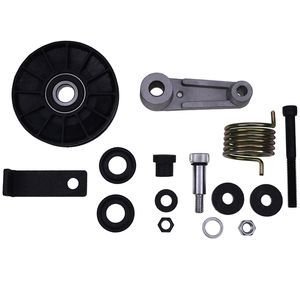
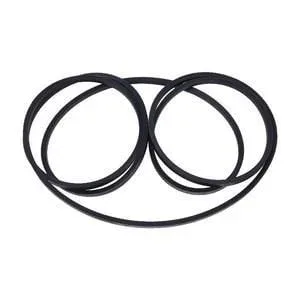
Matched Set Shipped — Belt tensioner and pulley checked against engine serial before dispatch.
Technical Specifications
| Parameter |
Value |
| Product Type |
Belt |
| Cross-Reference |
6667322 (reference only) |
| Machine Fitment |
653, 751, S130, S150, S160, S175, S185, S205, T140, T180, T190 |
| Belt Type |
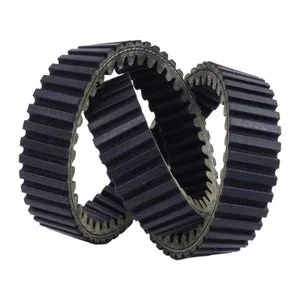
Flat, cogged drive belt with 3 grooves |
| Backing Construction |
Fiber-loaded backing with additional cord support |
| Operating Condition |
New Aftermarket |
| Warranty |
3-12 months against manufacturing defects |
| Quality Standard |
ISO |
Application Suitability
| Engine System |
Related Components |
| Hydraulic Main Pump Drive |
Belt tensioner, idler pulleys, main pump coupling |
| Engine Accessory Drive |
Alternator belt, fan belt, crankshaft pulley |
| Skid Steer Power Transmission |
Hydraulic pump, drive motor, final drive components |
System Faults That Destroy New Belts
A main pump drive belt engine replacement often fails prematurely not because the belt was defective, but because the system fault that destroyed the original belt was never corrected. Replacing the belt without inspecting the tensioner, pulleys, and pump alignment is treating a symptom, not the cause.
In our Shandong workshop, I have seen loaders return within weeks of a belt change. The worn tensioner bearing was still seizing intermittently, creating shock loads that shredded the new belt's cord reinforcement. [NEED_CITE: belt drive system alignment and tension diagnostic procedures]. A fiber-loaded backing with cord support handles continuous load well, but it cannot survive a misaligned pulley or a seized tensioner. Engine serial variants across Bobcat l*ng or tensioner configurations, meaning the correct variant must be confirmed before installation.

Engine Accessory Drive System Membership
This main pump drive belt engine replacement is not a standalone component. It belongs to the engine accessory belt drive system that transfers rotational power from the crankshaft to the hydraulic main pump. When this belt fails, the loader loses all hydraulic function — no lift, no tilt, no drive.
The flat cogged design with 3 grooves must match the driven pulley profile exactly. Groove count and pitch are not interchangeable. A mismatch forces the belt to ride incorrectly, generating heat and accelerating wear on both the belt and the pulley. We verify the pulley specification against the engine serial number to ensure the supplied belt variant corresponds.
Fiber-Loaded Backing and Heat Management in Hydraulic Systems
Skid steer loaders and compact track loaders operate the hydraulic system under continuous high load, particularly during grading, trenching, and material handling cycles. The main pump drive belt transmits significant torque and generates substantial heat at the pulley contact surface. [NEED_CITE: thermal management in mobile hydraulic belt drive systems].
The fiber-loaded backing with additional cord support on this belt reduces heat build-up compared to standard rubber-backed designs. This construction addresses a common system-level failure cause: thermal degradation of the belt backing, which leads to cracking, glazing, and eventual cord separation. When a belt shows these failure modes, the root cause is often excessive heat from continuous high-load operation, not just age or mileage.
Groove Profile, Cord Support, and Dimensional Accuracy
The 3-groove flat cogged design is engineered for specific pulley geometries. The cog profile engages the pulley grooves to prevent slip under load, while the flat backing surface distributes tension evenly across the belt width. The additional cord support embedded within the fiber-loaded backing provides tensile strength to resist stretching.
Dimensional accuracy of the groove pitch is critical. Even minor deviations cause uneven load distribution across the three grooves, concentrating stress on one or two grooves and accelerating localized wear. Our quality inspection records verify groove profile conformance and overall belt dimensions before dispatch. [NEED_CITE: dimensional tolerances for cogged drive belts in power transmission].
The Cost of Ignoring System-Level Diagnosis
Replacing this belt without checking the tensioner, pulleys, and pump alignment invites repeat failure. A worn tensioner bearing creates intermittent resistance, generating shock loads that exceed the belt's cord tensile rating. A misaligned pulley forces the belt to track incorrectly, wearing the groove edges and generating excess heat.
The hidden cost is not the belt itself. It is the second downtime event, the second diagnostic visit, and the lost production hours while the loader sits waiting for another main pump drive belt engine replacement. [NEED_CITE: cost analysis of repeat belt drive system failures]. In a fleet operation, these repeat failures accumulate into significant unplanned downtime across multiple machines.
Why Source Belt Drive Components Here
We supply the belt alongside matched tensioners and pulleys under one account and one warranty, eliminating the coordination overhead of sourcing from multiple suppliers. Our technical team confirms the correct belt variant by cross-referencing the engine serial number, machine model, and any available nameplate images.
Our Guangzhou warehouse maintains stock on fast-failure items for rapid dispatch, while our production and sourced supply lines both carry identical QC and warranty terms. Sample supply is available for fitment confirmation before bulk commitment, and our cross-reference verification covers superseded and alternate part numbers. We provide quality inspection records documenting dimensional accuracy and groove profile conformance for every shipment.
Documentation & Verification
- Commercial invoice and packing list specifying belt variant and quantity per engine serial confirmation.
- Part compatibility and cross-reference sheet for 6667322 (reference only) noting engine serial variants.
- Quality inspection record documenting groove pitch, overall dimensions, and backing construction verification.
- Warranty terms covering manufacturing defects on belt drive system components for 3-12 months.
- Packing photographs showing belt condition and packaging integrity before dispatch.
- HS code and customs documentation support for international belt drive system shipments.
Installation & Rebuild Sequence
- Verify belt tensioner rotation is smooth and free of play before installing the new belt.
- Inspect all pulleys for groove wear, edge damage, and bearing play; replace any component showing wear.
- Route the belt according to the engine-specific diagram, confirming 3-groove alignment with all pulleys.
- Apply specified tension and rotate the system by hand to verify tracking before starting the engine.
- Run the engine at idle and observe belt tracking; re-check tension after initial warm-up cycle.
- Document belt installation date and machine hours for scheduled belt drive system inspection intervals.
Request Fitment Verification
To confirm this main pump drive belt engine replacement matches your machine, provide the engine serial number and Bobcat loader model (S175, S185, T190, etc.). If the nameplate is worn or painted over, send a photograph of the existing belt, tensioner, or pulley assembly. We will verify the correct belt variant and provide a system-level parts list for your inspection.
Frequently Asked Questions
Q: What other belt drive components should be inspected or replaced when changing this belt?
A: Inspect the belt tensioner for bearing play and smooth rotation. Check all idler pulleys for groove wear, edge damage, and bearing condition. Verify pulley alignment with a straightedge. Replace any component showing wear to prevent the new belt from failing prematurely due to unresolved system faults.
Q: How do engine serial variants across Bobcat loader generations affect belt fitment?
A: Different engine serial ranges may use different belt routing, tensioner configurations, or pulley specifications. Providing the engine serial number allows us to confirm the correct belt variant, including groove count, pitch, and length, ensuring proper fitment and system function.
Q: What system-level fault could cause repeated belt failure even after replacement?
A: Common root causes include a seized or worn tensioner bearing, misaligned pulleys, incorrect belt tension, or a failing main pump coupling creating shock loads. System-level diagnosis must address these faults, not just replace the belt, to prevent repeat failures.
Q: Can matched belt drive kits including belt, tensioner, and pulley be supplied as one consignment?
A: Yes. We supply the belt alongside matched tensioners and pulleys under one account, with all components verified against the same engine serial number. This consolidated approach ensures matched tolerances and simplifies procurement for complete belt drive system service.