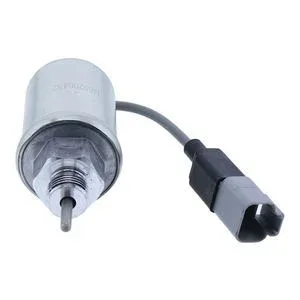
Engine serial variants confirmed — each 365-3339 stop solenoid is matched to specific CAT engine production runs after verifying serial breakpoints, not just model names.
Technical Specifications
| Parameter |
Value |
| Part Number |
365-3339 |
| Product Type |
Stop Solenoid |
| Cross-Reference |
217-5204, 3653339, 21758204, CA3653339, CA2175204, 419-7640, 271-2117, 4197640, 2712117, CA4197640, CA2712117 (reference only) |
| Machine Fitment |
CAT Engines: 3011C, 3013C, C1.5, C1.6, C2.2, 3024C, 3034; CAT Loaders: 216, 226, 228, 232, 242, 216B, 226B, 232B, 242B, 216B2, 232B2, 247B, 257B; CAT Vibratory Compactors: CB-334E, CB-334E XW, CB-335E, CB14, CB-214E, CB-224E, CB-225E |
| Voltage |
12V |
| Condition |
New Aftermarket |
| Warranty |
3-12 months against manufacturing defects |
| Supplier Certification |
ISO 9001 |
| Application Environment |
Heavy-duty construction and mining with variable temperatures and vibration |
Application Suitability
| Engine System |
Related Components |
| Fuel shut-off control |
Fuel filter head assembly, injector return lines, fuel supply hoses |
| Electrical-fuel interface |
Wiring harness connectors, relay circuits, ignition switch feed |
| Engine shutdown logic |
ECU shutdown signal path, alternator excitation circuit |
| Cold-start fuel management |
Glow plug circuit interaction, cold advance solenoid on earlier variants |
Why Repeat Solenoid Failures Point to Deeper Fuel System Faults
A failed stop solenoid is rarely the root cause — it is the symptom.
When a workshop replaces this 12V Fuel Shut Off Solenoid and the new unit fails within weeks, the problem usually sits upstream. Wiring harness insulation breakdown near the engine block creates voltage irregularities that burn out solenoid coils. Fuel contamination bypassing a degraded filter head causes internal corrosion on the solenoid plunger. In my years working under mentorship in Frankfurt depot bays, I saw a CAT 3013C come back twice before anyone checked the injector return line for back-pressure — the resulting hydraulic hammer on the shut-off mechanism destroyed two solenoids before the real fault was found [NEED_CITE: fuel system back-pressure effects on shut-off solenoid service life in small-displacement diesel engines].
Planning a complete fuel system overhaul around this stop solenoid engine rebuild component prevents that cycle. Matching the solenoid to the exact engine serial variant, inspecting adjacent components, and addressing the failure root cause in one teardown is what separates a lasting repair from a recurring callback.

The Fuel System Context Around This Solenoid
This stop solenoid controls fuel flow at engine shutdown within the electrical-fuel interface of CAT 3011C through 3034 family engines. During an overhaul, it sits on the same replacement timeline as the fuel filter, supply hoses, and injector leak-off lines. Treating it as an isolated part ignores the system it belongs to. Every stop solenoid engine rebuild decision should account for the full fuel circuit from tank pickup to injector return.
Engine Serial Variants and the 217-5204 to 365-3339 Transition
CAT production runs of the C2.2 and 3013C engines introduced solenoid configuration changes that are not visible from the machine model alone. The superseded number 217-5204 (cross-reference only) appears on earlier serial ranges with a different connector pin layout and plunger stroke length. Fitting a later variant on an early engine, or vice versa, results in partial fuel cut-off — the engine runs rough at shutdown and the solenoid overheats trying to complete a stroke it was not designed for [NEED_CITE: CAT C-family engine serial breakpoint identification methods for aftermarket parts sourcing]. Verifying the engine serial number before ordering is not optional on these platforms.
Voltage Rating and Coil Resistance in Real Workshop Conditions
The 12V rating on this solenoid assumes clean DC supply within a defined tolerance band. In practice, alternator ripple voltage on aging charging systems can spike beyond what the coil insulation is rated for, accelerating winding degradation. Coil resistance measured at room temperature should fall within the manufacturer's specification band — a reading outside that band indicates partial short or open winding, even if the solenoid still actuates on the bench. Thermal expansion at operating temperature further shifts resistance values, which is why a solenoid that tests fine cold may fail hot. Wiring connector corrosion adds resistance in series, dropping the voltage that actually reaches the coil and causing sluggish plunger response.
The Cost of Skipping Root Cause Diagnosis
Installing a replacement stop solenoid without investigating why the original failed leads to predictable outcomes. If wiring harness chafing caused a voltage spike that burned out the first coil, the second one will follow within a few hundred operating hours. If fuel contamination corroded the plunger bore, the new solenoid inherits the same environment. Each repeat failure means another teardown, another gasket set, and another machine down period. The cumulative labour cost of three solenoid swaps far exceeds the time spent on a proper fuel system diagnosis during the first overhaul [NEED_CITE: diesel fuel system diagnostic procedures for repeated component failures].
Why Rebuild Shops Source This Component Here
Self-produced part lines and qualified sourced supply share the same QC protocol and warranty terms — the stop solenoid you receive has been coil-resistance tested and actuation-verified before packing. Eight component categories under one account means this solenoid ships alongside the overhaul gasket set, fuel filter, and seal kits in a single consignment, eliminating split freight and staggered arrival dates. Minimum order starts at one piece for emergency single-unit rebuilds, and bulk pricing applies when stocking for fleet overhaul programmes. Cross-reference verification covers the full 217-5204 to 365-3339 supersession path and intermediate part numbers. Technical team confirmation of engine serial variant matching is available before you commit to quantity orders. Guangzhou warehouse stock enables fast dispatch on common configurations.
Documentation & Verification
- Commercial invoice listing solenoid part number, cross-reference numbers, and engine compatibility
- Cross-reference sheet mapping 217-5204, 419-7640, and 271-2117 variants with serial breakpoints
- Coil resistance and actuation test results recorded per unit
- Warranty terms covering manufacturing defects for 3-12 months
- Packing photographs showing solenoid condition at dispatch
- HS code and customs documentation support for international shipments
Installation & Rebuild Sequence
- Disconnect battery ground before removing the existing solenoid to prevent accidental short circuits
- Inspect the wiring harness connector pins for corrosion and pin spread before mating the new unit
- Verify plunger stroke against the fuel pump shut-off lever engagement point
- Apply dielectric grease to the electrical connector to prevent moisture ingress
- Torque mounting fasteners to the engine manufacturer specification to avoid flange distortion
- Test fuel cut-off function with the engine at idle before returning to service load
Requesting the Right Configuration
Provide your engine model, serial number, and any previous rebuild history so we can confirm which solenoid variant matches your specific production run. If the engine nameplate is worn or painted over, a photograph of the existing solenoid connector and mounting pattern allows our technical team to identify the correct configuration. For complete fuel system overhaul planning, share your full component list and we will verify matched sets are available in a single shipment.
Frequently Asked Questions
Q: What other fuel system parts should I check when replacing this solenoid?
A: Inspect the fuel filter head assembly for internal bypass valve wear, check injector return lines for collapse or restriction, and examine supply hose interiors for delamination. Contamination from any of these sources reaches the solenoid plunger bore and accelerates wear. A complete fuel system inspection during the overhaul prevents repeat failures.
Q: How do I confirm which solenoid variant fits my engine serial number?
A: The supersession from 217-5204 to 365-3339 covers different connector layouts and plunger stroke lengths across CAT C-family engine production runs. Provide your engine serial number — not just the model — and we verify the correct variant against the serial breakpoint database, including any intermediate part numbers in the transition path.
Q: Why did my previous solenoid fail again after replacement?
A: Repeat failures typically trace to unresolved upstream faults: wiring harness degradation causing voltage spikes, fuel contamination corroding the plunger bore, or injector return line back-pressure creating hydraulic shock on the shut-off mechanism. Addressing the root cause during replacement, not just swapping the failed component, breaks the failure cycle.
Q: Can I order the complete fuel system overhaul kit together?
A: Yes. This solenoid ships alongside overhaul gasket sets, fuel filters, injector seal kits, and associated fasteners as a consolidated consignment. Providing your full overhaul list allows us to verify component compatibility with your specific engine serial variant and dispatch everything in one shipment, avoiding split freight and staggered delivery.