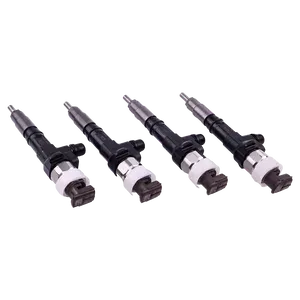
Matched Set Dispatch — each Kubota V3307 fuel injector order ships with verified cross-reference data and matched return-line hardware confirmed against the engine serial number.
Technical Specifications
| Parameter |
Value |
| Part Number |
1J770-53050 |
| Product Type |
Fuel Injector |
| Cross-Reference |
1J770-53050, 1J770-53070, 1J770-53074, 1J770-53051, 295050-1980, 295050-1320, 1J770-53075, 1J770-53053, 1J770-53052, 1J778-53051 (reference only) |
| Machine Fitment |
KX080-4, KX080-4S, M4-071HDC12, M4D-061HDC12, M4D-071HDC12, M6060HD, M7060HD, M7060HD12, M6060HDC, M6060HFC, M7060HDC, M7060HDC12, M7060HFC, SSV75, SSV75C, SSV75P, SSV75PC, SVL75-2, SVL75-2C, SVL75-2CA |
| Engine Compatibility |
V3307, V3307-CR-TE4, V3307 Tier 4 |
| Condition |
New Aftermarket Part |
| Engine Emission Tier |
Tier 4 |
| Warranty |
3-12 months against manufacturing defects |
| Factory Certification |
ISO |
Application Suitability
| Engine System |
Related Components |
| High-pressure common rail (V3307-CR-TE4) |
Fuel rail pressure sensor, return line fittings, copper crush washers |
| Upstream fuel filtration |
Water separator, primary and secondary fuel filters, supply pump |
| Cylinder combustion balance |
Full injector set, piston crowns, compression rings |
| Tier 4 emission aftertreatment |
DPF regeneration monitoring, NOx sensor, exhaust temperature sensors |
When One Kubota V3307 Fuel Injector Fails, the Others Are Already Compromised
A single failed injector on a common-rail V3307-CR-TE4 is almost always the symptom of upstream contamination, not an isolated component failure.
In the Pearl River Delta repair shops I have supported over the years, the pattern repeats itself: a machine comes in with rough idle or excessive smoke, the technician swaps out one injector, and the unit is back on the bench within a few hundred hours. The supply pump was already shedding metal particles. The water separator had been bypassing moisture for months. The new Kubota V3307 fuel injector was dead on arrival in a dirty system. [NEED_CITE: common rail fuel system contamination failure modes in off-road diesel engines]
Replacing the full set as a matched group — along with filtration components and return-line hardware — is not upselling. It is the only sequence that addresses the root cause and keeps the engine out of the bay for a meaningful interval.

The Common-Rail System Context That Changes Everything
Unlike older mechanical injection systems, the V3307-CR-TE4 runs rail pressures that leave virtually no tolerance for particulate contamination or water ingress. Every Kubota V3307 fuel injector in this system is fed from a shared high-pressure rail, meaning debris generated by a worn supply pump circulates to every cylinder simultaneously. The injectors that survive the first failure event are already internally scored and drifting from their calibrated flow rates.
Why Serial Number Verification Determines the Correct Variant
The V3307 engine family spans multiple emission tiers and calibration profiles. An injector calibrated for a V3307 Tier 4 machine will physically thread into a V3307-CR-TE4 rail, but the spray pattern and duration mapping differ enough to cause incomplete combustion and DPF regeneration failures. Before any order ships, the engine serial number and emission-tier designation must be confirmed so the correct calibration variant is matched. This step prevents the most expensive kind of mistake — one that only reveals itself after reassembly and test run. [NEED_CITE: diesel engine emission tier injector calibration variance across serial ranges]
Flow Rate Calibration and Leak-Down Testing in Practice
Each injector in this series is flow-tested and leak-down verified before release. Flow rate consistency across the set ensures balanced cylinder-to-cylinder fuel delivery, which directly affects piston crown temperature distribution and ring wear. An injector that delivers even a slight excess of fuel to one cylinder raises exhaust gas temperatures locally, accelerating piston erosion on that specific bore. The Tier 4 emission compliance also depends on spray atomization precision — out-of-spec droplet size disrupts the combustion chemistry that the DPF regeneration cycle expects, triggering repeated failed regenerations and derate events.
The Hidden Cost of Replacing Only the Failed Cylinder
It seems logical to replace only the injector that triggered the fault code. In practice, the remaining injectors have endured the same contaminated fuel supply, the same hours of thermal cycling, and the same rail pressure stress. The cylinder that failed first was simply the weakest unit in a set that was degrading together. Installing one new injector beside three worn ones creates a fuel delivery imbalance that shifts combustion loading unevenly across the crankshaft, accelerating bearing wear and introducing vibration signatures that compound over subsequent operating hours. [NEED_CITE: cylinder-to-cylinder fuel delivery imbalance effects on diesel crankshaft bearing loading]
The repair shop then faces a second teardown within months, not because the replacement part was deficient, but because the system-level diagnosis was skipped the first time.
Why Engine Rebuild Shops Source Fuel System Kits Here
Production on selected fuel system lines runs under the same QC protocol and warranty terms as the qualified sourced supply, so there is no split in coverage across the kit. Eight component categories sit under one account, meaning injectors, seal kits, filters, and gaskets for a V3307-CR-TE4 overhaul ship as one consignment rather than several mismatched deliveries. Orders start from one piece for emergency single-cylinder replacements. The Guangzhou warehouse holds stock on common Kubota V3307 platform items for fast dispatch. Part identification is confirmed from engine serial numbers, machine model plates, or photographs of worn nameplates when the original markings are no longer readable. Cross-reference verification covers superseded numbers across the V3307 family variants, and sample supply is available for fitment confirmation before bulk commitment.
Documentation & Verification
- Commercial invoice listing each injector unit with serial traceability
- Cross-reference sheet mapping all V3307 family variants (reference only)
- Flow-rate calibration and leak-down test record per injector
- Warranty terms covering manufacturing defects for 3-12 months
- Packing photographs showing sealed injector packaging before crate closure
- HS code and customs classification support for cross-border engine parts shipment
Installation & Rebuild Sequence
- Flush the fuel rail and return lines with clean test fluid before installing the new injector set to remove residual contamination
- Verify copper crush washer thickness matches the V3307-CR-TE4 specification to maintain correct injector protrusion depth
- Torque injector clamp bolts in the manufacturer-specified sequence to prevent rail distortion under high-pressure operation
- Prime the supply circuit and bleed air from the rail before cranking to protect the new injector solenoids from dry-fire damage
- Run a break-in cycle at partial load and monitor fuel trim values across all cylinders to confirm balanced delivery
Confirm Your Engine Build Before Ordering
Provide the engine serial number, the emission tier designation from the nameplate, and any previous rebuild history so we can verify which injector calibration variant your V3307-CR-TE4 requires. Include the machine model and the fault codes that prompted the repair, so we can advise on related fuel system components that should ship with the injector set.
Frequently Asked Questions
Q: What other fuel system components should be replaced alongside these injectors on the V3307-CR-TE4?
A: When injectors fail from contamination, the fuel filter assembly, water separator element, and supply pump should be inspected and typically replaced in the same service event. Return-line fittings and copper crush washers are single-use items that must be renewed to maintain rail pressure integrity. Skipping these components leaves the root cause active in the system.
Q: How do I confirm which injector part number matches my specific V3307 engine serial variant?
A: The V3307 family includes multiple emission tiers, each with a different injector calibration profile. Provide the full engine serial number from the nameplate and the tier designation. We cross-reference against the calibration database to confirm the correct variant before shipping, rather than relying on a single base number that may span several incompatible builds.
Q: Should I replace all injectors as a matched set or only the cylinder that triggered the fault code?
A: Replacing the full set maintains uniform fuel delivery across all cylinders. A single new injector beside worn units creates a cylinder-to-cylinder imbalance that shifts combustion loading unevenly, accelerating piston and bearing wear on adjacent bores. For engine rebuild shops, a matched set also simplifies flow-rate documentation for the customer.
Q: What root-cause checks should I perform before installing new injectors to prevent repeat failure?
A: Inspect the supply pump for internal wear and metal particle generation. Test the water separator for bypass condition. Verify fuel cleanliness at the tank pickup and after the secondary filter using a particle count sample. Any contamination source left active will destroy the new injector set within a short operating window.
Q: Does the overhaul kit include copper crush washers and return line hardware specific to the V3307 common-rail configuration?
A: The kit contents checklist is confirmed against your specific engine serial number before dispatch. This ensures the copper washers match the required thickness for correct injector protrusion, and the return-line fittings match the V3307-CR-TE4 rail configuration rather than a different tier variant that shares the same base block.