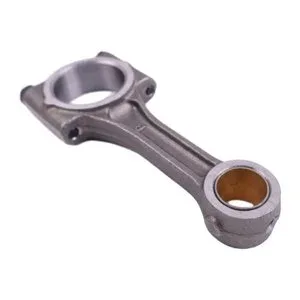
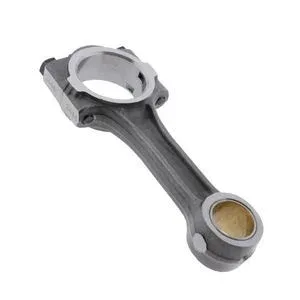
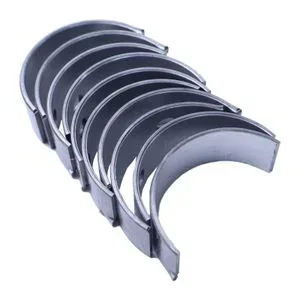
Matched Bottom-End Set — Con rod, bearings, piston pin and fasteners ship together so rebuild clearances stay consistent across the entire rotating assembly.
Technical Specifications
| Parameter |
Value |
| Part Number |
15261-22010, 15531-22010, 15381-22010, 15694-22010 |
| Product Type |
Connecting Rod |
| Cross-Reference (reference only) |
1526122010, 1553122010, 1538122010, 1569422010 |
| Machine Fitment |
Kubota Engines: D650, D750, D850, D950, V1100, V1200, ZB600; Kubota Tractors: B1550, B1750, B2150, B4200, B5100, B5200, B6100, B6200, B7100, B7200, B8200, B9200 series; Kubota Excavators: KH-35, KH-36, KH-41, KH-51, KH-61 series |
| Material |
Forged steel |
| Condition |
New Aftermarket |
| Warranty |
3-12 months against manufacturing defects |
| MOQ |
1 piece |
Application Suitability
| Engine System |
Related Components |
| Bottom-end rotating assembly |
Con rod bearings (STD / 0.25 / 0.50), main bearings, thrust washers |
| Piston and cylinder group |
Piston pin, piston rings, cylinder liner if honed or rebored |
| Lubrication circuit |
Oil pump, oil filter, gallery plugs — verify flow before reassembly |
| Overhaul sealing |
Full gasket set, crankshaft front and rear seals, valve stem seals |
Why the Wrong Bearing Grade Stops the Rebuild Before It Starts
Matching the connecting rod to the actual crankshaft journal condition is the single most overlooked step in a Kubota engine overhaul.
A reground crankshaft demands oversize bearing shells, but the rod itself must also suit the journal profile left by the machining. I have opened D650 engines where a previous shop fitted standard-grade shells on a reground crank, and the result was bearing wipe within the first hundred hours. When planning a Kubota connecting rod engine rebuild, the engine serial number and the measured journal diameter dictate which variant you need — not the number stamped on the old part. [NEED_CITE: crankshaft journal measurement procedures for small diesel engines]

The Bottom-End Assembly as a Matched System
Replacing a single failed rod without addressing the surrounding components invites a second teardown. The piston pin that rides in the small end of this connecting rod wears an oval profile over thousands of hours, and a new rod on a worn pin creates uneven loading. During any Kubota connecting rod engine rebuild, the con rod bearings, piston pin, piston rings, and big-end fasteners should be treated as a single kit so that tolerances remain consistent across the entire assembly.
Superseded Numbers and Serial-Range Variants
Kubota revised this connecting rod design across multiple engine generations, which is why eight cross-reference numbers exist for what appears to be the same base component. The earlier D650 and D750 engines use a different big-end bore tolerance than the later V1100 and V1200 platforms, and fitting the wrong generation rod produces either excessive oil clearance or a starved bearing. Always confirm the engine serial number before selecting from the cross-reference list — the number stamped on the old rod may already be superseded. [NEED_CITE: Kubota engine serial range identification for D and V series]
Forged Steel, Bore Tolerance, and What They Mean on the Bench
Forged steel provides the fatigue resistance this component needs under the repeated combustion loading of a small-bore diesel operating at sustained high RPM. The big-end bore is precision-machined to accept specific bearing shell thicknesses, and any deviation in that bore roundness transfers directly to oil film thickness on the crankshaft journal. The small-end bushing bore must maintain concentricity with the big end to keep the piston centered in the cylinder liner — a rod that is even slightly bent will accelerate liner wear on one side and increase blow-by past the rings.
The Hidden Cost of Skipping the Root-Cause Check
A rod that failed from oil starvation points to a problem upstream — a clogged oil pickup, a failing oil pump, or a blocked gallery. Fitting a new connecting rod without diagnosing why the original one failed means the replacement faces the same lubrication deficit and will fail again. Shops that skip this step see repeat comebacks on the same engine within months, eroding customer trust and consuming warranty budget. [NEED_CITE: root cause analysis for connecting rod bearing failure in diesel engines]
What Makes This Supply Chain Different for Rebuild Shops
Our own production lines and qualified sourced supply operate under one warranty, so a matched bottom-end kit — connecting rod, bearings, piston, pin, rings, and gasket set — carries consistent quality terms regardless of which facility made each component. Eight product categories ship under one account, meaning the overhaul parts and the consumables arrive together. Orders start from one piece for emergency single-cylinder repairs. Guangzhou warehouse stock covers common Kubota D and V series rods for fast dispatch. Part identification works from the stamped number, the engine model, a photograph of the old part, or a nameplate image when the original plate is worn or painted over. Cross-reference verification covers all eight numbers including superseded variants.
Documentation & Verification
- Commercial invoice listing each cross-reference number with reference-only notation
- Bearing grade and oversize compatibility sheet matched to engine serial range
- Dimensional inspection record covering big-end bore, small-end bore, and center distance
- Warranty terms document specifying coverage period and defect conditions
- Packing photographs showing rod orientation and protective wrapping before crate closure
- HS code and customs classification support for international engine parts shipments
Installation & Rebuild Sequence
- Clean big-end bore and verify bearing shell crush height before fitting new shells
- Check connecting rod bolt stretch or torque-to-angle per Kubota service manual specification
- Measure oil clearance with plastigauge on each journal before final cap installation
- Confirm piston-to-rod orientation mark aligns with timing gear side during assembly
- Prime lubrication system and verify oil pressure at idle before applying load during break-in
Before You Request a Quote
Provide the full engine model and serial number, along with any known regrind history on the crankshaft, so we can confirm the correct cross-reference number and the right bearing grade for your Kubota connecting rod engine rebuild. If the nameplate is missing, a photograph of the engine block casting number or the old connecting rod stamping is usually enough to identify the platform.
Frequently Asked Questions
Q: How do I determine the correct bearing grade if the crankshaft was previously reground?
A: Measure the crankshaft journal diameter with a micrometer and compare it against the Kubota service manual specification chart. A reground crank typically falls into the 0.25 or 0.50 undersize category, and the corresponding oversize bearing shells must be fitted. The connecting rod big-end bore should also be checked for out-of-round condition before reassembly.
Q: Which of the eight cross-reference numbers applies to my engine?
A: Each number corresponds to a specific engine serial range across the D650, D750, D850, D950, V1100, and V1200 platforms. Provide your engine serial number and we will confirm the correct variant. Superseded numbers are common across Kubota generations, so the stamping on your old rod may no longer be the current reference.
Q: Should I replace all connecting rods or only the damaged one?
A: For a partial repair on a single cylinder, replacing only the failed rod is acceptable provided the remaining rods pass dimensional inspection for straightness and bore tolerance. For a full overhaul, matched replacement of the entire set ensures uniform weight and consistent bearing clearances across all cylinders.
Q: What else must be replaced when fitting a new connecting rod?
A: The con rod bearing shells, piston pin, big-end bolts, and piston rings should all be replaced as a matched set. Reusing worn bearing shells or a worn piston pin with a new rod will produce uneven loading and accelerate wear, defeating the purpose of the replacement.
Q: How do I identify the engine model when the nameplate is unreadable?
A: A clear photograph of the engine block casting number, the cylinder head casting, or the old connecting rod stamping is usually sufficient for identification. We cross-reference these markings against the Kubota D and V series serial range database to confirm the correct platform.