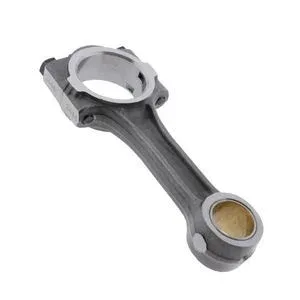
Matched Set Supply — Connecting rods dispatched in balanced weight groups matched to your Kubota rebuild grade, eliminating mid-job mismatches.
Technical Specifications
| Parameter |
Value |
| Product Type |
Connecting Rod |
| Compatible Engine Brand |
Kubota |
| Engine Fitment |
D905, D1105, D1005, D1305, V1205, V1305, V1405, V1505 |
| Condition |
New Aftermarket |
| Quality Standard |
ISO 9001 |
| Warranty |
3–12 months |
Application Suitability
| Engine System |
Related Components |
| Rotating Assembly |
Pistons, piston pins, piston rings, main and con rod bearings |
| Lubrication Circuit |
Oil pump, main gallery plugs, bearing shell oil feed holes |
| Block Structure |
Cylinder liners, liner seals, block deck gaskets |
| Valve Train |
Camshaft, tappets, valve springs — checked when rod failure is suspected |
Overhaul Kits That Miss the Grade After a Previous Rebuild
A connecting rod must match the crankshaft journal condition left by the last machinist, not just the factory manual.
In workshops across Shandong and beyond, I have opened Kubota D1105 and V1505 engines where the previous rebuilder reground the crank to undersize but the next overhaul kit arrived with standard-size bearing shells and a standard-bore rod. The connecting rod engine rebuild Kubota kits sold as "complete" often skip this detail, leaving the technician to discover the mismatch only after plastigauge shows excessive clearance [NEED_CITE: engine bearing clearance verification procedures for diesel rebuilds]. When the rod bore and bearing shell grade disagree, the assembly either starves for oil film or hammers the journal, and the engine is torn down again within weeks.
The Rotating Assembly as a Matched System
This Connecting Rod sits at the center of the Kubota D and V series rotating assembly, linking piston motion to crankshaft rotation under extreme cyclic load. Every dimensional relationship matters: the small-end bushing must align with the piston pin bore within tight tolerance, while the big-end bore must accept the correct bearing shell grade for the existing crankshaft journal condition. Supplying the connecting rod as an isolated component ignores these dependencies. We position it within the full rebuild context so that pistons, pins, bearings, and rods arrive as a dimensionally verified set.
Crankshaft History Determines the Rod You Actually Need
Factory manuals specify standard dimensions, but most engines reaching overhaul stage have already been rebuilt once. The crankshaft journals may have been machined to undersize, meaning the connecting rod big-end bore and the bearing shells must match that reduced diameter. Confirming this before ordering prevents the situation where a standard Connecting Rod arrives for a crankshaft that now requires undersize shells [NEED_CITE: crankshaft journal regrind practices and undersize bearing selection]. Our technical team reviews your engine serial number and rebuild history to identify the correct rod variant across the Kubota D-series and V-series range, where subtle differences in rod length and bolt pattern exist between early and late production engines.

What the Specifications Mean on the Bench
The big-end bore diameter directly governs oil film thickness between the bearing shell and the crankshaft journal; even a small deviation from the specified range changes the clearance enough to cause either metal-to-metal contact or excessive oil bleed that drops pressure downstream. The small-end bushing inner diameter must match the piston pin within the manufacturer's interference or clearance specification, because any play here translates to pin scoring and eventual piston rejection. Weight matching across the full rod set matters for balance at operating RPM — a heavy rod on one cylinder while the others are lighter creates vibration that accelerates main bearing wear. Material grade and heat treatment condition determine how the rod handles the tensile stress on the exhaust stroke, particularly in turbocharged variants like the V1505 where combustion pressures are elevated.
The Cost of Skipping the Root Cause
When a Connecting Rod fails, the visible damage is only the endpoint. Lubrication starvation from a blocked oil gallery, over-speed from governor malfunction, or a bearing shell that spun due to incorrect clearance — these are the system-level faults that will destroy the replacement rod just as quickly [NEED_CITE: common root causes of connecting rod failure in small diesel engines]. Replacing the rod without diagnosing why the original failed is the most expensive mistake in an overhaul, because the second teardown costs the same labor again plus whatever additional damage the repeated failure caused. We guide buyers through the diagnostic checklist before confirming the parts order.
Why Source This Component Through Our Workflow
Our own production lines and qualified sourced supply operate under one account with identical QC and warranty terms, so a connecting rod sourced alongside your piston sets and gasket kits carries consistent documentation. The eight-category catalog means your entire Kubota overhaul list — block and internal parts, seals, filters, and fasteners — ships as one consignment rather than arriving in staggered batches. Minimum order is one piece, so a single-cylinder repair does not force you to buy a full set. Our Guangzhou warehouse holds stock on fast-moving Kubota D and V series components for rapid dispatch. Part identification is possible from the engine serial plate alone when the original rod number is unreadable, and cross-reference verification (for identification purposes only) covers superseded part numbers across engine generations. Technical staff confirm compatibility and bearing grade before we release the order.
Documentation & Verification
- Commercial invoice listing each Connecting Rod by engine model and grade
- Cross-reference sheet mapping superseded Kubota numbers (reference only)
- Dimensional inspection record covering big-end bore and small-end bushing
- Warranty terms specifying coverage under normal diesel operating conditions
- Packing photographs showing matched set grouping before crate closure
- HS code and customs classification support for cross-border shipment
Installation & Rebuild Sequence
- Clean oil gallery passages in the connecting rod before bearing shell installation
- Verify big-end bore diameter with a dial gauge before selecting bearing grade
- Confirm piston pin fit in the small-end bushing per specified clearance range
- Torque rod bolts to specification in stages, checking free rotation after each step
- Plastigauge every big-end bearing after assembly to confirm oil film clearance
- Run initial break-in at reduced load with frequent oil pressure checks
Request the Correct Configuration for Your Engine
Provide the Kubota engine model designation, the serial number from the block plate, and any known history of previous crankshaft regrinding. If the nameplate is unreadable, send a photograph of the existing rod showing any stamped numbers and the big-end bolt configuration. This allows us to confirm the exact Connecting Rod variant and the matching bearing shell grade before quoting.
Frequently Asked Questions
Q: What other components should ship together with the connecting rod during a full overhaul?
A: The rod operates within a matched rotating assembly, so piston, piston pin, rings, con rod bearings, and main bearings should all be ordered simultaneously. Gasket sets, liner seals, and valve stem seals are typically replaced at the same teardown. Ordering everything together ensures dimensional grades align and avoids a second teardown for a missing component.
Q: How do I know if my crankshaft requires undersize bearings from a previous rebuild?
A: Measure the crankshaft journal diameter with a micrometer or refer to the machining marks left by the previous rebuilder. If the journal has been reground, the connecting rod big-end bore and bearing shells must match the undersize dimension. We verify this from your engine serial and any available rebuild records before dispatch.
Q: Are connecting rods interchangeable between Kubota D-series and V-series engines?
A: While certain dimensions overlap, rod length, bolt pattern, and weight specifications differ between the inline D-series and the V-configuration engines. Installing a rod from the wrong series causes alignment errors with the piston and crankshaft. Always confirm compatibility against the specific engine model and production serial range.
Q: What typically causes the original connecting rod to fail in these engines?
A: Common root causes include lubrication starvation from contaminated oil or blocked passages, over-speed events, and bearing shell failure due to incorrect clearance. Diagnosing the underlying fault before installing the replacement rod prevents the same failure from recurring after the rebuild is completed.