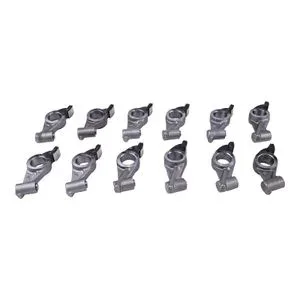
Verified Variants — connecting rod 15471-22012 / 15471-22013 supplied with matched bearing grades aligned to the specific Kubota engine serial build.
Technical Specifications
| Parameter |
Value |
| Part Number |
15471-22012 15471-22013 |
| Cross-Reference |
15471-22012, 15471-22013 (reference only) |
| Product Type |
Connecting Rod |
| Machine Fitment |
L1500, L175, L2350DT, L2350F, L245-IIDT, L245-IIF, L2550, L295DT, L295F, L405, L405DT, M4950, M4950DT, M4950DT OLD TYPE, M4950DT-S, M4950-S, R400(B), R410, R410B, RW25, RW30, GV1120-B-50-AUS, GV1160-B-50-AUS, GV3100-B-50-AUS, GV3150-B-50-AUS, GV3200-B-50-AUS, GV3120-60-B, GV-3170(SW), GV-3190Q-60, GV-3240, GV-3240SW, KH-101, KH-101KTA, KH-151, KH-191, KH-191EXP, KH-28, KH-28L, KH-60, KH-60H, KH-66 / H, KH-66/H KCL, KH-70(H), KH-90, KH-90H, KH-91 / H, KX101, KX151, Bobcat 225, Bobcat 643 |
| Material |
Forged steel, heat-treated for high tensile strength |
| Surface Treatment |
Black oxide |
| Condition |
New aftermarket, OEM-equivalent |
| Warranty |
12-month warranty against manufacturing defects |
| Minimum Order |
1 piece |
| Standards |
ISO 9001, ISO 6892-1, SAE J429 Grade 8.2 |
Application Suitability
| Engine System |
Related Components |
| Rotating assembly — Kubota D1301 / D1402 block |
Crankshaft journals, main and rod bearing shells, piston pin |
| Overhaul kit contents verification |
Piston rings, cylinder liner, full gasket set, thrust washers |
| Single-cylinder repair after oil starvation event |
Replacement rod with matched big-end bearing grade |
| Fleet preventive rebuild program |
Matched rod-and-bearing sets stocked by engine serial variant |
Why the Same Connecting Rod Part Number Ships in Multiple Internal Builds
The rod itself may share a number, but the bearing grade and piston-to-rod clearance depend on what happened inside your engine during its last rebuild.
When a D1301 or D1402 comes in for overhaul, the crankshaft journal condition dictates which undersize bearing shell pairs with this connecting rod. If the previous shop reground the crank to 0.25 mm undersize and the current order specifies standard bearings, the rod big-end bore and the journal will not achieve the correct oil film clearance. The engine may assemble without obvious interference, but bearing failure follows within the first hundred hours. [NEED_CITE: engine bearing clearance standards for diesel rebuild]
I have seen teardowns where the rod number was correct but the bearing shells in the kit were standard grade — because the kit was assembled for a virgin block, not one with regrind history. The result is a second teardown, new gaskets, and lost shop bay time. Matching the connecting rod to the measured journal dimension and the correct piston pin clearance is the difference between a rebuild that holds and one that comes back.

Block Internals That Move as a Matched Set
This connecting rod operates inside the lower rotating assembly of the Kubota D-series block, where big-end bore geometry, bearing shell crush height, and crankshaft journal diameter must align within a narrow tolerance band. During a complete D1301 or D1402 overhaul, the rod does not get evaluated in isolation — its big-end bore is measured alongside the piston pin bore to confirm both ends sit within specification for the target engine build variant.
Serial Variant Differences Across D1301 and D1402 Builds
Kubota produced multiple internal configurations under the same D1402 designation across different production years. Some variants use a different piston crown height, which changes the rod-to-piston relationship and compression geometry. Confirming the engine serial number before ordering ensures the connecting rod arrives matched to the specific block variant, not just the general model family. [NEED_CITE: Kubota engine serial variant identification practices]
What the Forged Steel Specification Means for Rebuild Durability
Heat-treated forged steel gives this connecting rod the tensile strength needed to handle combustion loads in compact diesel blocks that run at sustained high RPM in excavator and tractor applications. The black oxide surface treatment provides corrosion resistance during storage and initial break-in before the oil film fully conditions the rod surfaces. SAE J429 Grade 8.2 alignment ensures the fastener-grade material integrity required for the rod bolt clamping load.
The Cost of Mismatched Bearing Grades During Overhaul
When a connecting rod is installed with bearing shells that do not match the actual crankshaft journal condition, the failure is rarely immediate. Instead, excessive oil clearance at the big end causes pressure loss throughout the lubrication circuit, which then starves adjacent bearings and the piston cooling jets. The engine runs, oil pressure reads low, and by the time the root cause is traced, secondary damage has spread to the main bearings and cylinder walls. [NEED_CITE: diesel engine lubrication circuit failure propagation]
Why Procurement Verification Happens Before the Block Is Torn Down
Our supply workflow for this connecting rod starts with engine serial confirmation and crankshaft journal measurement data — not just the part number on the old rod. Cross-reference verification covers the superseded number 15471-22012 alongside the current 15471-22013 to confirm interchange suitability for your specific build. The Guangzhou warehouse stocks common rod-and-bearing configurations for fast dispatch, and sample supply is available so your machinist can verify fitment before committing to a full engine set. Technical support is available for bearing grade and piston pin clearance confirmation when the engine has prior rebuild history.
Documentation & Verification
- Commercial invoice listing rod part number and matched bearing grade per cylinder
- Cross-reference sheet for 15471-22012 and 15471-22013 (reference only)
- Dimensional inspection record covering big-end bore and pin bore tolerances
- 12-month warranty terms covering manufacturing defects
- Dispatch packing photographs showing rod and bearing set condition
- HS code and customs documentation for international rebuild kit shipments
Installation & Rebuild Sequence
- Clean rod big-end bore and cap mating surfaces before bearing shell installation
- Verify rod bolt stretch or torque-to-yield specification per Kubota service data
- Confirm bearing oil film clearance with plastigauge before final assembly
- Match rod and cap by etched number — caps are not interchangeable between rods
- Break-in the rebuilt engine under graduated load to seat bearings properly
Before You Request a Quote
Provide the engine model, serial number, and any known crankshaft regrind history so the correct bearing grade ships alongside the connecting rod. If the block has been rebuilt previously, share the oversize or undersize measurements from your machinist to avoid clearance mismatches.
Frequently Asked Questions
Q: What other components should be replaced together with the connecting rod during an overhaul?
A: During a D1301 or D1402 overhaul, the rod should be paired with matched big-end bearing shells of the correct grade, piston rings, cylinder liner if worn, and a complete gasket set. Reusing old bearings or mixing grades from different suppliers risks clearance errors that lead to early failure.
Q: My crankshaft was reground last time — how do I confirm the correct bearing grade for this rod?
A: Share the measured journal diameter from your machinist. We cross-check the crankshaft condition against available bearing undersize grades — standard, 0.25, or 0.50 — and supply shells that achieve the correct oil film clearance with this connecting rod big-end bore.
Q: Do different serial numbers of the same D1402 engine use different connecting rods?
A: Production variants exist across D1402 serial ranges. While the rod part number may remain the same, piston crown height and pin bore specifications can differ. Confirming your engine serial number ensures the complete rotating assembly matches your specific block build.
Q: Is the overhaul gasket kit complete for my specific engine build, or are items missing?
A: Generic overhaul kits sometimes omit seals specific to certain D1301 or D1402 variants. We verify kit contents against your engine serial number and supply any missing items — such as variant-specific O-rings or oil gallery plugs — in the same consignment.
Q: What caused the original rod to fail — and how do I prevent the same failure after rebuild?
A: Common causes include oil starvation from pump wear, over-rev events, or bearing shell crush height errors from a previous rebuild. Addressing the root cause — not just replacing the broken rod — means checking oil pump output, verifying bearing clearances, and confirming the lubrication circuit integrity before restart.