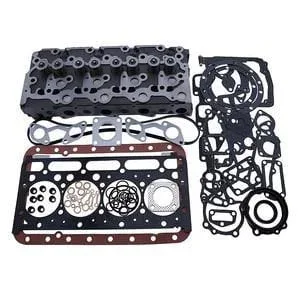
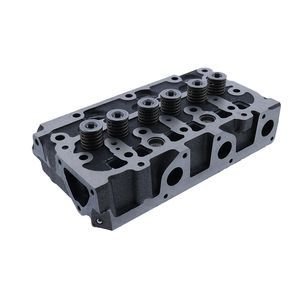
Complete Assembly — This Kubota V2203 cylinder head ships with valves and springs already fitted, eliminating the partial-kit delays I have seen stall engines on the test bench.
Technical Specifications
| Parameter |
Value |
| Part Number |
6686996 |
| Product Type |
Cylinder Head |
| Cross-Reference |
6686996, 7327333 (reference only for identification purposes) |
| Compatible Engine |
Kubota V2203, V2203 2EB - Tier II |
| Machine Fitment |
Bobcat Excavator 331, 334, 337, 341; Bobcat Skid Steer Loader 753, 763, 773, 7753, S150, S160, S175, S185; Bobcat Work Machine 5600 |
| Assembly State |
Fully assembled with valves and springs |
| Condition |
New Aftermarket |
| Warranty |
3-12 months against manufacturing defects |
| Manufacturing Standard |
ISO-certified manufacturing partners |
Application Suitability
| Engine System |
Related Components |
| Valve Train & Combustion Sealing |
Valve cover gasket, intake and exhaust manifold gaskets, head bolt set |
| Cooling & Thermal Management |
Thermostat, coolant hoses, water pump impeller |
| Fuel Delivery & Injection |
Injector sleeves, fuel return lines, injection pump timing gear |
| Bottom End & Block Interface |
Head gasket, block deck surface, cylinder liner flange |
Why Overhaul Kits Still Leave Engines Waiting on the Bench
A complete cylinder head assembly removes the most common rebuild delay: waiting for matched valve train components.
In the repair bays I have worked in, an engine block sits on the stand for days because the overhaul kit arrived without valve springs, or the supplied springs do not match the installed valve stem length. Rebuild shops then scramble to source individual valves, keepers, and spring seats from separate suppliers, each with its own lead time [NEED_CITE: diesel engine overhaul kit completeness standards for compact equipment]. When a Kubota V2203 Cylinder Head for Engine Overhaul arrives fully assembled, the valve train is already matched for seat concentricity and spring tension, so the head bolts down and the engine moves to the test cell without a second parts order.

The Combustion Sealing System in a V2203 Rebuild
The cylinder head sits at the top of the combustion sealing chain, transferring clamping load from the head bolts through the head gasket into the block deck. Any flatness deviation on the head deck or any valve seat erosion directly compromises compression and coolant sealing. This Kubota V2203 Cylinder Head for Engine Overhaul addresses both paths by arriving with the deck surface finished to specification and the valve seats already cut and lapped to their mating valves, so the rebuild does not depend on a local machine shop having the correct pilot and cutter set for a V2203.
Matching the Head to the Correct V2203 Variant
The Kubota V2203 family includes the base V2203 and the V2203 2EB Tier II variant, which differ in combustion chamber geometry, valve size, and injector angle. Fitting a base V2203 head onto a 2EB Tier II block can result in piston-to-valve interference or poor spray pattern coverage across the bowl. Before dispatch, the cross-reference numbers 6686996 and 7327333 are verified against the engine serial plate and build record to confirm which variant the machine left the factory with, preventing the kind of mismatch that only reveals itself when the engine is cranked for the first time [NEED_CITE: Kubota V2203 engine serial variant identification for rebuild shops].
Reading the Specifications That Matter at Assembly
Deck flatness governs whether the head gasket can seal combustion pressure and coolant passages simultaneously; a head that exceeds the allowable warp specification will leak coolant into adjacent cylinders under thermal cycling. Valve seat concentricity determines how evenly the valve face contacts the seat, which directly affects heat transfer away from the valve head — a poorly seated exhaust valve will burn through within a few hundred hours. Spring tension must fall within a defined range so that valves close decisively at high RPM without floating, yet do not overload the cam lobe and rocker tip. These three parameters — deck flatness, seat concentricity, and spring tension — are the measurable items on the quality inspection record that distinguish a head ready to bolt on from one that still needs machine shop time.
The Real Cost of a Mismatched or Incomplete Head
When a cylinder head arrives without valves, the shop must pull the old valves from the removed head, inspect each one for stem wear and face pitting, and hope they are still within service limits. Transferring worn valves into a new casting defeats the purpose of the replacement and often leads to early compression loss. A head supplied for the wrong V2203 variant may physically bolt on but will produce low compression on one or more cylinders, forcing a teardown to diagnose a problem that was present from the moment the head was fitted [NEED_CITE: common causes of post-overhaul compression loss in compact diesel engines]. Each of these outcomes adds unplanned labor hours and keeps the Bobcat loader or excavator out of service longer than the rebuild schedule allowed.
How Sourcing Here Keeps the Overhaul on Schedule
Selected part lines are produced in-house while the remainder is sourced from qualified ISO-certified partners, and both paths carry the same warranty terms, so a cylinder head and its accompanying gasket set arrive under one accountability. Eight product categories — engine, hydraulic, electrical, undercarriage, cabin, seal kits, tools, and general spares — mean a complete overhaul job list ships as one consignment rather than several partial deliveries. Minimum order is one piece, so a single emergency head for a downed Bobcat 753 does not require padding the order to meet a threshold. Part identification works from a part number, a machine model, or a photograph of a worn nameplate, which matters when the engine plate is painted over or corroded. Cross-reference verification covers superseded and alternate numbers like 7327333, catching catalog errors before the part ships. Sample supply is available for fitment confirmation before a shop commits to a bulk order for a fleet rebuild program.
Documentation & Verification
- Commercial invoice and packing list referencing part number 6686996 and applicable cross-reference numbers.
- Part compatibility sheet confirming V2203 or V2203 2EB Tier II fitment with cross-reference marked reference only.
- Quality inspection record documenting valve seat concentricity, spring tension, and deck flatness measurements.
- Warranty terms covering manufacturing defects for the stated period with clear return conditions.
- Packing photographs showing the assembled head secured against transit damage before crate closure.
- HS code and customs documentation support for international engine parts shipments.
Installation & Rebuild Sequence
- Verify block deck flatness before fitting this cylinder head to ensure the head gasket seals uniformly across all combustion and coolant passages.
- Clean all oil galleries and coolant passages in the block and confirm no debris remains from the previous head removal.
- Torque head bolts in the manufacturer-specified sequence and stages to achieve even clamping load across the V2203 deck.
- Set valve clearance to specification after assembly, then recheck after the first heat cycle to account for initial seat settlement.
- Run the engine through a graduated break-in load sequence to seat the new valve faces and confirm combustion sealing before returning the machine to full duty.
Request a Fitment-Confirmed Quote
To move forward, provide the Kubota engine model and serial number from the engine plate, along with any cross-reference numbers visible on the old head casting. If the plate is unreadable, a photograph of the machine model badge and the old head's port layout will allow the technical team to confirm variant compatibility. For rebuild shops planning multiple overhauls, share the engine build list so the complete head and adjacent gasket and fastener requirements can be quoted as one matched set.
Frequently Asked Questions
Q: Does this cylinder head come with valves and springs, or do I transfer from the old head?
A: This unit ships fully assembled with valves, springs, keepers, and spring seats already installed and inspected for concentricity and tension. You bolt it directly onto the block without transferring any valve train components from the removed head, which eliminates the risk of carrying worn valves into a new casting and avoids the need for a local machine shop to cut seats.
Q: My engine is a V2203 2EB Tier II — is this head compatible with that variant?
A: Compatibility depends on the exact engine serial number, as the V2203 and V2203 2EB Tier II differ in combustion chamber shape and valve geometry. Provide the engine serial plate details so the technical team can verify cross-reference 6686996 or 7327333 against the correct variant record before dispatch, preventing a physical-fit-but-wrong-compression outcome.
Q: What other engine components should I inspect or replace when fitting this head?
A: The head gasket must be replaced every time the head is removed. Inspect the head bolts for stretch beyond the service limit, as yielded bolts will not maintain clamp load. Check the injector sleeves for erosion and the thermostat for proper opening temperature, since overheating is a primary cause of cylinder head failure in V2203 applications.
Q: How do I confirm the correct head when my engine plate is worn or painted over?
A: A clear photograph of the machine model badge, the old head casting number, and the port layout is usually sufficient for identification. The technical team cross-references these visual cues against the Kubota V2203 build records and the interchange reference for 6686996 and 7327333 to confirm the exact variant required.
Q: What does the warranty cover if the head fails during the coverage period?
A: The warranty covers manufacturing defects such as casting porosity, valve seat separation, or spring failure under normal operating conditions for the stated term. It does not cover damage from overheating, improper torque sequence, or contamination ingress. A returned head must be accompanied by the original inspection record and a description of the operating conditions leading to the failure.