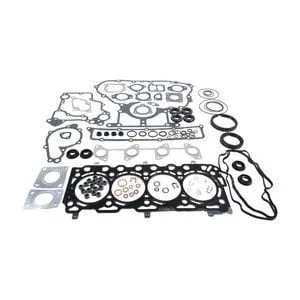
Engine Serial Variants Confirmed — We map V3300 DI, DI-T, and E2B/E3BG sub-models to their distinct cylinder head castings and port geometries before shipping, so the part matches the exact engine build on your stand.
Technical Specifications
| Parameter |
Value |
| Product Type |
Cylinder Head |
| Cross-Reference (reference only) |
1G545-0302-8, 1G513-0302-0, 1G546-03024, 1G545-03028, 1G546-03020, 1G546-03022 |
| Machine Fitment |
Kubota M8200, M8200-CAB, M8200DT, M8200DT-CAB, M8200DTN, M8200HD, M8200HDC, M8200SDTN, M8200SDTN-CAB, M9000, M9000-CAB, M9000DT, M9000DT-CAB, M9000DTL, M9000DTM, M9000DTMC, M9000HD, M9000HDC, M9000HDL-F |
| Engine Fitment |
V3300, V3300-DI, V3300-DI-T, V3300-E2B, V3300-T-E2B, V3300-E3BG series variants |
| Condition |
New Aftermarket |
| Material |
High-silicon aluminum alloy (A380 equivalent) |
| Surface Flatness Tolerance |
±0.02 mm |
| Valve Seat Hardness |
45–48 HRC |
| Pressure Test |
150 psi for 10 minutes |
| Corrosion Resistance |
ISO 9227 NSS ≥720 hours |
| Torque Specification |
108 N·m |
| Standards |
ISO 9001, ISO 9227, SAE J1330 |
| Warranty |
12 months against manufacturing defects |
| MOQ |
1 piece |
Application Suitability
| Engine System |
Related Components |
| V3300 combustion chamber |
Head gasket set, valve stem seals, head bolt set |
| V3300 valve train |
Intake and exhaust valves, valve springs, rotocoils |
| V3300 upper engine overhaul |
Overhaul gasket kit, piston ring sets, main and rod bearings |
| V3300 cooling interface |
Coolant passage seals, thermostat housing gasket |
| V3300 fuel delivery |
Injector sleeve seals, fuel return line fittings |
Why V3300 Sub-Model Variants Dictate Cylinder Head Selection
One part number can map to multiple castings depending on whether the engine is DI, DI-T, or E2B.
When a rebuild shop orders a cylinder head for a V3300 without specifying the exact engine serial variant, the casting that arrives may have the wrong port geometry or injector bore configuration. I have seen tractors sit on the stand for weeks because the head bolted on but the intake runner profile did not match the manifold, or the valve seat angle was wrong for the combustion chamber design. The V3300 family spans naturally aspirated DI, turbocharged DI-T, and later E2B and E3BG emissions-compliant variants, each with internal differences that affect head compatibility. A V3300 cylinder Head engine rebuild requires verifying the engine serial plate or build code before confirming the order, because superseded part numbers do not always tell the full story about which casting the engine actually needs. [NEED_CITE: engine serial identification methods for diesel tractor rebuilds]

Matching the Cylinder Head to the Exact V3300 Engine Build
The V3300 engine family includes over twenty documented sub-variants, from the base V3300-DI through the V3300-E3BG-ABR-1 and V3300-T-E2B-THOMAS-1. Each sub-variant can carry differences in valve seat material, port runner volume, and coolant passage routing. When sourcing a V3300 Cylinder Head engine rebuild component, the engine serial number and build plate data determine which casting is correct. Our technical team cross-references the engine code against known variant configurations before confirming fitment, reducing the risk of receiving a head that physically bolts on but fails to seal or flow correctly once assembled.
What a Rebuild Shop Must Verify Before the Head Goes On
A cylinder head does not operate in isolation. During a V3300 top-end overhaul, the head gasket must match the deck surface finish and bore diameter, the valve stem seals must suit the guide bore in the new head, and the head bolts must be replaced if they have been torque-to-yield previously. [NEED_CITE: cylinder head bolt reuse guidelines for diesel engines] Rebuild shops that order the head alone often discover mid-assembly that the gasket kit they sourced was for a different deck configuration, or that the valve guides in the replacement head require different seals than the original. We recommend confirming the full complement of mating components against the specific V3300 variant before the head leaves our warehouse, so the engine goes together in one sequence without waiting on a second shipment.
Material and Geometry Details That Affect Post-Rebuild Performance
The high-silicon aluminum alloy used in this cylinder head provides thermal stability across the temperature swings typical of diesel combustion chambers. Surface flatness held within ±0.02 mm ensures consistent head gasket compression across the entire deck, which is critical for preventing coolant intrusion into the cylinders or combustion gas leakage between adjacent bores. Valve seat hardness in the 45–48 HRC range supports extended service intervals before recession becomes measurable. The pressure test at 150 psi for 10 minutes validates water jacket integrity, catching any porosity or micro-crack that would otherwise surface only after the engine is running under load. Corrosion resistance meeting ISO 9227 NSS requirements means the external casting surfaces withstand exposure to coolant chemistry and ambient moisture over the service life. [NEED_CITE: aluminum cylinder head flatness tolerance standards for diesel engines]
The Cost of Casting Mismatches During Overhaul
When a cylinder head casting does not match the engine variant, the consequences extend beyond a simple return. The block may have already been cleaned, measured, and fitted with new pistons and rings. The head arrives, the valves are installed, and the engine is assembled—only for the intake manifold to sit at the wrong angle or the injector to protrude incorrectly. Disassembly then means re-cleaning the block, re-inspecting the bearings for contamination from the aborted assembly, and reordering the correct head along with a fresh gasket set. This cascading rework consumes labor and extends machine downtime well beyond what a single incorrect component should cause. Shops that skip the variant confirmation step absorb these hidden costs repeatedly across multiple rebuilds.
Why Rebuild Shops Source This Cylinder Head Through Us
Our own production lines and qualified sourced supply operate under one account and one warranty, so a V3300 Cylinder Head engine rebuild order carries the same quality terms regardless of which facility produced it. Eight product categories mean the head gasket set, valve stem seals, head bolts, and overhaul bearings all ship from one source as a single consignment. One-piece minimum order allows a shop to order a single head for an emergency rebuild or a batch of matched heads for a fleet overhaul without different purchasing rules. Our Guangzhou warehouse stocks common V3300 variants for fast dispatch, while less common E3BG sub-models are identified and confirmed before production. Part identification from engine serial number, photograph, or nameplate image covers situations where the original head is too damaged to read its casting number. Cross-reference verification accounts for superseded part numbers across V3300 generations, mapping older references to the current correct casting.
Documentation & Verification
- Commercial invoice listing exact V3300 variant and matched component cross-references
- Compatibility sheet confirming engine serial variant against head casting number
- Dimensional inspection record including deck flatness and port position measurements
- Pressure test certificate documenting water jacket integrity before dispatch
- Packing photographs showing head orientation and protective packaging condition
- HS code and customs documentation for international engine parts clearance
Installation & Rebuild Sequence
- Clean block deck surface and verify flatness before positioning the new cylinder head
- Install new head gasket dry, aligned to coolant and oil passage openings on the V3300 block
- Place head onto block and hand-start all head bolts to confirm thread engagement
- Torque head bolts in the V3300 manufacturer sequence to 108 N·m in progressive stages
- Verify valve train geometry and set valve clearances before installing the valve cover
- Fill cooling system, prime fuel system, and run initial break-in per overhaul protocol
Requesting a Fitment-Confirmed Quote
Provide the V3300 engine serial number or full build code from the engine nameplate, along with any overhaul history such as previous piston oversize grades or block decking. If the nameplate is unreadable, a photograph of the existing cylinder head casting number and the valve cover configuration helps us identify the correct variant. We will confirm the matching head casting and recommend the complete set of mating components for your rebuild scope.
Frequently Asked Questions
Q: What other components should I order when replacing this cylinder head on a V3300?
A: A complete head replacement typically requires a new head gasket set matched to your V3300 variant, a full set of valve stem seals, and a new head bolt set if your engine uses torque-to-yield fasteners. Depending on valve train wear, intake and exhaust valves, springs, and rotocoils may also be due. We can package these together based on your engine serial number.
Q: Do the DI, DI-T, and E2B variants of the V3300 share the same cylinder head casting?
A: They do not always share the same casting. The turbocharged DI-T variants may have different port volumes, and the E2B emissions-compliant versions can carry altered combustion chamber geometry. The engine serial plate or build code is needed to confirm which casting matches your specific V3300 sub-model before ordering.
Q: Should head bolts be replaced every time the cylinder head is removed?
A: If your V3300 uses torque-to-yield head bolts, they must be replaced after each removal because they stretch beyond their elastic limit during installation. Standard torque bolts can sometimes be reused if they pass length and thread inspection. Confirm your bolt type with the engine service manual or provide us the engine serial for identification.
Q: Is this cylinder head supplied with valve seats and guides already installed?
A: The cylinder head casting comes with valve seats installed and machined to the specified hardness range. Valve guides are typically pre-installed as well. However, final valve seat cutting and guide honing to match your specific valve stem diameters should be performed by your machine shop during assembly to ensure correct sealing and clearance.