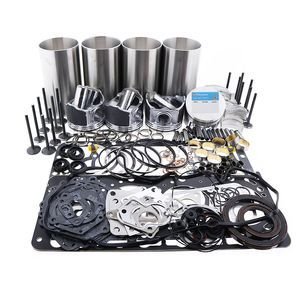
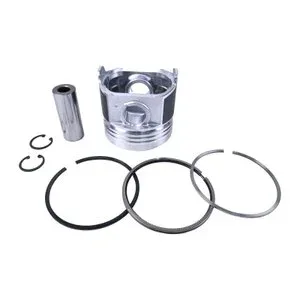
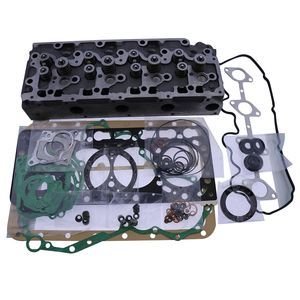
Matched Overhaul Sealing Set — Every gasket in this Cummins QSF3.8 upper and lower kit is verified against engine serial variants before dispatch, preventing the missing-seal failures that force a second teardown in dusty field conditions.
Technical Specifications
| Parameter |
Value |
| Part Number |
6547863 6547864 |
| Product Type |
Overhaul Gasket Kit |
| Cross-Reference |
6547863, 6547864 (reference only) |
| Machine Fitment |
Cummins QSF3.8 Engine |
| Part Name |
Upper & Lower Gasket Kit |
| Condition |
New Aftermarket |
| Material |
Reinforced composite layers |
| Temperature Range |
Up to 180°C |
| Kit Contents |
Upper and lower engine sealing gaskets |
| Warranty |
3–12 months against manufacturing defects |
| Manufacturing Standard |
ISO 9001 |
Application Suitability
| Engine System |
Related Components |
| Cylinder head sealing system |
Head gasket, valve cover gasket, injector sleeve seals |
| Block-to-oil pan sealing |
Oil pan gasket, rear main seal, front crankshaft seal |
| Coolant passage sealing |
Thermostat housing gasket, water pump gasket |
| Full QSF3.8 overhaul |
Piston rings, main and rod bearings, thrust washers |
| Top-end repair on QSF3.8-powered excavators and loaders |
Valve stem seals, intake and exhaust manifold gaskets |
Why Overhaul Gasket Kits Fail After the Engine Rebuild Is Complete
The teardown happened twice because a single seal was missing from the kit.
In mining and heavy construction environments, a Cummins QSF3.8 engine pulled from an excavator or loader often arrives at the rebuild bench with unknown service history. The block may have been machined during a previous overhaul, crankshaft journals ground to an undersize, or head surfaces skimmed — and none of that is recorded on the nameplate. An Overhaul Gasket Kit that ships as "complete" but does not account for these variant differences will leave the technician short of the correct gasket thickness or missing a critical O-ring. The engine runs for a few hundred hours, then coolant migrates into the oil gallery or compression bleeds past the head gasket. [NEED_CITE: common causes of premature head gasket failure in turbocharged diesel engines] The cost is not just the replacement gasket — it is the second teardown, the replacement fluids, the machine standing idle on site, and the lost production tonnage while the excavator waits.

Gasket Position Within the QSF3.8 Sealing System
This Overhaul Gasket Kit covers both the upper-end and lower-end sealing surfaces of the Cummins QSF3.8 engine in one matched set. The upper set addresses the cylinder head-to-block interface, valve cover, thermostat housing, and intake manifold sealing faces. The lower set covers the oil pan, rear main seal carrier, and front cover gasket surfaces. Supplying both sets together means the rebuild technician does not source upper gaskets from one supplier and lower gaskets from another — eliminating the material grade mismatch that causes one end of the engine to fail before the other.
Serial Variant Differences That Change Gasket Dimensions
Not every QSF3.8 engine uses identical gasket profiles. Cummins Engine serial number ranges correspond to different production runs where bore spacing tolerances, coolant port positions, and bolt patterns shifted between early and late builds. A previous rebuild may have altered the deck height or crankshaft journal diameter, requiring a different gasket compression thickness to maintain correct sealing load. [NEED_CITE: engine serial number variant identification for industrial diesel gasket selection] Confirming the exact engine serial number before ordering ensures the kit matches the block as it sits on the bench today — not as it left the factory.
Reading the Specifications That Matter at the Rebuild Bench
The reinforced composite layer construction of these gaskets is designed to handle the thermal cycling and combustion pressures specific to the QSF3.8 platform. The 180°C temperature rating covers sustained operating temperatures at the cylinder head-to-block interface, where exhaust-side gasket zones see the highest thermal load. Composite materials in this class maintain conformability across minor surface irregularities that remain after head and block resurfacing — a property that rigid steel-shim gaskets cannot match on engines with prior machining history. The matched thickness across all gaskets in the set ensures uniform clamping load distribution when head bolts are torqued to sequence, reducing the likelihood of localized blow-by paths developing after initial run-in.
The Hidden Cost of a Missing Seal in the Overhaul Package
When an Overhaul Gasket Kit arrives missing the rear main seal or the correct oil cooler O-ring, the rebuild either stops or proceeds with a locally sourced substitute of uncertain material grade. A substitute seal in the wrong compound degrades under QSF3.8 operating temperatures and oil chemistry, failing within months. [NEED_CITE: elastomer compatibility requirements for diesel engine oil seal applications] The engine is then torn down again — not because the gasket set itself was defective, but because one component was absent or incorrect, and the replacement did not match the system requirements. This second teardown doubles labor cost and pushes the machine return-to-service date back by days or weeks.
Sourcing This Overhaul Gasket Kit With Verified Compatibility
Production on selected sealing lines is handled in our own facility, with the remainder sourced from ISO 9001-certified manufacturing partners — both carry the same QC and warranty terms. The complete QSF3.8 overhaul package ships under one account, covering gaskets, bearings, pistons, and seals without splitting across multiple suppliers. Minimum order is one kit, supporting emergency rebuilds and single-engine overhauls. Our technical team verifies compatibility against engine serial number and prior rebuild history before dispatch, and cross-reference validation covers superseded part numbers that may appear on worn nameplates or legacy service records. Pre-shipment quality inspection records document dimensional compliance at batch level. Sample kits are available for fitment confirmation before bulk commitment on fleet-level overhaul programs.
Documentation & Verification
- Commercial invoice and packing list detailing each gasket by position and quantity
- Cross-reference sheet mapping 6547863 and 6547864 (reference only) to engine serial ranges
- Dimensional inspection record covering coolant port spacing and bolt hole alignment
- Warranty terms covering manufacturing defects for 3–12 months
- Pre-shipment packing photographs showing kit completeness and seal condition
- HS code and customs documentation for international overhaul parts shipment
Installation & Rebuild Sequence
- Verify head and block deck flatness before installing upper gasket set to prevent localized blow-by
- Clean all sealing surfaces of residual adhesive and carbon deposits that compromise composite gasket conformability
- Follow Cummins QSF3.8 torque sequence and angle specifications to achieve uniform clamping across the head gasket
- Install lower-end gaskets only after confirming crankshaft endplay and bearing clearances are within rebuild specifications
- Perform initial run-in with monitored coolant and oil pressure to confirm sealing integrity before returning to full load
Requesting a Verified Kit for Your Engine
Provide the QSF3.8 engine serial number, any known prior rebuild history including machining work on the block or crankshaft, and the specific repair scope — full overhaul, top-end only, or bottom-end only. This allows confirmation of correct gasket thickness grade and complete kit contents before the engine reaches the bench.
Frequently Asked Questions
Q: What gaskets are included in this upper and lower kit, and what might still be missing for a full QSF3.8 overhaul?
A: The kit contains upper and lower engine sealing gaskets covering head, valve cover, oil pan, and front/rear seal carrier surfaces. Injector sleeve seals, specific O-rings for oil cooler connections, and certain coolant bypass gaskets may not be included depending on engine serial variant. Request a detailed contents list matched to your engine serial number before ordering to confirm completeness.
Q: The crankshaft was ground in a previous rebuild — do I need a different gasket thickness or grade?
A: Crankshaft grinding changes journal diameter and may affect rear main seal sizing, but typically does not alter head or oil pan gasket thickness. However, if the block deck or head surface was machined, gasket compression requirements change. Provide the engine serial number and details of any prior machining so the correct thickness variant is selected for your QSF3.8.
Q: Different QSF3.8 engine serial numbers use different internal parts — how do I confirm this kit fits mine?
A: Share the full engine serial number from the nameplate or data tag. Cross-reference verification maps your serial range to the correct gasket profiles, coolant port positions, and bolt patterns. If the nameplate is worn or painted over, a photograph of the block casting number and head casting number allows identification of the correct variant.
Q: What other engine system components should be inspected or replaced at the same time as these gaskets?
A: During a QSF3.8 overhaul using this gasket set, inspect piston rings, main and rod bearings, thrust washers, and valve stem seals for wear. Coolant passage condition, injector sleeve integrity, and head bolt stretch should also be evaluated. Replacing gaskets without addressing the root cause of the original failure risks early repeat failure.
Q: How do I verify the exact QSF3.8 engine model and serial number when the nameplate is worn or painted over?
A: Locate the block casting number and cylinder head casting number, typically stamped in accessible positions on the engine block. A clear photograph of these castings, along with any visible numbers on the flywheel housing, allows technical identification of the engine variant and correct gasket kit selection.