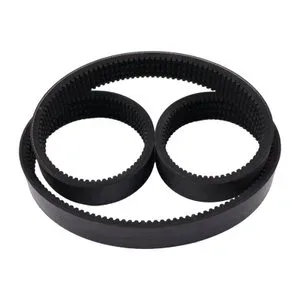
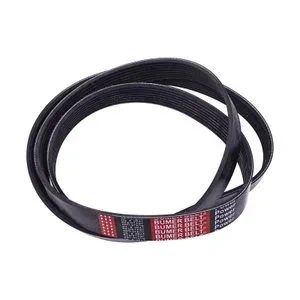
Engine Sequence Variant Confirmed — Bobcat S630 through T870 loaders use different belt routings despite sharing the same base engine block, and this 3VX banded cogged V-belt is verified against the specific accessory drive configuration for each machine model.
Technical Specifications
| Parameter |
Value |
| Part Number |
7177671 |
| Product Type |
Belt |
| Cross-Reference |
7177671 (for identification purposes) |
| Machine Fitment |
Bobcat S630, S650, T630, T650, T870 |
| Part Name |
3VX Banded Cogged V-Belt |
| Material |
EPDM rubber compound with aramid fiber fabric and aramid tensile cords |
| Dimensions |
4×10×1670La |
| Condition |
New Aftermarket |
| Warranty |
3–12 months against manufacturing defects |
| Standard |
ISO 9001 |
Application Suitability
| Engine System |
Related Components |
| Belt Drive – Accessory Drive |
Tensioner assembly, idler pulleys, fan clutch |
| Belt Drive – Alternator Circuit |
Alternator mounting bracket, pulley alignment spacers |
| Belt Drive – Cooling Fan Drive |
Water pump pulley, fan hub bearing |
| Belt Drive – A/C Compressor (if equipped) |
Compressor clutch pulley, magnetic clutch coil |
Why the Same Drive Belt Part Number Fails Across Different Rebuilds
A replacement Drive Belt engine rebuild project that works on one Bobcat T650 may shred within weeks on another, even when both machines carry the same part number on the old belt. The failure rarely originates in the belt itself. Root causes hide in the tensioner arm pivot, the idler pulley bearing, or a misaligned alternator bracket carried over from the previous service cycle. [NEED_CITE: belt drive system misalignment diagnostics for diesel engines]
In the Yangtze River Delta construction belt, I have seen this pattern repeat on dozens of Bobcat loaders. Shops order the belt, install it, and send the machine back to the yard. Two weeks later the belt snaps or the edges show feathering. The tensioner spring was weak, the idler bearing had play, and nobody checked. The new belt absorbed all the system faults until it could not anymore. I learned this the hard way, from senior technicians who pulled me aside after I sent out parts that came back on the bench.

The Belt Drive System Inside Your Bobcat Engine Bay
The belt in your Bobcat S630 or T870 does more than spin a fan. It transfers crankshaft power to the alternator, water pump, and in some configurations the hydraulic cooler fan or A/C compressor. Every pulley in that loop adds a load point, and every load point introduces alignment tolerance. When an engine comes off the rebuild stand, the Drive Belt engine rebuild task is not finished until every driven accessory spins true and the tensioner holds the correct deflection.
What the Previous Failure Is Trying to Tell You
A belt that cracks along the ribs usually points to heat buildup from a slipping tensioner. A belt that loses chunks from the back side often means a seized idler pulley bearing is dragging the belt surface across a stationary face. Frayed edges suggest pulley misalignment. These symptoms describe the system fault, not the belt defect. Ordering a new belt without addressing the upstream cause means scheduling the same repair again in a matter of weeks. [NEED_CITE: root cause analysis methodology for repeated belt drive failures]
EPDM and Aramid Under the Hood
The EPDM compound in this belt resists the heat profile typical of enclosed loader engine bays, where ambient temperatures around the accessory drive regularly exceed what standard chloroprene belts tolerate. Aramid tensile cords carry the load without stretching under sustained high-RPM operation, maintaining the tension setting established during installation. The cogged profile adds flexibility around smaller-diameter pulleys such as the alternator, while the banded construction ties multiple ribs together so that dynamic load does not fatigue individual ribs in isolation.
The Cost of Replacing Only What Broke
When a shop pulls a shredded belt off a Bobcat S650 and installs only a new belt, the underlying fault remains. A weak tensioner spring will allow slip, generating heat that degrades the replacement belt faster than the first one failed. A worn idler bearing introduces vibration that accelerates rib fatigue across the entire belt span. The machine goes back to work, and the next failure is already in progress. [NEED_CITE: total cost of repeat equipment downtime in construction fleets]
Sourcing This Belt as Part of the Rebuild
Our selected production lines and qualified sourcing partners operate under the same quality inspection and warranty terms, so this belt ships with the same accountability whether it was produced in our Guangzhou facility or by an ISO-certified partner. We stock belt drive components across eight categories under one account, meaning tensioners, idler pulleys, and overhaul gasket sets can move in the same consignment. Minimum order starts at one piece, so a single emergency replacement ships without forcing a bulk commitment. Our technical team verifies fitment from the engine serial number, not just the machine model, catching variant differences before the part leaves the warehouse. Cross-reference verification covers superseded and alternate numbers to prevent the situation where an older reference no longer maps to the correct physical belt. Samples are available for fitment confirmation before larger quantities are committed.
Documentation & Verification
- Commercial invoice listing each belt by part number and engine serial cross-reference
- Compatibility sheet confirming belt routing against your specific Bobcat loader model
- Dimensional inspection record verifying 4×10×1670La measurement before dispatch
- Warranty terms document covering manufacturing defects for the stated period
- Packing photographs showing belt condition and protective wrapping at time of shipment
- HS code guidance for customs clearance in your destination market
Installation & Rebuild Sequence
- Verify pulley alignment across the full accessory drive loop before routing this banded V-belt
- Inspect tensioner arm pivot and spring for free movement and correct deflection range
- Check every idler pulley bearing for axial play and smooth rotation without noise
- Route the 3VX belt following the Bobcat-specific diagram, confirming rib-to-groove seating
- Set tension to specification and run the engine at idle to observe tracking behavior
- Re-check tension after the initial run-in period once the aramid cords have seated
Request the Right Belt for Your Engine
Provide your Bobcat loader model, engine serial number, and any history of previous belt drive service. If the nameplate is unreadable, a photograph of the existing belt and the pulley arrangement allows our team to confirm the correct variant. Include details on whether the tensioner or idler pulleys were replaced during the last service, so we can advise on matched component supply for the current repair.
Frequently Asked Questions
Q: What other belt drive components should be inspected or replaced alongside this belt?
A: The tensioner assembly, all idler pulleys, and every driven accessory pulley should be checked for bearing play, surface wear, and alignment. A worn tensioner spring or seized idler bearing will cause the new belt to fail prematurely. Replacing matched components during the same service window prevents repeat downtime on the Bobcat loader.
Q: How do I confirm the correct belt variant for my Bobcat engine serial?
A: Engine serial numbers determine the accessory drive configuration, including pulley count and belt routing path. Provide your engine serial alongside the loader model, and our technical team will cross-reference the correct belt specification. Photographs of the existing belt and pulley layout help verify fitment when nameplates are worn.
Q: What system-level conditions cause this belt to fail prematurely?
A: Pulley misalignment, weak tensioner springs, seized idler bearings, and contaminated pulley grooves all introduce abnormal load on the belt. These faults transfer stress to the replacement belt if left unaddressed. Inspecting the entire accessory drive loop identifies the root cause rather than treating only the failed component.
Q: Can this belt ship as part of a complete engine overhaul kit?
A: Yes. This belt can be combined with overhaul gasket sets, piston and ring assemblies, bearing shells, and other belt drive components in a single consignment. Consolidating the full rebuild list under one account simplifies logistics and ensures all matched components arrive together for the engine rebuild project.