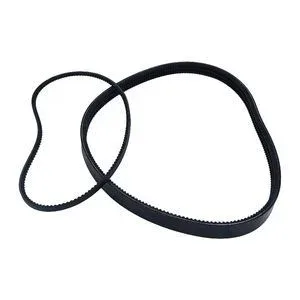
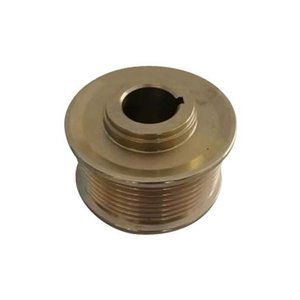
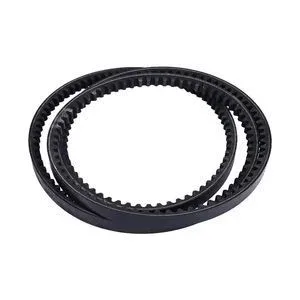
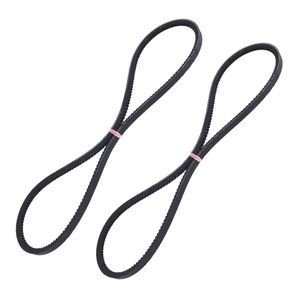
Matched Set Confirmed — drive and alternator belts verified against engine serial prefix before dispatch, preventing the misrouting that strands machines on the bench.
Technical Specifications
| Parameter |
Value |
| Part Number |
6726898, 6675837 |
| Product Type |
Belt |
| Cross-Reference (reference only) |
6726898, 6675837 |
| Machine Fitment |
Bobcat 753, 763, 773, S150, S160, S175, S185, T180, T190 |
| Brand Compatibility |
BOBCAT |
| Condition |
New Aftermarket |
| Material |
EPDM (Ethylene Propylene Diene Monomer) rubber compound |
| Reinforcement |
Aramid cord |
| Heat Resistance |
Up to 150°C |
| Dimensional Tolerance |
±0.3 mm on width and length |
| Warranty |
6 months against manufacturing defects |
| MOQ |
1 piece |
| Standards |
ISO 9001, ISO 11795:2017 |
Application Suitability
| Engine System |
Related Components |
| Accessory drive circuit |
Tensioner assembly, idler pulley bearings, pulley alignment shims |
| Alternator charging circuit |
Alternator mounting brackets, alternator bearing set, wiring harness connectors |
| Scheduled engine maintenance |
Complete belt set, coolant hose set, thermostat gasket |
| Engine overhaul consumables |
Overhaul gasket kit, front crankshaft seal, timing cover gasket |
Why the Same Part Number Ships in Different Belt Routing Variants
Confirming engine serial prefix before ordering prevents the belt length mismatch that leaves a machine idling on the rebuild stand.
I once shipped a Drive & Alternator Belt Set to a site in Nigeria based solely on the machine model — a Bobcat T190. The tensioner mounting hole pattern on that particular engine serial variant sat further outboard, requiring a belt routing path that was measurably longer than the standard configuration. The machine sat on the bench for days while a replacement set was sourced. That experience reinforced a rule now applied to every order: the engine serial prefix must be checked before any Drive & Alternator Belt Set engine rebuild replacement leaves the warehouse [NEED_CITE: engine serial variant identification practices for compact loaders]. Different production runs of the same compact loader platform can carry belt drive configurations that diverge in routing length and pulley clocking, even when the external part number appears unchanged.

The Belt Drive System and Its Adjacent Components
The drive belt and alternator belt operate within a single accessory drive circuit. When one belt is replaced without the other, tension balance across the system shifts, and the remaining belt absorbs a disproportionate share of the load. This matched Drive & Alternator Belt Set engine rebuild replacement addresses both circuits simultaneously, restoring uniform wear progression and consistent charging output. During an engine overhaul, the belt drive system is among the last subsystems assembled — yet it is the first to reveal misalignment or tensioner fatigue once the engine fires.
Engine Serial Variants and the Fitment Gap They Create
Across the Bobcat 753 through T190 range, engine serial prefixes map to specific belt routing lengths and tensioner positions. A replacement Drive & Alternator Belt Set engine rebuild replacement ordered without this verification risks arriving with the correct rib profile but incorrect effective length. We cross-check the engine serial prefix against the belt routing diagram before confirming fitment, covering both superseded and alternate belt numbers [NEED_CITE: compact loader engine serial variant belt routing differences]. This step eliminates the scenario where a belt physically fits the pulleys but cannot achieve proper tension because the routing path demands a different length variant.
Material Selection for High-Temperature Engine Bays
The EPDM compound resists thermal degradation up to 150°C, which matters in compact loader engine bays where airflow is restricted and oil mist is constant. Aramid cord reinforcement provides tensile stability under the cyclic loading of frequent throttle changes — common in demolition and quarry applications where the engine transitions between idle and rated RPM dozens of times per hour. The surface rib geometry is matched to OEM pulley profiles, preventing the chirping noise and uneven load distribution that signal a belt riding incorrectly in the pulley groove. Dimensional tolerance is held to ±0.3 mm on both width and length, which keeps the belt seated correctly across the full pulley face rather than migrating toward one edge.
The Hidden Cost of Ignoring the Root Cause of Belt Failure
A belt that fails prematurely is frequently a symptom, not the cause. Worn tensioner springs allow the belt to slip under load, generating heat that degrades the rubber compound from the inside. Failing alternator bearings introduce lateral runout that saws through the belt ribs one by one. Misaligned pulleys — sometimes by less than a degree — concentrate wear on a single rib until it separates. Replacing the belt without diagnosing these system-level faults means the new Drive & Alternator Belt Set engine rebuild replacement will follow the same failure path within weeks [NEED_CITE: root cause analysis methodology for accessory drive belt failures in mobile equipment]. The cost is not the belt itself but the second teardown, the second round of labor, and the second period of machine downtime.
Why Rebuild Shops Source This Set Through One Account
Self-produced lines and qualified sourced supply carry the same QC protocol and warranty terms, so a rebuild shop ordering this belt set alongside tensioners, gaskets, and seal kits receives everything under one account and one warranty. The eight-category product range means a complete overhaul consumables list ships as a single consignment rather than arriving in staggered deliveries from multiple vendors. Minimum order of one piece allows a single emergency replacement without forcing a bulk commitment. The technical team verifies engine serial variants and cross-references superseded belt numbers before dispatch. Sample sets are available for fitment confirmation before a bulk order is placed, reducing the risk of stocking an incorrect variant.
Documentation & Verification
- Commercial invoice listing each belt by part number and engine serial variant confirmed
- Cross-reference sheet mapping superseded and alternate belt numbers, marked reference only
- Dimensional inspection record covering belt width, length, and rib profile before dispatch
- Warranty terms covering manufacturing defects for six months from delivery date
- Packing photographs showing belt set in original retail box with protective foam lining
- HS code and customs documentation support for international engine parts shipments
Installation & Rebuild Sequence
- Install the Drive & Alternator Belt Set engine rebuild replacement only after tensioner and idler pulley bearings are verified
- Clean all pulley grooves with solvent before belt installation to prevent debris-induced rib damage
- Confirm belt routing path matches the engine serial variant diagram, not a generic template
- Set tensioner to specified deflection and run the engine at idle to seat belts before load testing
- Recheck tension after the first operating cycle as the aramid cord and EPDM compound settle
Request a Fitment-Verified Quote
Provide your engine model, serial number prefix, and any previous rebuild history so we can confirm which belt routing variant applies to your machine. If the nameplate is worn or painted over, a photograph of the engine block casting number is usually sufficient for identification. We will return a confirmed Drive & Alternator Belt Set engine rebuild replacement match along with any adjacent components your rebuild sequence requires.
Frequently Asked Questions
Q: Does the set include all belts for the accessory drive, or just drive and alternator?
A: This set covers the drive and alternator circuits specifically. Some engine configurations include an additional belt for a secondary hydraulic pump or fan drive. Provide your engine serial prefix so we can confirm whether your accessory drive requires additional belts beyond this matched pair.
Q: Should the belt tensioner and pulley bearings be replaced at the same time?
A: In most cases, yes. A worn tensioner spring or degraded idler pulley bearing will cause premature failure of the new belt set. We recommend inspecting both during the rebuild and replacing any component showing free-play or roughness. Matched tensioner assemblies are available from our inventory.
Q: How do I confirm the correct belt variant for my specific engine serial number?
A: Send us the engine serial number or a clear photograph of the nameplate. We cross-reference the serial prefix against belt routing diagrams to confirm the correct length and routing variant. This step prevents the mismatch that occurs when different production runs of the same machine model carry different belt configurations.
Q: What system-level faults cause premature belt failure beyond normal wear?
A: Common root causes include worn tensioner springs that allow slip, failing alternator bearings that introduce lateral runout, and pulley misalignment that concentrates load on a single rib. Identifying and correcting these faults during the rebuild prevents the new belt set from repeating the same failure cycle.
Q: Can I order a sample set for fitment verification before committing to bulk?
A: Yes. Sample supply is available for fitment confirmation before any bulk commitment. This is particularly useful when stocking belt sets for a mixed fleet where engine serial variants may differ across machines of the same model designation.