Matched Set Dispatch — Every belt, tensioner, and pulley in this power transmission kit ships under one packing list, eliminating partial arrivals that keep a BC600XL out of service.
Technical Specifications
| Parameter |
Value |
| Part Number |
154537-001 |
| Product Type |
Belt |
| Cross-Reference |
154537-001 (reference only), 154537001 (reference only) |
| Machine Fitment |
Vermeer BC600XL Brush Chipper |
| Condition |
New Aftermarket |
| Material |
High-tensile polyester cords and heat-resistant rubber compound |
| Operating Temperature |
Up to 120°C |
| Profile Type |
Precision-molded tooth profile |
| Outer Layer |
Abrasion-resistant |
| Edge Construction |
Reinforced |
| Testing |
Pre-shipment tension testing |
| Warranty |
3-12 months against manufacturing defects |
| Standard |
ISO 9001 |
Application Suitability
| Engine System |
Related Components |
| Crankshaft-to-chipping-drum power transmission |
Drive pulley assembly, idler pulley, tensioner bearing |
| Auxiliary front-end drive loop |
Belt guard hardware, alignment shims, crankshaft seal |
| Engine overhaul support system |
Timing components, accessory bracket fasteners, gasket set |
| Scheduled maintenance replacement |
Tensioner spring, pulley groove inspection gauge, seal kit |
Why a New Drive Belt Fails Within Weeks of Installation
Replacing the belt without auditing the tensioner and pulleys transfers the original fault straight onto the new component.
In hot-climate chipping operations, I have watched a fresh Drive Belt engine replacement rebuild fail inside a single shift because the tensioner arm was fatigued and applying uneven load across the cord body. The belt is only one link in the power transmission chain; the pulley grooves, tensioner bearing, and crankshaft output flange all share the load cycle [NEED_CITE: belt drive system failure root cause analysis for mobile wood processing equipment]. When any one of those mating surfaces carries wear beyond tolerance, the replacement belt absorbs the mismatch as localized heat, and the rubber compound degrades from the inside out before visible cracking appears on the outer layer.

Where This Belt Sits Inside the Engine Power Transmission System
The 154537-001 belt transmits torque from the engine crankshaft output to the chipping drum input shaft on the BC600XL. This is a high-torque, shock-loaded loop: every time a six-inch branch enters the feed mechanism, the drum decelerates and the belt must recover grip within fractions of a second. A Drive Belt engine replacement rebuild that ignores the driven-side load profile will specify the correct part number but miss the system context that determines service life.
Engine Serial Variants and Why the Same Number Can Mislead
Vermeer BC600XL units shipped across different production years carry engine variants that alter pulley diameter and center-distance spacing. Two machines wearing the same external model badge can require different tensioner arm geometries, meaning the belt that seats perfectly on one unit will ride high or low in the groove on another. Confirming the engine serial number and production date code is the only reliable way to lock down the correct variant before ordering a Drive Belt engine replacement rebuild [NEED_CITE: engine serial variant impact on accessory drive belt geometry in forestry equipment].
Reading the Specifications Against Real Operating Conditions
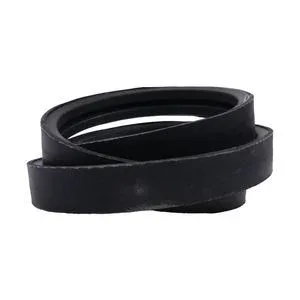
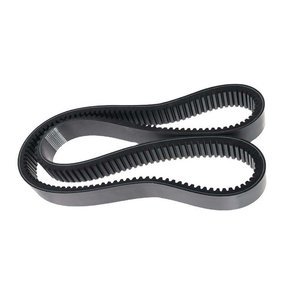
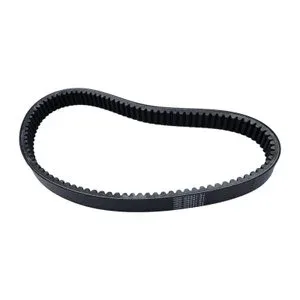
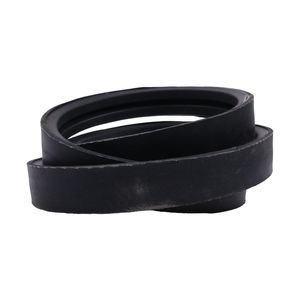
The precision-molded tooth profile on this belt is designed to seat fully into matched pulley grooves, distributing load across each cord strand rather than relying on friction alone. High-tensile polyester cords resist elongation under sustained torque, which matters when the chipping drum encounters hardwood density spikes. The heat-resistant rubber compound is rated for continuous operation up to 120°C, a threshold regularly approached in enclosed engine compartments during summer chipping work. Reinforced edges resist fraying at the pulley entry and exit points, where lateral flexing concentrates wear. The pre-shipment tension testing verifies that each belt holds its specified length under load, catching manufacturing variance before the part reaches a machine.
The Hidden Cost of a Single-Part Replacement Decision
Ordering only the belt and deferring tensioner inspection creates a predictable failure loop: the new belt wears prematurely, the machine goes down again, and the second replacement is ordered under greater time pressure with less diagnostic care. Workshops that have adopted a system-audit approach report meaningfully fewer repeat visits for the same transmission fault [NEED_CITE: repeat failure rate reduction through systematic belt drive component audit]. The downtime cost of a second belt failure on a BC600XL during a contracted land-clearing job typically exceeds the cost of the tensioner and pulley that should have been changed in the first window.
Why Buyers Source This Belt Through Our Counter
Our own production lines and qualified sourced supply operate under the same quality inspection and warranty terms, so a matched belt-and-tensioner kit carries a single accountability chain. Eight product categories under one account mean the belt, seals, gaskets, and fasteners for a full transmission service ship as one consignment. One-piece minimum order lets a workshop replace a single failed belt without padding an unnecessary bulk purchase. Guangzhou warehouse stock on high-turnover drive components shortens dispatch lead times for common failure items. Part identification works from a part number, a machine model, or a photograph of a worn nameplate when paint and debris have obscured the original stamping.
Documentation & Verification
- Commercial invoice listing each belt and companion component by line item
- Cross-reference sheet mapping 154537-001 to alternate interchange numbers (reference only)
- Pre-shipment tension test record included with every belt dispatched
- Warranty card stating coverage period and defect claim procedure
- Packing photographs showing belt condition before crate closure
- HS code guidance for customs clearance in destination country
Installation & Rebuild Sequence
- Inspect pulley groove depth and tensioner arm pivot before routing the new belt onto the BC600XL drive.
- Clean all mating surfaces of rubber residue and debris to prevent tooth-profile seating errors.
- Set tensioner to manufacturer-specified deflection and verify with a calibrated gauge after initial run-in.
- Run the engine at idle for a brief warm-up cycle and recheck belt tracking alignment under no-load conditions.
- Re-inspect after the first full-load chipping pass to confirm no edge ride-out or abnormal heat signature.
Quoting a Complete Transmission Service
Provide the engine model, serial number, and any prior rebuild history so the correct belt variant and matched companion parts are confirmed before a kit is assembled. If the machine nameplate is illegible, a clear photograph of the existing belt tooth profile and pulley arrangement is enough to begin identification.
Frequently Asked Questions
Q: What other components should be replaced alongside this drive belt?
A: The tensioner assembly, idler pulley, and pulley groove surfaces should all be inspected during the same service window. Worn tensioner bearings and grooved pulleys transfer uneven loading onto the new belt, causing premature cord fatigue. A matched kit that includes these companion items avoids a second teardown within weeks of the first repair.
Q: How do I confirm the correct belt for my BC600XL engine variant?
A: Provide the engine serial number and production date code from the engine nameplate. Different production runs of the BC600XL used engine variants with altered pulley diameters and center distances. A photograph of the old belt and pulley arrangement helps cross-verify the tooth profile and length before dispatch.
Q: Why does the replacement belt keep breaking on the same machine?
A: Recurring belt failure usually points to an unresolved system fault rather than a defective belt. Common root causes include a fatigued tensioner spring, worn pulley grooves that pinch the cord body, and misalignment between the crankshaft and drum input shafts. Addressing these mating components stops the failure cycle.
Q: Can I get a kit that includes the tensioner and pulleys together?
A: Yes. Supplying the machine model and engine serial number allows us to assemble a matched kit covering the belt, tensioner assembly, pulleys, and associated seals. Consolidating these items into one shipment ensures compatibility and eliminates the risk of partial deliveries delaying the repair.
Q: Are belts from different BC600XL production years interchangeable?
A: Not always. Engine variant changes across production years can alter pulley spacing, groove profile, and tensioner geometry. A belt that fits one variant may ride incorrectly on another, leading to edge wear and early failure. Always verify fitment against the specific engine serial number rather than the machine model alone.