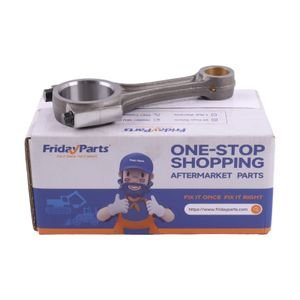
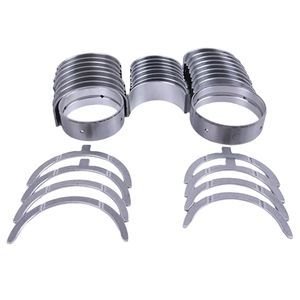
Engine Rebuild Matched Set — Cover and tappet gasket supplied as a verified pair for Cummins 4BT and B3.9 variants, eliminating mismatched batch fitment issues during top-end overhauls.
Technical Specifications
| Parameter |
Value |
| Part Number |
5365772 3283767 |
| Product Type |
Push Rod Cover & Gasket Set |
| Cross-Reference |
5365772, 3936188, 3927917 (cover); 3283767, 3904056, 3922078, 3928831, 3900544, 3903837 (gasket) — for identification purposes only |
| Machine Fitment |
Cummins 4BT, 4B3.9, B3.9 G, B3.9 CM2620 B171C |
| Content |
1x Push Rod Cover, 1x Tappet Cover Gasket |
| Condition |
New Aftermarket |
| Standards |
ISO 9001 |
| Warranty |
3-12 months against manufacturing defects |
Application Suitability
| Engine System |
Related Components |
| Valve Train Sealing |
Push rod seals, valve cover gaskets, rocker arm assembly hardware |
| Cylinder Head Interface |
Head gasket sets, injector sleeve seals, thermostat housing gaskets |
| Lubrication Boundary |
Tappet bore seals, oil gallery plugs, crankcase breather elements |
| Top-End Overhaul |
Valve stem seals, injector return line washers, rocker lever adjusting screws |
Why the Same Push Rod Cover Part Number Fits Several Engine Builds
Confirming the engine serial variant before ordering is the single step that prevents a cover-gasket mismatch on the bench.
A push rod cover leak often traces back to a reused fastener or a gasket grade that does not match the block casting revision, not the cover itself. When the cover comes off, the underlying push rods and tappets show wear patterns that explain why the seal failed in the first place. Replacing only the visible leak source without addressing adjacent valve train wear leads to a repeat teardown within a short service window. [NEED_CITE: Cummins B-series valve train wear progression and sealing interface revisions]

Valve Train Boundary — What the Cover Actually Seals
This push rod cover and tappet gasket set sits at the boundary between the cylinder head oil gallery and the external block face on Cummins 4BT and B3.9 engines. When the cover is removed during a Push Rod Cover Gasket Set engine rebuild, the exposed push rods and tappet bores should be inspected for scoring and excessive side clearance. The gasket material is rated for sustained high-temperature exposure consistent with B-series operating envelopes.
Superseded Numbers and Serial Range Variants
The cover casting has gone through several part number revisions — 3936188 and 3927917 are earlier references that map to the same physical interface on later 4BT builds, while 5365772 is the current identifier. The gasket has an even longer supersession chain: 3904056, 3922078, 3928831, 3900544, and 3903837 all reference the same sealing profile across different production years. [NEED_CITE: Cummins B-series push rod cover supersession history and serial break points] Matching the correct variant to your engine serial range prevents the situation where a gasket compresses unevenly against a revised cover flange.
Gasket Material and Cover Machining Tolerances
The tappet cover gasket in this set is manufactured to maintain seal integrity across the thermal cycling range typical of 4BT and 4B3.9 engines in construction and agricultural duty. The cover mounting surface is precision-machined to align with the cylinder head interface, which is critical because even minor warpage on the mating face causes localized gasket blowout under sustained load. Fastener torque sequence on reassembly must follow the published pattern — uneven clamping load is a common root cause of repeat leaks that technicians misdiagnose as a defective gasket.
The Cost of Skipping the Adjacent Valve Train Inspection
When a push rod cover is replaced without inspecting the push rods, tappets, and rocker arm pivots underneath, the underlying wear that caused the original seal failure remains unaddressed. A worn tappet bore allows excess oil splash that overwhelms a new gasket within weeks. Shops that treat this Push Rod Cover Gasket Set engine rebuild as an isolated seal swap — rather than a valve train boundary service — see machines return with the same leak pattern before the next scheduled maintenance interval. [NEED_CITE: diesel engine valve train leak diagnosis and root cause analysis methodology]
Why Source This Set Through Our Engine Parts Desk
Self-produced and qualified sourced lines carry the same quality control and warranty terms under one account, so this cover and gasket set ships with consistent documentation. Eight product categories mean the valve cover gaskets, push rod seals, and head hardware for the same job can consolidate into one consignment. Minimum order is one piece, which matters when a single machine is down and you need to confirm fitment before committing to a fleet quantity. Our technical team verifies cross-references against superseded numbers and engine serial variants before dispatch, reducing the risk of receiving a cover that physically bolts on but seals against the wrong flange revision.
Documentation & Verification
- Commercial invoice listing cover and gasket as matched set with batch traceability
- Cross-reference sheet mapping 5365772 and 3283767 against superseded numbers, marked reference only
- Dimensional inspection record confirming cover flange flatness and gasket thickness
- Warranty terms covering manufacturing defects for the stated period
- Packing photographs showing kit contents before crate closure
- HS code and customs classification support for international engine parts shipments
Installation & Rebuild Sequence
- Clean cylinder head mating surface to bare metal before positioning the tappet cover gasket
- Verify push rod tips and tappet faces for wear while the cover is off — replace as a set if scoring is present
- Torque cover fasteners in the published sequence to achieve even gasket compression across the flange
- Inspect rocker arm assembly and valve stem seals for age-related hardening during the same top-end service window
- Run the engine to operating temperature and recheck fastener torque after the initial heat cycle
Confirming the Right Set for Your Engine Build
Provide the engine serial number and any previous rebuild documentation so we can confirm which cover casting revision and gasket profile matches your specific 4BT or B3.9 variant. If the nameplate is unreadable, a photograph of the existing cover and the block casting number near the oil filter housing is usually sufficient for identification.
Frequently Asked Questions
Q: What else should be replaced when the push rod cover is off?
A: Inspect push rods for bending and tip wear, check tappet faces and bores for scoring, and evaluate rocker arm pivot bushings and valve cover gaskets. These components share the same valve train oil boundary and are accessible during the same teardown. Replacing only the cover gasket without checking adjacent wear surfaces often results in a repeat visit.
Q: My engine has a superseded part number — does this set still fit?
A: The cover and gasket in this set cover a long supersession chain across multiple Cummins B-series production years. Provide your engine serial number so we can map the original number on your nameplate against the current identifiers and confirm the physical interface matches your block casting revision before shipping.
Q: Are there different push rod cover variants across 4BT and B3.9 serial ranges?
A: Yes, cover flange profiles and fastener patterns have changed across B-series generations, and the gasket must match the cover revision. Engine serial confirmation resolves this — we verify the correct variant against your specific build rather than shipping a generic fitment that may seal unevenly on a revised casting.
Q: Does the kit include fasteners or only the cover and gasket?
A: This set contains one push rod cover and one tappet cover gasket. Fasteners are not included. We recommend replacing cover bolts if the originals show thread stretching or corrosion. Provide your rebuild scope and we can quote fastener kits and any additional seals needed for the complete top-end service.
Q: How do I confirm my exact engine model from the nameplate or serial number?
A: The engine serial number is stamped on the block near the oil filter housing or on the dataplate attached to the valve cover. If the plate is worn or painted over, a clear photograph of the casting number and the existing push rod cover allows our technical team to identify the correct variant for your application.