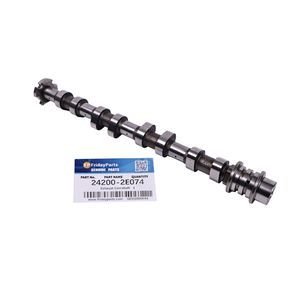
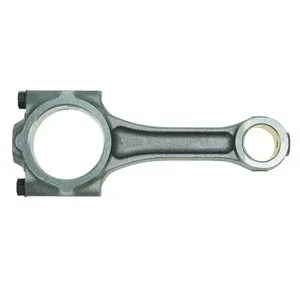
System-Matched Dimensions — Rod big-end bore and small-end pin hole verified against V2403-M crankshaft journal grade before dispatch
Technical Specifications
| Parameter |
Value |
| Product Type |
Connecting Rod |
| Cross-Reference |
V2403-M connecting rod (reference only) |
| Machine Fitment |
Kubota V2403, V2403-M, V2403M engines |
| Material |
Forged steel, heat-treated |
| Hardness |
28–32 HRC |
| Big-End Bore Tolerance |
±0.005 mm |
| Small-End Pin Hole Tolerance |
±0.005 mm |
| Surface Finish |
ISO 4287 Ra ≤ 0.8 μm |
| Yield Strength |
≥ 900 MPa |
| Elongation |
≥ 12% |
| Condition |
New aftermarket, direct replacement |
| Warranty |
6-month warranty against manufacturing defects |
| Minimum Order |
1 piece |
Application Suitability
| Engine System |
Related Components |
| Block rotating assembly |
Con rod bearing shells matched to crankshaft regrind grade |
| Piston and cylinder group |
Piston pin, circlips, and piston assembly sized to bore condition |
| Lubrication circuit |
Oil pump, main bearings, and crankshaft journal condition |
| Overhaul sealing |
Complete engine overhaul gasket set for V2403-M variant |
Why a Connecting Rod Alone Cannot Save the Rebuild
A replacement rod must arrive with bearing shells that match the crankshaft's actual journal diameter — not the factory standard.
In the workshops I have worked with across the Pearl River Delta, the most costly teardowns are the ones that happen before the engine ever fires. A connecting rod for Kubota V2403-M engine rebuild goes in, the bearings are ordered at standard grade, and the crankshaft turns out to have been reground during a previous overhaul. The clearance is wrong, the shell spins or starves for oil, and the entire rotating assembly comes back out [NEED_CITE: engine bearing clearance standards for reground crankshafts]. The cost is not the rod. The cost is the labor, the gaskets, the seals, and the machine sitting idle for another week.

The Rotating Assembly as a Matched System
The connecting rod sits at the center of a dimensional chain that runs from the crankshaft journal through the big-end bearing shell, the rod itself, the small-end bushing, and the piston pin. Every interface in that chain has a tolerance stack, and any mismatch compounds through the assembly. When sourcing a connecting rod for Kubota V2403-M engine rebuild, the rod is only one link — confirming the bearing grade, the bushing condition, and the pin diameter together keeps the entire group within specification.
Rebuild History and the Grade Problem
Engines that have already been overhauled once carry hidden variables. If the crankshaft journals were reground to an undersize, the bearing shells must be ordered at the matching oversize grade. Ordering standard shells alongside a new rod creates an assembly clearance that is either too tight or too loose — both conditions lead to rapid bearing failure. Before confirming an order for a connecting rod for Kubota V2403-M engine rebuild, the crankshaft condition and any prior regrind must be measured and documented [NEED_CITE: crankshaft regrind undersize identification for diesel engines].
Reading the Specifications That Matter
Forged steel with heat treatment to 28–32 HRC provides the fatigue resistance the rod needs under the compression and tension cycles of a four-cylinder diesel. The ±0.005 mm tolerance on both the big-end bore and the small-end pin hole is where the real quality control sits — these dimensions determine bearing crush and pin fit, and any drift outside that band shows up as noise, heat, or premature wear within the first hundred hours. The surface finish at Ra ≤ 0.8 μm ensures the bearing shell seats uniformly without localized pressure points. Yield strength above 900 MPa means the rod can absorb the peak firing pressures of the V2403-M without permanent deformation.
What a Mismatched Rod Actually Costs
When the bearing grade does not match the crankshaft condition, the engine may run for a short period before the shell begins to deteriorate. Metal enters the oil, scoring the main bearings and the camshaft journals. A failure that started as a clearance issue becomes a full engine teardown. In my experience, the shops that skip the crankshaft measurement step end up doing the same job twice, and the second time the damage extends well beyond the rod and bearings [NEED_CITE: secondary damage patterns from incorrect bearing clearance in diesel rebuilds].
Why Buyers Source This Rod Through XUNPO
Self-produced and qualified sourced lines carry the same warranty terms under one account. Eight product categories — engine, hydraulic, electrical, undercarriage, cabin, seal kits, tools, and general spares — allow a full overhaul list to ship as a single consignment. Orders start from one piece, so a single emergency rod does not require a bulk commitment. The Guangzhou warehouse stocks common rotating assembly items for fast dispatch. Part identification works from an engine serial number, a photograph of the nameplate, or a worn component image. The technical team confirms bearing grade compatibility and rod weight balance before the order ships.
Documentation & Verification
- Commercial invoice listing rod quantity, weight balance data, and matched bearing grades
- Cross-reference sheet confirming V2403-M variant compatibility (reference only)
- Dimensional inspection record covering big-end bore, small-end pin hole, and rod weight
- Warranty terms document specifying coverage period and manufacturing defect scope
- Packing photographs showing anti-rust coating and individual sealed polybag condition
- HS code and customs documentation prepared for engine component export
Installation & Rebuild Sequence
- Clean rod big-end bore and cap mating surfaces before fitting bearing shells to prevent debris-induced scoring
- Confirm bearing shell grade against measured crankshaft journal diameter, not assumed factory standard
- Torque rod cap bolts to specification in staged increments and verify big-end bore roundness after tightening
- Check small-end bushing fit and piston pin clearance before assembling piston to connecting rod
- Rotate assembly by hand after installation to detect binding before completing engine reassembly
What to Send With Your Inquiry
Provide the engine serial number and any known rebuild history so the correct bearing grade and rod variant can be confirmed. If the nameplate is unreadable, a photograph of the existing rod, the crankshaft journal stamping, or the piston crown marking will allow identification. Share the full overhaul component list if you are sourcing the rod alongside pistons, bearings, and gaskets as a matched set.
Frequently Asked Questions
Q: What other parts should be replaced together with the connecting rod during an overhaul?
A: Con rod bearing shells, piston pin bushings, piston rings, and the full engine gasket set should all be evaluated. If the crankshaft shows wear or scoring, main bearings and thrust washers should also be included. Replacing the rod without addressing adjacent wear surfaces risks a repeat teardown within the first service interval.
Q: How do I know if my crankshaft has been reground and what bearing grade I need?
A: Check the crankshaft journal stamping for an undersize mark, or measure the journal diameter directly with a micrometer. A reground journal will be smaller than the factory standard dimension. The bearing shells must then be ordered at the corresponding oversize grade to restore correct oil clearance.
Q: Are connecting rods for V2403, V2403-M, and V2403M interchangeable?
A: While these engines share a common platform, internal dimensions and component specifications can differ across production runs. Confirm the exact engine variant and serial number before ordering. A dimensional check of the big-end bore and rod length against your existing component is the safest verification step.
Q: What caused the original rod to fail and how do I prevent it from happening again?
A: Common root causes include oil starvation from a blocked gallery, incorrect bearing clearance from a prior rebuild, or a torque spike from an adjacent system fault. Addressing only the broken rod without investigating the lubrication circuit and bearing condition invites the same failure to repeat.
Q: Can I order a matched set of rods balanced for my engine's cylinder count?
A: Yes. For multi-cylinder engines, rods should be weight-balanced as a set to minimize rotational vibration and reduce load on the main bearings. Provide the cylinder count and engine variant when ordering, and request a weight balance record with the shipment.


![10778 → 1+0+7+7+8 = 23 23 mod 6 = 5 → 句式 5: [站点修饰词] [品类词] – Fits [机型序列] 23 mod 6 = 5 → 选 "System-Matched" System-Matched Connecting Rod Bearing Set – Fits Kubota D1105](https://xunpomachineryparts.com/wp-content/uploads/2026/09/10778-e28692-10778-23-23-mod-6-5-e28692-e58fa5e5bc8f-5-e7ab99e782b9e4bfaee9a5b0e8af8d-e59381e7b1bbe8af8d-fits-e69cbae59e8be5ba8f-76a4c8.webp)