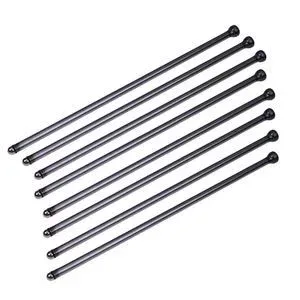
System-Level Tolerance Matching — Every connecting rod 4956017 ships only after big-end bore grade aligns with your crankshaft journal condition and piston weight class.
Technical Specifications
| Parameter |
Value |
| Part Number |
4956017 |
| Product Type |
Connecting Rod |
| Cross-Reference |
4956017 (reference only) |
| Machine Fitment |
Cummins B3.3, QSB3.3 |
| Material |
SAE 4340 alloy steel |
| Design |
Fracture-split |
| Surface Treatment |
Phosphate-coated |
| Big-End Bore Tolerance |
±0.005 mm |
| Surface Hardness |
HRC 38–42 |
| Tensile Strength |
≥1,200 MPa |
| Condition |
New Aftermarket |
| Warranty |
3–12 months against manufacturing defects |
| MOQ |
1 piece |
| Standards |
ISO 9001, ISO 8533, SAE J1397 |
Application Suitability
| Engine System |
Related Components |
| Reciprocating Assembly |
Piston, piston pin, piston rings, con rod bearings, con rod bolts |
| Crankshaft & Main Bearings |
Main bearing shells, thrust washers, crankshaft seals |
| Lubrication System |
Oil pump, oil filter, gallery plugs, oil cooler gasket |
| Overhaul Kit Coordination |
Full gasket set, cylinder head bolts, liner seals, freeze plugs |
When a Connecting Rod Fails, the Rebuild Starts Before the Teardown
A connecting rod ordered without verifying crankshaft journal grade and overhaul kit bearing contents guarantees a second teardown before the engine ever fires.
I have seen Cummins B3.3 units pulled from genset enclosures after a connecting rod engine overhaul rebuild completed on paper but failed in practice. The rod was dimensionally correct; the bearing shells were standard grade while the crankshaft had been reground to 0.25 mm undersize during a prior rebuild. The clearance mismatch destroyed the new bearings within the first hundred hours [NEED_CITE: connecting rod bearing clearance failure modes in medium-duty diesel engines]. This is not a parts defect — it is a system-level specification gap that only surfaces when the engine is under load.
Every connecting rod engine overhaul rebuild that ignores prior repair history repeats this pattern across different engine families.

The Reciprocating Assembly as a Matched Set
A connecting rod does not function in isolation within the B3.3 or QSB3.3 engine block. Its big-end bore tolerance must align with the con rod bearing shell grade, which in turn depends on whether the crankshaft journal is standard or has been machined undersize. The piston weight class affects rod loading at rated RPM, meaning a rod paired with an incorrect piston assembly introduces vibration that accelerates bearing wear across the entire engine system.
Dimensional Grades and the Hidden Rebuild History
This is where most B3.3 and QSB3.3 rebuilds fail before assembly begins. A crankshaft ground to 0.25 or 0.50 undersize requires correspondingly oversized bearing shells, but the connecting rod big-end bore remains at factory specification. If the overhaul kit ships standard-grade bearings without checking the crankshaft, the clearance collapses under thermal expansion [NEED_CITE: diesel engine crankshaft regrind bearing grade selection practices]. Always confirm journal condition and serial variant before locking the bearing specification for any connecting rod in the build.
Material and Tolerance Under Combustion Load
The SAE 4340 alloy steel forging provides the tensile strength needed for the peak cylinder pressures generated by the B3.3 and QSB3.3 combustion cycle. The fracture-split cap design produces a mating surface that is unique to each rod-and-cap pair — they are not interchangeable between cylinders. This eliminates cap-to-rod misalignment that would otherwise create uneven bearing load and localized oil film breakdown. The phosphate coating re*er startup before full oil pressure stabilizes at the big end.
The Cost of Skipping Root-Cause Diagnosis
When a connecting rod fails in service, the rod itself is rarely the origin of the fault. Oil pump pressure degradation, blocked lubrication galleries, or cooling system decline create the thermal and friction conditions that destroy rod bearings first, then the rod. Replacing the connecting rod without diagnosing the upstream system fault sets up the next failure cycle [NEED_CITE: root cause analysis methodology for diesel connecting rod bearing failures]. The rebuild cost doubles because the same root cause repeats.
Why Source This Component Through XUNPO
Own production lines and qualified sourced supply operate under one account and one warranty framework, so the connecting rod and its matched bearings, gaskets, and piston components carry identical quality terms. Eight product categories mean the entire reciprocating assembly, lubrication components, and overhaul gasket kit ship in a single consignment from the Guangzhou warehouse. Minimum order starts at one piece for emergency single-rod replacement, and the technical team verifies dimensional grade and engine serial variant compatibility before dispatch. Cross-reference verification covers superseded numbers across B3.3 and QSB3.3 production runs, and sample supply is available for fitment confirmation before bulk commitment.
Documentation & Verification
- Commercial invoice listing each connecting rod by engine serial variant
- Bearing grade cross-reference sheet matched to crankshaft journal condition
- Dimensional inspection record showing big-end bore measurement per rod
- Hardness certificate confirming HRC range on SAE 4340 material
- Packing photographs of VCI-wrapped rods in foam inserts before carton seal
- HS code and customs documentation support for international shipment
Installation & Rebuild Sequence
- Verify crankshaft journal grade matches con rod bearing shells before mating the connecting rod to the crankshaft
- Clean all oil galleries and confirm flow to each big-end journal before final assembly
- Torque con rod bolts to specification using calibrated tool and confirm cap alignment
- Rotate crankshaft by hand after each connecting rod installation to check for binding
- Record bearing clearance with Plastigauge before installing oil pan and filling with specified lubricant
- First startup requires monitored oil pressure confirmation at idle before applying any load
Requesting a Quotation
Provide the engine model, serial number, and any known crankshaft regrind history so the correct connecting rod grade and bearing set can be confirmed. If the engine has undergone prior rebuilds, share the build sheet or teardown notes to avoid grade mismatches. Photographs of the existing rod stamping and crankshaft journal markings help the technical team verify the exact variant before the order is finalized.
Frequently Asked Questions
Q: What bearing grade pairs with this connecting rod after a crankshaft regrind?
A: The connecting rod big-end bore remains at factory specification regardless of crankshaft condition. After a regrind, you must select oversized bearing shells — typically 0.25 or 0.50 mm — that match the new journal diameter. Confirm the exact undersize with your machinist before ordering the bearing set for your connecting rod assembly.
Q: Does a standard overhaul kit include the correct con rod bolts for my engine serial?
A: Overhaul kit contents vary by engine serial variant and production year. Some B3.3 variants use torque-to-yield bolts that must not be reused, while others use standard stretch bolts. Verify your specific kit contents list against the engine build sheet to confirm the connecting rod fastener specification before beginning assembly.
Q: What system faults cause connecting rod failure beyond the rod itself?
A: Oil pump pressure loss, blocked lubrication galleries, and cooling system degradation are the most common upstream causes. These conditions destroy con rod bearings through oil starvation or thermal overload before the rod itself fails. Replacing the connecting rod without addressing the root cause leads to repeat failure within the same operating cycle.
Q: Are connecting rods for B3.3 and QSB3.3 interchangeable across all production years?
A: While the base part number may appear consistent, production variants can differ in piston weight class, bolt specification, and bearing width. Always confirm your engine serial number and cross-reference the variant code before ordering. A mismatched connecting rod causes balance and clearance issues that surface only under load.
Q: How do I confirm my engine variant before ordering rebuild components?
A: Locate the engine serial number on the dataplate, typically on the valve cover or block side. Provide this number along with any prior rebuild documentation. The technical team uses it to confirm the exact connecting rod specification, bearing grade, and matched piston assembly for your specific engine build.