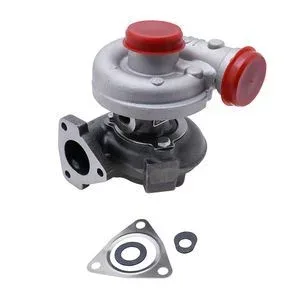
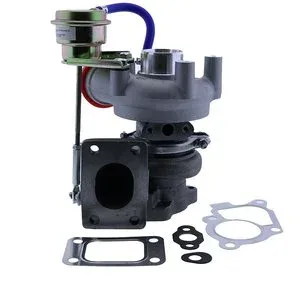
Matched Sets Shipped — Every turbocharger consignment includes oil feed gaskets and air intake seals matched to the C2.2 / 3024C engine serial variant, preventing mismatched clearances during reassembly.
Technical Specifications
| Parameter |
Value |
| Part Number |
513-6823 |
| Product Type |
Turbocharger |
| Turbo Model |
RHF4-46001P8.5NHBRL323CAZ |
| Compatible Engine |
C2.2, 3024C |
| Cross-Reference (reference only) |
CA317-0981, 317-0981, 3170981, CA513-6823, 5136823, CA442-9826, 442-9826, 4429826, CA239-0230, 239-0230, 2390230, 2634220, CA282-5179, 282-5179, 2825179, CA308-2308, 308-2308, 3082308, CA324-0237, 324-0237, 3240237, CA10R-9578, 10R-9578, 10R9578 |
| Machine Fitment |
216B, 226B, 226B3, 232B, 242B, 247B, 247B3, 257B |
| Condition |
New Aftermarket |
| Warranty |
3–12 months against manufacturing defects |
| MOQ |
1 piece |
| Manufacturing Standard |
ISO-certified manufacturing |
Application Suitability
| Engine System |
Related Components |
| Intake & Forced Induction |
Turbo oil feed line, oil return hose, intake gaskets |
| Lubrication Circuit |
Oil filter, turbo bearing oil supply gallery seals |
| Exhaust Routing |
Exhaust manifold gasket, clamp bands, flex pipe |
| Air Filtration |
Air filter element, intake duct seals, pre-cleaner |
| Emission & Exhaust System |
Exhaust temperature sensor, wastegate actuator linkage |
Why Overlooking Upstream Contamination Destroys a Fresh Turbocharger
Replacing the turbocharger without addressing oil gallery residue and air filter bypass is the leading cause of early re-failure after an engine rebuild.
When a C2.2 or 3024C engine comes in for overhaul, the turbocharger is often the visible casualty — scored bearings, blue-tinged compressor housing, shaft play beyond tolerance. Yet I have pulled turbos from rebuilt engines that failed again within weeks because carbon debris from the old oil feed line migrated straight into the new unit's journal bearings. The same pattern repeats across skid steer loader engine rebuilds where the Turbocharger engine rebuild replacement for CAT C2.2 3024C gets bolted on while reused hoses and gaskets carry residual contamination. [NEED_CITE: turbocharger failure root cause analysis in compact diesel engines]
A matched set approach — turbocharger, oil feed line gaskets, intake seals, and oil filter replaced as a single consignment — closes the contamination loop. Skipping any one item leaves the next failure already in motion.

Matching the Turbocharger to the Engine Serial Variant
The C2.2 and 3024C engine families share displacement but diverge in turbo mounting orientation and oil port clocking across production runs. When sourcing a Turbocharger engine rebuild replacement for CAT C2.2 3024C, the engine serial number determines which oil feed flange angle and wastegate actuator bracket position you need. Engines produced before and after the Tier 3 emission update carry different exhaust manifold stud patterns, meaning the same base turbocharger part number may physically bolt on but misalign the oil return path by enough to starve the bearing cartridge under load.
Sizing, Rebuild History, and Why Standard Grade Is Not Always Correct
Engines that have been through a previous rebuild often have honed cylinders and oversize pistons, changing blow-by volumes and crankcase pressure. A turbocharger calibrated for factory-standard blow-by may run hotter than intended on a block that has seen one or two prior overhauls. Before shipping, our technical team checks the engine rebuild history you provide — bore grade, piston oversize, and whether the block was line-bored — to confirm the RHF4-46001P8.5NHBRL323CAZ turbine housing trim suits the actual airflow demand. This is the same verification step that catches situations where crankshafts have been ground undersize but standard-grade bearings were still supplied, a mismatch I encountered firsthand in a Shandong workshop when an engine seized hours after reassembly. [NEED_CITE: engine rebuild sequencing and matched tolerance verification for diesel power units]
Reading the Spec Sheet: What the Numbers Actually Mean for Your Rebuild
The RHF4-46001P8.5NHBRL323CAZ designation encodes the compressor wheel trim, turbine housing A/R ratio, and bearing cartridge type. The P8.5 reference indicates the compressor trim size, which governs how much air mass the unit moves at a given shaft speed — too small and the engine runs rich under load, too large and boost lag becomes noticeable on a skid steer loader cycling between idle and full throttle. The NHBRL323 bearing configuration specifies a fully floating journal bearing cartridge rather than a ball-bearing center section, meaning oil film integrity depends entirely on clean, pressurized supply from the moment of first cranking. The CAZ suffix denotes the wastegate actuator calibration range, which must match the engine ECU's expected boost curve. A mismatch here triggers over-boost faults or limp-mode restrictions that technicians sometimes misdiagnose as electronic failures when the root cause is mechanical.
The Hidden Cost of Skipping Root-Cause Analysis
Installing a new turbocharger on a C2.2 or 3024C that lost its previous unit to oil starvation, without flushing the oil feed gallery and replacing the feed line restrictor, guarantees the replacement will inherit the same failure mode. I have seen three consecutive turbocharger failures on a single 247B skid steer before the technician traced the problem to a collapsed oil filter element sending debris upstream. The cost is never just the turbo — it is the labor of removing the cab, draining coolant, and splitting the exhaust again, multiplied by each misdiagnosed attempt. [NEED_CITE: diesel engine forced induction failure cascade and diagnostic sequence]
Why Buyers Source This Turbocharger Through Our Engine System Workflow
Our production lines and qualified sourcing partners operate under one account and one warranty, so the turbocharger and its companion gaskets ship with identical QC documentation. Eight product categories mean the oil feed line, exhaust manifold gasket, air filter, and turbo all consolidate into one consignment rather than arriving from separate suppliers on separate schedules. Minimum order is one piece — a single emergency turbo for a downed 257B ships without inflated batch requirements. Our Guangzhou warehouse stocks fast-moving turbocharger models for rapid dispatch on common skid steer loader applications. Part identification works from the number, engine serial, a photograph of the nameplate, or a photo of the old unit — we cross-reference superseded numbers like 239-0230 and 442-9826 against current production specs to confirm fitment. Before a bulk commitment, a sample turbocharger is available so your rebuild shop can verify port alignment and flange fit on the actual engine block.
Documentation & Verification
- Commercial invoice listing turbocharger part number, engine serial reference, and consignee HS code
- Cross-reference sheet mapping 513-6823 to superseded numbers (reference only)
- Dimensional inspection record covering flange bolt pattern and oil port clocking
- Warranty terms specifying coverage scope for manufacturing defects
- Packing photographs showing turbocharger orientation and protective crating before dispatch
- Export documentation with correct HS code for turbocharger customs classification
Installation & Rebuild Sequence
- Pre-lube the journal bearing cartridge with clean engine oil before first cranking to prevent dry-start scoring
- Replace the oil feed line restrictor and gaskets simultaneously with the RHF4-46001P8.5NHBRL323CAZ turbocharger
- Verify oil return line has no kinks or restrictions — gravity-drain path must be unobstructed
- Torque exhaust manifold nuts in the manufacturer-specified sequence to avoid flange distortion
- Run the engine at idle for the initial break-in period before applying load to seat the bearing surfaces
What We Need to Confirm the Right Turbocharger for Your Engine
To match the correct variant, provide the engine model (C2.2 or 3024C), the full engine serial number, and any prior rebuild records noting bore grade or piston oversize. If the data plate is illegible, a photograph of the old turbocharger's identification tag and the exhaust manifold flange pattern allows our technical team to verify fitment. For overhaul shops quoting multiple units, share the engine list so we can confirm serial-range compatibility across the entire batch.
Frequently Asked Questions
Q: How do I confirm whether superseded turbocharger numbers still fit my C2.2 engine?
A: We verify cross-reference numbers including older references against current production specifications by checking oil port orientation, flange bolt pattern, and wastegate actuator calibration. Provide the engine serial number and any previous rebuild records so we can match the correct variant, particularly if the block has been honed or pistons replaced with oversize components during a prior overhaul.
Q: Should I replace the oil feed line when installing a new turbocharger on a 247B?
A: Yes. Reusing an old oil feed line risks sending carbon debris into the new turbocharger's journal bearing, causing early failure. We supply matched oil feed gaskets and recommend replacing the feed line restrictor at the same time. Our technical team can add these components to your consignment so everything arrives together for a single rebuild session.
Q: Can I order just one turbocharger for an emergency repair?
A: Minimum order is one piece. A single turbocharger for an emergency engine rebuild ships without batch quantity requirements. We stock fast-moving RHF4 turbocharger models in our Guangzhou warehouse for rapid dispatch, and our technical team can confirm fitment from a photograph of the old unit or the engine nameplate when the part number is unreadable.
Q: What engine rebuild history do you need before shipping this turbocharger?
A: We need the engine serial number and details of any prior rebuilds — specifically whether the crankshaft was ground undersize, cylinders honed to oversize, or the block line-bored. These factors change blow-by volume and oil pressure characteristics, which affect turbocharger trim selection and bearing clearance requirements for reliable operation after reassembly.