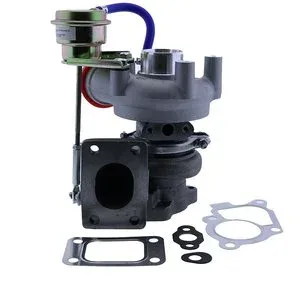
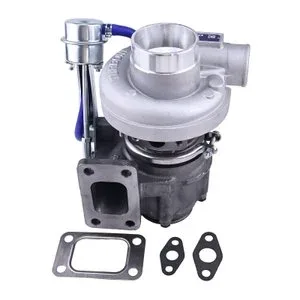
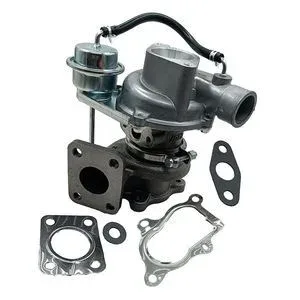
Engine Serial Variants Confirmed — Every TD04L4 turbo is matched to the specific C3.3B variant using engine serial data before dispatch, preventing flange and oil port misalignment.
Technical Specifications
| Parameter |
Value |
| Part Number |
436-1920 |
| Product Type |
Turbocharger |
| Cross-Reference (reference only) |
CA436-192, 436-192, 436192 |
| Machine Fitment |
236D, 236D3, 242D, 242D3, 246D, 246D3, 257D, 257D3, 259D, 259D3, 262D, 262D3, 277D, 279D, 279D3, 287D, 289D, 289D3, 308, 308.5, 308E2 CR, 308E2 SR, 309, 310, AP300F, AP355F, 906M, 907M, 908M |
| Turbo Model |
TD04L4, TD04L4-09TK3-5.0 |
| Engine Fitment |
CAT C3.3B |
| Condition |
New Aftermarket |
| Warranty |
6 months against manufacturing defects |
| Turbine Wheel Material |
Nickel-chromium alloy |
| Max Exhaust Gas Inlet Temperature |
850°C |
| Journal Bearing Shaft Surface Roughness |
Ra ≤ 0.2 μm |
| Oil Clearance |
0.035–0.042 mm |
| Compressor Housing Material |
A380 aluminum |
| Compressor Housing Dimensional Tolerance |
±0.15 mm |
| Gasket Interface Material |
Fluorosilicone elastomer |
| Gasket Temperature Rating |
-40°C to +230°C |
| Bench Testing Speed |
150,000 RPM |
| MOQ |
1 piece |
| Certification |
ISO 9001 |
Application Suitability
| Engine System |
Related Components |
| Exhaust & emission path on C3.3B |
Exhaust manifold gaskets, turbo mounting studs, heat shields |
| Oil supply and return circuit |
Oil feed line, oil drain gasket, banjo bolt washers |
| Intake and charge air system |
Air filter assembly, intake ducting, boost hose clamps |
| Engine overhaul scope |
Overhaul gasket kit, piston rings, main and conrod bearings |
| Preventive maintenance during scheduled rebuild |
Turbo inspection at engine mid-life, seal and gasket refresh |
Why the Same TD04L4 Turbocharger Part Number Fails on Some C3.3B Builds
The turbo physically bolts on but the oil port angle or exhaust flange orientation is wrong for that specific engine serial range.
I once dispatched a TD04L4 turbo for a CAT 308.5 working on a demolition site in Indonesia. The machine model matched, the part number matched, yet the oil feed inlet sat at an angle that blocked the existing supply line. The machine sat idle for three days while we identified the correct variant. That happened because C3.3B engines across different machine platforms carry variant-specific oil port configurations and exhaust flange orientations. A TD04L4 Turbocharger for CAT C3.3B Engine Rebuild must be confirmed against the actual engine serial number, not just the machine model plate [NEED_CITE: engine serial variant differences in compact diesel turbo fitment].
When the wrong variant goes on, the installer either forces a hose bend that eventually cracks under heat cycling or fabricates an adapter that introduces a restriction. Both paths lead to oil starvation at the journal bearing within the first few hundred hours.

Matching the Turbo to the C3.3B Exhaust and Intake System
This TD04L4 turbocharger sits at the center of the C3.3B emission and exhaust system, bridging the exhaust manifold outlet and the charge air cooler inlet. The turbo does not operate in isolation — its performance depends on exhaust gas energy arriving at the turbine within the designed temperature envelope, and on clean filtered air reaching the compressor wheel. When a TD04L4 Turbocharger for CAT C3.3B Engine Rebuild is specified, the adjacent exhaust manifold gaskets, intake duct seals, and oil supply plumbing all form part of the same sealing and flow circuit.
Replacing only the turbo while leaving degraded manifold gaskets or a partially blocked oil feed line in place transfers the failure risk to the new unit. The system must be addressed together to protect the rebuild investment.
Engine Serial Variants and Dimensional Tolerances After Prior Rebuilds
C3.3B engines powering skid steers, compact excavators, and asphalt pavers may share the same base designation yet differ in turbo mounting geometry. Oil feed port clocking, drain flange bolt pattern, and exhaust outlet orientation can shift between production runs [NEED_CITE: diesel engine variant tracking by serial number range]. An engine that has already undergone a previous rebuild may also carry non-standard clearances in the oil gallery, making the 0.035–0.042 mm journal bearing oil clearance on this turbo critical to verify against actual supply pressure.
A380 aluminum compressor housing held to ±0.15 mm dimensional tolerance ensures the compressor wheel maps correctly to the intake ducting without gap-induced boost leakage. When the prior rebuild used oversized bearings or modified oil passages, the turbo oil clearance must be re-confirmed before assembly.
Reading the Specifications That Matter on Site
The nickel-chromium alloy turbine wheel handles exhaust gas inlet temperatures up to 850°C, which aligns with the C3.3B combustion profile under sustained load in paving or excavation duty. Journal bearing shaft surface roughness at Ra ≤ 0.2 μm minimizes friction heat at the 150,000 RPM bench test speed, directly influencing how long the bearing survives before oil film breakdown. Fluorosilicone elastomer gaskets rated from -40°C to +230°C cover the full thermal swing a turbo mounting face experiences between cold starts and peak load, maintaining seal integrity through repeated heat cycles.
These parameters collectively determine whether the TD04L4 Turbocharger for CAT C3.3B Engine Rebuild survives the first thousand hours or fails prematurely from thermal fatigue or oil coking.
The Cost of Skipping Root-Cause Diagnosis
Installing a new turbo on a C3.3B without investigating why the previous unit failed is a pattern I have encountered repeatedly across Southeast Asian job sites. Journal bearing damage often traces back to contaminated oil feed or an inadequate filtration interval, while compressor wheel erosion points to unfiltered air bypassing a damaged intake hose. Fitting a fresh TD04L4 Turbocharger for CAT C3.3B Engine Rebuild over an unresolved oil contamination issue means the replacement inherits the same destructive conditions [NEED_CITE: turbocharger failure root cause analysis in diesel engines].
Downtime compounds when the second turbo fails within weeks, and the machine owner loses confidence in the rebuild quality rather than recognizing the upstream fault that was never corrected.
Why Procurement Through This Channel Works
Selected production lines run in our own facility while the remainder is sourced from ISO 9001 manufacturing partners, and both carry the same quality control and six-month warranty terms. Eight product categories sit under one account, so the turbo, overhaul gasket kit, oil feed lines, and intake seals for a C3.3B rebuild ship as a single consignment rather than arriving on staggered timelines. Minimum order is one piece, which matters when a single machine is down and waiting. Part identification works from a part number, machine model, photograph, or nameplate image — useful when site conditions have worn the original turbo label beyond reading. Cross-reference verification covers superseded and alternate numbers so older listings still resolve to the correct current variant. A sample can be supplied for fitment confirmation before a distributor commits to bulk stock.
Documentation & Verification
- Commercial invoice listing turbo part number 436-1920 with engine serial cross-reference
- Compatibility sheet confirming C3.3B variant match, marked reference only
- Quality inspection record including balance test at 150,000 RPM
- Six-month warranty terms covering manufacturing defects
- Packing photographs showing turbo protected against transit damage
- HS code and customs documentation for emission system components
Installation & Rebuild Sequence
- Verify oil feed and drain port orientation against the C3.3B block before mounting the TD04L4 turbo
- Flush oil supply lines and replace banjo bolt washers to protect journal bearing surface finish
- Install fluorosilicone gaskets dry, without sealant, to maintain designed clamping load
- Torque exhaust manifold and turbo mounting fasteners to specification in staged sequence
- Pre-lube the turbo center section through the oil feed port before first crank
- Run the engine at idle for several minutes to confirm oil flow and absence of boost leaks
Requesting the Right Quote
Provide the engine serial number from the C3.3B data plate along with any previous rebuild history, including whether oversized bearings were fitted or oil galleries were modified. If the original turbo nameplate is unreadable, a photograph of the exhaust flange and oil port orientation allows variant confirmation. Supplying the machine model and operating hours helps determine whether adjacent exhaust and intake components should be included in the same order.
Frequently Asked Questions
Q: What else should be replaced alongside the turbo during a C3.3B rebuild?
A: The overhaul gasket kit, oil feed and drain lines, exhaust manifold gaskets, banjo bolt washers, and intake duct seals should all be refreshed as a matched set. Reusing degraded seals around a new TD04L4 turbocharger risks boost leaks or oil contamination reaching the journal bearing, undermining the rebuild.
Q: How do I confirm the correct turbo variant for my engine serial number?
A: Provide the engine serial number from the C3.3B data plate or a photograph of the existing turbo mounting face and oil port positions. C3.3B variants differ in oil port clocking and exhaust flange orientation, so serial-level verification prevents mis-fitment on site.
Q: What oil system faults cause premature turbo failure on this engine?
A: Contaminated oil, degraded filtration media, or restricted oil feed lines starve the journal bearing of clean lubricant, leading to rapid shaft surface damage. Always flush oil supply passages and replace filters when fitting a replacement turbo on the C3.3B.
Q: Does the overhaul gasket kit include the turbo mounting gaskets?
A: The turbo mounting gaskets and oil drain flange seals are typically part of the engine overhaul gasket kit. Confirm the kit contents against your specific C3.3B serial variant to ensure all turbo interface seals are included before beginning assembly.
Q: How can I tell if the old turbo failed from oil starvation or intake contamination?
A: Oil starvation produces visible scoring on the journal bearing shaft surface, while intake contamination causes pitting and erosion on the compressor wheel blades. Identifying the failure mode directs which upstream components need attention before the new turbo is installed.