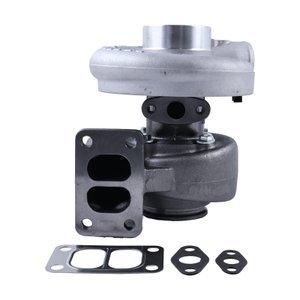
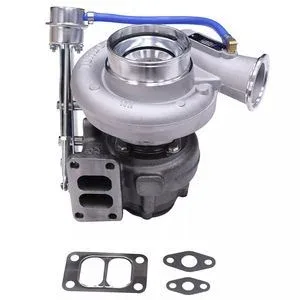
Overhaul Component — Matched turbo, gaskets, and oil feed components ship together after engine serial verification.
Technical Specifications
| Parameter |
Value |
| Part Number |
3802289 3522777 3528742 3528741 3522778 |
| Product Type |
Turbocharger |
| Cross-Reference |
3802289, 3522777, 3528742, 3528741, 3522778, 3526739, 3802302, 3802115, 466563-0001, 466563-0003, 447450-0051, 447450-0065, 3535415, 3535416, 3535417, 3535418, 3528740, 3528749, 3534829, 3534830, 3535430 (reference only) |
| Machine Fitment |
Various machinery with 6BT, 6BT-590, 6T-590 Engine (Cummins, J.I. Case, DFM) |
| Turbo Model |
H1C, H1C-8243AF/E18DA11 |
| Condition |
New Aftermarket |
| Warranty |
3-12 months against manufacturing defects |
| Compatible Engine Number |
6BT, 6BT-590, 6T-590 |
| Performance Testing |
100% pre-shipment verification of pressure ratios and rotational balance |
| Manufacturing Standard |
ISO-certified manufacturing |
Application Suitability
| Engine System |
Related Components |
| Air Induction & Intake |
Intake manifold gaskets, air filter element, intercooler seals, boost hoses |
| Lubrication & Turbo Oil Feed |
Turbo oil feed line, oil return hose, oil filter, crankcase breather |
| Exhaust & Emission Path |
Exhaust manifold gasket, turbo-to-downpipe gasket, flex pipe, heat shields |
| Engine Block & Overhaul Kits |
Piston cooling nozzles, main and rod bearings (check grade/oversize), full gasket set |
Why the Same H1C Part Number Ships in Four Variants
The H1C turbocharger family covers multiple 6BT variants, and flange patterns, oil port orientations, and compressor housings shift across engine serial ranges.
A turbo failure on a 6BT is rarely an isolated event. Oil contamination, coked feed lines, and degraded intercooler seals often accompany the primary failure, and missing those root causes during an engine rebuild guarantees a repeat failure shortly after the machine returns to work. When sourcing an H1C Turbocharger 3802289 engine rebuild component, treating it as a standalone swap rather than a system-level intervention leads to costly comebacks [NEED_CITE: root cause analysis procedures for diesel turbocharger failure].
The Air-Induction System Context for the 6BT Platform
Positioning the turbocharger correctly within the broader air-induction and exhaust system is the first step in a successful overhaul. The H1C unit is responsible for delivering the precise mass flow and boost pressure required for the 6BT combustion chamber design. If the adjacent components—such as the intake tract seals or the exhaust manifold gasket—are reused past their service limit, the new turbocharger operates under compromised conditions from the moment it spools up.
Addressing Root Causes Before the Turbo Goes In
Before the new unit is unboxed, the lubrication pathway feeding the turbo center bearing must be verified. Sludge or carbon buildup in the oil feed line restricts flow, causing the new turbo bearings to overheat and score within the first operating hours. During a 6BT rebuild, replacing the oil feed and return lines as a matched set alongside the H1C Turbocharger 3802289 engine rebuild prevents the lubrication starvation that destroys replacement turbos prematurely [NEED_CITE: diesel engine lubrication system contamination standards].

Pressure Ratios and Thermal Endurance Under Continuous Load
The H1C variant is engineered for the specific pressure ratio and flow map required by the 5.9L 6BT displacement. Compressor and turbine wheel balance is verified before shipment to minimize bearing load, which directly extends service life within the engine lubrication system. The exhaust temperature resistance is rated for sustained high-load operation, a critical factor for 6BT applications in heavy-duty cycles such as mining haulage or continuous-duty pumping, where thermal fatigue cracks typical housings.
The Cost of Missing the System-Level Diagnosis
Fitting a new turbo without resolving the underlying oil system fault or verifying the intercooler integrity results in predictable, rapid re-failure. The hidden cost is not just the second turbocharger; it is the second teardown, the second set of gaskets, and the extended machine downtime while the root cause is finally addressed [NEED_CITE: total cost of ownership metrics for heavy equipment powertrain rebuilds].
Sourcing System-Matched Overhaul Components
Because we manage both self-produced and qualified sourced supply lines under a single account and warranty, the entire air and oil system list ships as one consignment. The technical team verifies cross-references covering superseded and alternate numbers to ensure the exact H1C variant matches the engine serial provided. A sample unit is available for fitment confirmation before any bulk commitment is made for fleet-level rebuild programs.
Documentation & Verification
- Commercial invoice and packing list detailing all matched induction and lubrication components.
- Part compatibility and cross-reference sheet confirming the specific H1C variant against the provided 6BT serial.
- Quality inspection record verifying pre-shipment rotational balance and pressure ratio testing.
- Warranty terms covering manufacturing defects for the defined operational period.
- Packing photographs showing secure bracing of the compressor and turbine housings.
- HS code and customs documentation support for international engine rebuild supply chains.
Installation & Rebuild Sequence
- Clean all oil feed and return galleries in the block before installing the new turbo oil lines.
- Prime the H1C center bearing with clean engine oil via the feed port before first cranking.
- Verify torque specifications on the exhaust manifold and turbo flange nuts to prevent warpage.
- Run the engine at idle for several minutes to establish full oil pressure and verify boost response.
Request a Rebuild Quotation
To initiate a system-matched quotation for this H1C Turbocharger 3802289 engine rebuild, please provide the specific 6BT engine serial number and the engine plate photograph. Detail the known repair history and the current condition of the adjacent intake and exhaust components so we can assemble a complete overhaul consignment.
Frequently Asked Questions
Q: What other components should be replaced alongside the turbo during a 6BT rebuild?
A: A complete system approach requires replacing the turbo oil feed and return lines, intake and exhaust manifold gaskets, intercooler seals, and the air filter element. Reusing these aged components introduces contamination or leaks that will prematurely destroy the new turbocharger center bearing and compromise boost pressure delivery.
Q: How do I confirm which H1C variant matches my specific engine serial number?
A: Provide the full engine serial number from the 6BT data plate. Our technical team uses this to verify the exact turbo flange pattern, oil port position, and compressor housing orientation, ensuring the supplied unit matches the specific variant configuration of your engine block.
Q: My old turbo part number is superseded — how do I find the correct replacement?
A: We maintain an extensive cross-reference database covering superseded, alternate, and legacy part numbers. By supplying the worn part number or a photograph of the data tag, we can trace the lineage to the correct current H1C variant required for your specific application.
Q: What oil system checks should be done before installing the new turbo?
A: The primary requirement is flushing the turbo oil feed gallery and replacing the inline restrictor or filter if equipped. The oil pan must be inspected for metallic debris indicating broader bearing wear, and the oil pump pickup screen must be cleared to guarantee adequate volume reaches the new turbo bearings.