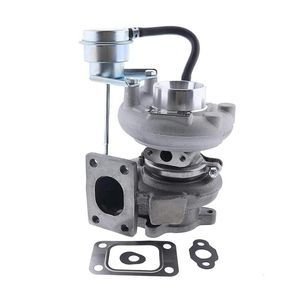
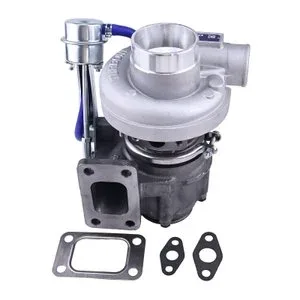
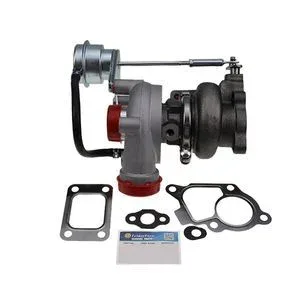
Matched Set Dispatch — Oil feed and return line condition verified before RHF3H turbocharger ships, ensuring rebuild kits arrive complete and correctly sequenced.
Technical Specifications
| Parameter |
Value |
| Part Number |
7000677 7020831 |
| Cross-Reference |
7000677 (reference only), 7020831 (reference only) |
| Product Type |
Turbocharger |
| Turbo Model |
RHF3H |
| Compatible Engine Brand |
Kubota |
| Engine Models |
V2607-DI, V2607T |
| Machine Fitment |
Bobcat Skid Steer Loader S160, S185, S205, S550, S570, S590; Bobcat Track Loader T180, T190, T550, T590 |
| Condition |
New Aftermarket |
| Warranty |
3–12 months against manufacturing defects |
| Factory Certification |
ISO 9001 |
Application Suitability
| Engine System |
Related Components |
| Emission & Exhaust |
Exhaust manifold gaskets, intake manifold seals, turbo oil feed and return lines |
| Lubrication |
Oil pump, oil filter, oil cooler core, crankcase breather |
| Air Induction |
Air filter element, pre-cleaner, intake hose and clamps |
| Engine Overhaul |
Overhaul gasket kit, main and rod bearings, piston rings, thrust washers |
When a New Turbo Fails Weeks After Installation
Root-cause verification prevents the second teardown.
A replacement turbo that fails prematurely rarely points to the turbo itself. In my experience checking units returning from field service, contaminated oil or a restricted feed line destroys the new bearing cartridge within the first operating cycle. One Bobcat S160 running a Kubota V2607-DI came back with a seized RHF3H turbocharger after only a few weeks. The teardown revealed scored bearings and a blued shaft — classic oil starvation. The oil supply gallery had never been flushed after the previous failure, and carbon debris from the old turbo had migrated into the feed line [NEED_CITE: turbocharger lubrication failure modes and oil system contamination]. Replacing the turbocharger without addressing the lubrication path simply transferred the failure to the new unit.
This RHF3H turbocharger belongs to the emission and exhaust system of Kubota V2607-series engines, and should be evaluated alongside intake gaskets, oil supply lines, and air filtration components during any engine rebuild or turbo-related repair.
The Turbocharger Within the V2607 Lubrication and Induction Circuit
The RHF3H turbocharger draws pressurized oil from the engine gallery through a feed line, uses it to cool and lubricate the floating bearings, then returns it via gravity to the crankcase. Every connection in that circuit — the feed hose, the return hose, the block fitting, the crankcase drain passage — must be verified before installation. A restricted return line causes oil to back up into the compressor housing, producing the blue smoke that operators often misdiagnose as a turbo seal failure.
Engine Serial Variants and Mounting Differences
Kubota V2607-DI and V2607T engines share the same displacement but differ in aspiration routing and, in some production runs, turbo mounting orientation. The oil feed port position and exhaust flange stud pattern should be confirmed against the engine serial plate before the replacement RHF3H turbocharger is dispatched. An incorrect variant wastes a full teardown cycle and risks damaging the new unit's oil inlet fitting during forced alignment.
Interpreting the RHF3H Compressor and Turbine Specifications
The RHF3H designation indicates a compact, journal-bearing turbocharger sized for the airflow demand of a 2.6-liter indirect-injection diesel. The turbine housing is matched to the exhaust gas volume and temperature profile of the V2607 family — running this turbo on an engine with altered displacement or injection timing shifts the operating point outside its efficiency island, causing either lag or overspeed [NEED_CITE: turbocharger compressor map matching for small-displacement diesel engines]. The journal bearing design requires clean oil at adequate pressure from the moment the engine fires; dry starts without pre-lubrication score the bearing surface before oil pressure builds.

What Happens When the System Is Not Addressed
A rebuild shop that installs a new turbocharger without replacing the oil feed line or confirming the return passage is clear will see the unit back on the bench. Carbon particles embedded in the old feed hose act as lapping compound against the new journal bearings. Each repeat failure adds another teardown, another gasket set, and another round of machine downtime to the repair record [NEED_CITE: repeat turbocharger failure root cause analysis in mobile equipment].
System-Level Supply Under One Account
Our own production lines and qualified sourced supply carry identical QC and warranty terms, so an overhaul gasket kit and a replacement RHF3H turbocharger ship under the same accountability. The Guangzhou warehouse stocks common fast-failure items for fast dispatch on the V2607 engine family. Part identification works from an engine serial number, a worn nameplate photograph, or a cross-reference number — our technical team verifies variant differences before anything ships. Minimum order is one piece, and sample supply is available for fitment confirmation before a fleet-level commitment.
Documentation & Verification
- Commercial invoice and packing list referencing engine serial and turbo variant
- Part compatibility sheet marking 7000677 and 7020831 as cross-reference only
- Dimensional check on oil port position and exhaust flange before dispatch
- Rotor balance and housing integrity quality inspection record included
- Warranty terms covering manufacturing defects for 3 to 12 months
- HS code and customs documentation support for cross-border shipment
Installation & Rebuild Sequence
- Pre-lubricate the RHF3H bearing cartridge with clean engine oil before first start
- Replace oil feed and return hoses to eliminate embedded carbon contamination
- Verify exhaust flange stud pattern matches the V2607 variant on the bench
- Torque turbine housing nuts to specification and recheck after heat cycle
- Confirm crankcase breather is clear to prevent pressure buildup in the oil return
- Run the engine at idle for several minutes before applying load to circulate oil
Submit Your Engine Details for a Matched Rebuild List
Provide the Kubota engine model, serial number, and any prior rebuild history so we can confirm the correct V2607 variant and assemble a complete parts list. Include photographs of the existing turbo data plate and oil line fittings if the nameplate is worn or painted over. This allows us to verify cross-reference numbers and dispatch a matched set that addresses the root cause, not just the symptom.
Frequently Asked Questions
Q: What other engine components should be replaced at the same time as the turbocharger?
A: During any turbocharger replacement on a Kubota V2607 engine, the oil feed and return lines, intake and exhaust manifold gaskets, and air filter element should all be replaced. If the engine is undergoing a full overhaul, the turbocharger should be included in the rebuild parts list alongside bearings, rings, and the overhaul gasket kit to ensure matched tolerances and eliminate repeat teardowns.
Q: How do I confirm which V2607 engine variant my machine has?
A: Check the engine serial plate located on the valve cover or block side. The plate lists the exact model designation — V2607-DI or V2607T — along with the serial number. If the plate is missing or illegible, a photograph of the turbo mounting flange and oil port orientation allows our technical team to identify the variant before shipment.
Q: What caused the original turbo to fail, and how do I prevent it happening again?
A: The most common causes are oil starvation from a restricted feed line, contaminated oil from a failing engine component, or a blocked air filter allowing dust ingestion. Inspect the full lubrication path, replace feed and return hoses, confirm the crankcase breather is clear, and verify the air induction system is sealed. These steps address the root cause rather than replacing only the failed component.
Q: Do V2607-DI and V2607T engines use the same turbocharger?
A: Both engines can use the RHF3H turbo model, but mounting orientation, oil port position, and exhaust flange configuration may differ between production runs. Confirming the engine serial number before ordering ensures the correct variant is supplied and prevents misfitment during installation.