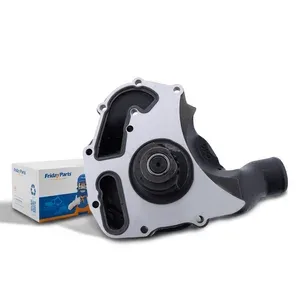
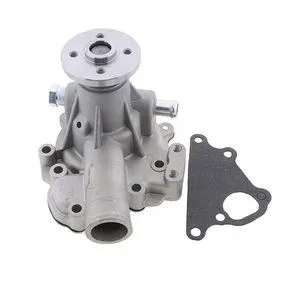
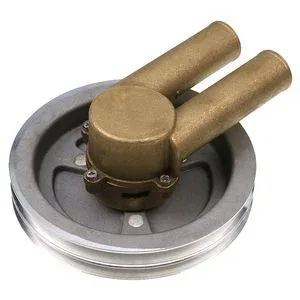
Engine Sequence Variants Verified — Every pump is checked against the specific Perkins 1104 serial range before dispatch, preventing variant mismatch during overhaul.
Technical Specifications
| Parameter |
Value |
| Part Number |
4131A062 |
| Cross-Reference |
4131A062 (reference only), 4225069M91 (reference only) |
| Product Type |
Water Pump |
| Condition |
New Aftermarket |
| Impeller Material |
High-silicon aluminum alloy (A-Si12Cu1Mg) |
| Mechanical Seal |
Dual-carbon/ceramic faces with Viton O-rings |
| Shaft Runout |
≤0.03 mm per ISO 1940-1 G6.3 |
| Machined Surface Finish |
Ra 0.8 μm |
| Flow Rate |
≥28 L/min at 2,200 rpm |
| Pressure Hold |
≥1.8 bar for 10 minutes |
| Assembly State |
Supplied with gasket |
| Warranty |
6-month standard, extendable to 12 months per application |
| MOQ |
1 piece |
| Standards |
ISO 9001, ISO 1940-1 G6.3 |
| Machine Fitment |
Massey Ferguson 275, 290, 375, 390, 451, 471, 481, 491, 492, 533, 543, 563, 573, 583, 593, 596, 5425, 5435, 5445, 5455, 5460, 5460SA, 6445, 6455, 6460, 6470, 8925, 8926, 8947, 3425, 3435, 3445, 3455, 89410; Landini Rex 105F, Rex 105GE, Rex 105GT, Rex 75F, Rex 75GE, Rex 75GT, Rex 85F, Rex 85GE, Rex 85GT, Rex 95F, Rex 95GE, Rex 95GT, Mythos 105, PowerFarm 105, PowerFarm 75, PowerFarm 85, PowerFarm 95, Vision 105, Vision 85, Vision 95, Ghibli 105, GlobalFarm 105, Trekker 105F, Trekker 75F, Trekker 85F, Trekker 95F; Manitou MLT 735-120 LSU, MLT 735-120 LSU PS, MLT 634-120 LSU PS, MLT 627 T 24 MU, MLT 741-120 LSU PS, MLA 628 TW LS 120 PS, MT 1440 SLT, MT 1740 SLT, MRT 1742 M RC, MRT 2150 M RC, MVT 730, MHT 860 LT LSU Evolution; McCormick C95Max, C85Max, C75Max, C60Max, C105Max, F95, F85, F75, F70, F60, MC105, MC115, MC120, MC135, CX95, CX85, CX75, CX105, V75, V80, V85 |
Application Suitability
| Engine System |
Related Components |
| Perkins 1104D-44T / 1104D-44TA cooling circuit |
Thermostat housing, radiator hoses, coolant temperature sensor |
| Perkins 1104C-44T / 1104C-E44T / 1104C-E44TA coolant loop |
Fan belt tensioner, bypass hose, expansion tank cap |
| Perkins A4.248 / A4.236 water circulation |
Cylinder block gasket set, freeze plugs, heater core hoses |
| Perkins 1104A-44 / 1104A-44T / 1104A-44TA thermal management |
Water temperature gauge sender, fan clutch, radiator core |
| Perkins 1000.4WT / 1000.3WTI / 2160 / 2200 cooling system |
Coolant filter, surge tank, lower radiator mount |
Why the Same Part Number Can Still Leak on the Bench
Confirm the engine serial and family before ordering — the 1104A, 1104C, and 1104D families share base numbers but differ in port orientation, gasket thickness, and flange geometry.
In repair workshops across the Gulf, I have watched mechanics unbox a water pump that matches the catalog number perfectly, only to find the bolt pattern sits two millimeters off the block face or the outlet port points toward the radiator instead of the thermostat housing. The Perkins 1104 Water Pump engine rebuild is one of the most common jobs in agricultural and telehandler maintenance, yet the variant differences within this engine family cause more repeat teardowns than bearing failures do [NEED_CITE: Perkins 1104 series engine serial variant identification guide]. A pump stamped with the right number but built for the wrong sub-series will seal initially, then weep coolant past the gasket once thermal cycling begins under load — usually during the first heavy shift after reassembly.

The Cooling System as a Closed Loop
This water pump belongs to the pressurized coolant circuit of the Perkins 1104-series engine, sitting between the cylinder block outlet and the radiator inlet. When a Perkins 1104 Water Pump engine rebuild goes forward, replacing the pump alone without inspecting the thermostat, hoses, and radiator condition addresses the symptom rather than the root cause of overheating. A blocked radiator core or a stuck thermostat forces the new pump to work against higher back-pressure, accelerating seal wear and shortening service life. System-level thinking during reassembly prevents the machine from returning to the bay within weeks.
Serial Variants and Gasket Surface Differences
The Perkins A4.248, A4.236, and 1104-series blocks share a common pump mounting face in catalog drawings, yet the actual gasket surface finish and bolt-hole spacing vary across production runs. The supplied gasket is matched to the 4131A062 flange profile, but engines that have been line-bored or resurfaced during a previous overhaul may need a different thickness to maintain proper clamping load [NEED_CITE: engine block resurfacing effects on gasket sealing in diesel rebuilds]. Confirming whether the block has been machined before — and by how much — is essential before the pump bolts down. I have seen standard gaskets compress too thin on a resurfaced A4.248, causing coolant to seep into the timing cover within the first fifty hours.
Reading the Specs That Matter in the Field
The dual-carbon/ceramic mechanical seal with Viton O-rings is selected for sustained thermal cycling, which is the dominant failure mode in desert and quarry environments where ambient temperatures push coolant past normal operating range. Shaft runout held to ≤0.03 mm per ISO 1940-1 G6.3 keeps the seal faces parallel, preventing the uneven wear that causes a slow drip at idle. The high-silicon aluminum impeller resists cavitation erosion better than standard cast aluminum, which matters when the pump runs at high speed under partial coolant fill. Flow rate of ≥28 L/min at 2,200 rpm ensures adequate heat rejection during peak load, and the pressure hold test at ≥1.8 bar for 10 minutes verifies gasket and seal integrity before the unit leaves the bench.
The Cost of Skipping the Sequence Check
Sending a pump that physically bolts on but belongs to a different engine variant leads to a slow leak that shows up only after the machine has been back in service for days — far enough from the workshop that a field teardown becomes necessary. Each repeat repair costs more in labor, coolant, and lost operating time than confirming the serial number would have taken in the first place [NEED_CITE: cost impact of repeat engine disassembly in heavy equipment maintenance]. In fleet operations running Massey Ferguson and Manitou units across multiple engine generations, a single unconfirmed variant can cascade into incorrect stocking decisions for the entire season.
Sourcing With System Matching in Mind
Our own production lines and qualified sourced supply carry the same quality inspection and warranty terms, so whether the pump comes from our Guangzhou facility or a certified partner, the flow and pressure hold tests apply identically. Eight product categories under one account mean the thermostat, gasket set, hoses, and coolant filters ship in the same consignment as the pump. One-piece minimum order allows a single emergency replacement without waiting for a batch quantity. Part identification from a number, machine model, photograph, or nameplate image covers situations where the original plate is painted over or missing. Cross-reference verification includes superseded numbers, catching cases where a catalog has not been updated. A sample unit is available for bench fitment confirmation before a fleet-level commitment, reducing the risk of variant mismatch on a large order.
Documentation & Verification
- Commercial invoice listing 4131A062 with engine family cross-reference marked reference only
- Compatibility sheet mapping pump flange variant to Perkins 1104 serial ranges
- Quality inspection record showing flow rate and pressure hold test results
- Warranty terms specifying coverage duration by operating application
- Packing photographs confirming gasket inclusion and protective caps on ports
- HS code and customs documentation support for destination country clearance
Installation & Rebuild Sequence
- Clean the block mating surface to bare metal; residual gasket material causes uneven clamping on the pump flange.
- Verify bolt-hole depth against the new fastener length — previous overhauls may have used shorter bolts on a different variant.
- Torque the pump mounting bolts in a star pattern to the Perkins 1104 specification to avoid flange distortion.
- Fill the cooling system slowly, bleeding air from the thermostat housing before starting the engine.
- Run the engine to operating temperature and check the pump weep hole and gasket joint for seepage under pressure.
Requesting a Fitment-Confirmed Quote
Provide the engine family designation, the full serial number from the block plate, and any known rebuild history so the correct pump variant and gasket thickness can be confirmed before dispatch.
Frequently Asked Questions
Q: What other cooling system parts should I replace alongside the water pump during an engine rebuild?
A: Inspect the thermostat, radiator hoses, bypass hose, and fan belt tensioner whenever the pump comes off. A stuck thermostat or collapsed hose will overload the new pump and cause early seal failure. Replace the coolant temperature sender if its readings have drifted, and flush the radiator core to remove scale that restricts flow.
Q: How do I confirm which 1104 variant my engine is, and does the pump differ between variants?
A: The engine serial number on the block plate identifies the exact variant within the 1104A, 1104C, or 1104D family. Port orientation, gasket profile, and bolt spacing can differ between sub-series even when the base part number appears identical. Send us the serial number and we cross-check against variant-specific fitment records.
Q: Is the gasket included, and does it match the specification for my block?
A: The pump ships with a gasket matched to the standard flange profile for this part number. If your block was resurfaced during a previous overhaul, the mating distance changes and a different gasket thickness may be required. Mention any machining history when ordering so we can verify the correct seal.
Q: What caused the original pump to fail, and how do I prevent repeat failure?
A: Common root causes include cavitation from low coolant level, seal wear from sustained high-temperature operation, and bearing damage from a misaligned or overtightened fan belt. Check the radiator fill level, belt tension, and thermostat operation before installing the new pump to address the underlying fault.
Q: Can I get a sample to bench-test before committing to a fleet order?
A: Yes. A single sample unit can be shipped for fitment verification on your engine block before you place a bulk order. This confirms bolt pattern, port orientation, and gasket surface match without tying up inventory on an unproven fit.