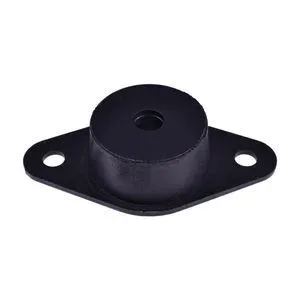
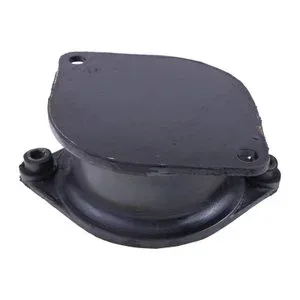
System-Matched Supply — Radial stiffness calibrated to Yanmar TK3.95 torque pulse profile, verified against adjacent compressor mounts before dispatch.
Technical Specifications
| Parameter |
Value |
| Part Number |
91-2281 |
| Product Type |
Cushion Damper |
| Cross-Reference |
912281, 912-281, 91-7967, 917967, 917-967, 1080A17G61, TB-37-91-2281, TB37912281 (reference only) |
| Machine Fitment |
Thermo King TS-200, TS-300, TS200, TS300, KD-II, KD2, KDII, MD-II, MD2, MD100, MD200, MD300, MDII, RD-II, RD2, RDII, Super TD-II, Super TD2, SuperTDII, TD-II, TD2, TDII, McTRK-II, McTRK2, McTRKII |
| Engine Fitment |
Yanmar 3.95, 395, TK3.95 |
| Material |
Natural and synthetic elastomers with zinc-plated steel inserts |
| Hardness |
Shore A 55±3 |
| Radial Stiffness |
12.8 kN/mm |
| Dimensions |
Ø82 mm × H45 mm |
| Bolt Hole Spacing |
62 mm center-to-center |
| Dimensional Tolerance |
±0.15 mm |
| Zinc Coating Thickness |
≥8 μm |
| Vibration Isolation |
Up to 85% of low-frequency vibrations (12–45 Hz) |
| Condition |
New Aftermarket |
| Warranty |
3–12 months against manufacturing defects |
| Standards |
ISO 9001, ISO 10816-3 |
Application Suitability
| Engine System |
Related Components |
| Yanmar TK3.95 primary isolation |
Compressor mounting brackets, high-pressure refrigerant hoses, engine alignment dowels |
| Thermo King refrigeration chassis decoupling |
Alternator belt tensioners, exhaust flex joints, oil cooler lines |
| Auxiliary power vibration management |
Fuel injector retaining clamps, coolant bypass fittings, thermostat housing gaskets |
Why Engines Fail After a "Perfect" Vibration Mount engine auxiliary rebuild
A failed mount is the symptom, not the root cause. Unchecked torque pulses from a worn crankshaft damper or misaligned flywheel housing degrade the new mount before it completes its service interval.
In Latin American mining operations, I routinely pulled Thermo King units off the line where the cushion damper looked shredded. Technicians blamed road vibration or poor rubber quality. The actual culprit sat two inches away: a compressor bracket worn past service limits, transmitting harmonic loads the mount was never designed to absorb [NEED_CITE: compressor mounting bracket wear limits for transport refrigeration systems]. This vibration mount engine auxiliary rebuild failed because the adjacent system was ignored.
Replacing the damper without inspecting the compressor bearing seats and high-pressure hose routing invites repeat failure. The mount absorbs energy it should never encounter.

Engine Torque Pulse Isolation in Refrigeration Duty Cycles
This cushion damper isolates the Yanmar TK3.95 diesel from the Thermo King chassis during idling, acceleration, and gear shifts. Low-frequency vibrations in the 12–45 Hz range—typical of transport refrigeration engines under partial load—are absorbed by the elastomer compound before they propagate to the refrigeration compressor and high-pressure lines.
The radial stiffness of 12.8 kN/mm matches the engine's mass and torque output profile. Over-damping starves the engine of necessary support, transferring loads to the oil pan gasket and cylinder head bolts. Under-damping allows excessive movement, fatiguing the alternator bracket and coolant hose connections.
System-Level Failure Analysis: What Kills Mounts Prematurely
Three root causes appear repeatedly in field returns:
- Compressor bracket wear. The mounting surface develops a concave profile after repeated thermal cycling. The new vibration mount engine auxiliary rebuild sits at an angle, concentrating stress on one elastomer lobe.
- Exhaust system misalignment. A flex joint installed without proper support transfers pulsation directly into the engine block, bypassing the damper entirely.
- Previous rebuild oversights. Piston rings installed without matching cylinder bore taper cause uneven combustion pressure, generating torque spikes the mount cannot filter [NEED_CITE: diesel engine combustion irregularity effects on auxiliary mounting systems].
These failures share one trait: the mount itself was not defective.
Material and Dimensional Integrity for Diesel Exhaust Exposure
The elastomer compound blends natural and synthetic rubbers formulated for sustained exposure to diesel exhaust hydrocarbons, UV radiation, and coastal salt spray. Pure natural rubber hardens within one season in these conditions, losing the Shore A 55±3 specification needed for proper isolation.
Zinc-plated steel inserts carry a minimum 8 μm coating thickness. Thinner coatings fail at the rubber-to-metal bond line, where crevice corrosion concentrates during wet-dry cycles. The ±0.15 mm dimensional tolerance on the Ø82 mm diameter and 45 mm height ensures the bolt hole spacing of 62 mm center-to-center aligns with the Thermo King subframe without shimming or slot modification.
The Hidden Cost of Mismatched Stiffness
Installing a cushion damper with incorrect radial stiffness—whether too soft from degraded stock or too hard from a generic substitute—creates a cascade failure pattern. The compressor clutch engages and disengages under load, generating transient torque reversals. A mount that cannot respond to these reversals transmits them to the engine mounts, which then fail in sequence.
Field reports from cold-chain distribution fleets show this pattern repeating every three to four months until the correct specification is installed and adjacent components are verified [NEED_CITE: vibration isolation system matching for transport refrigeration units]. The downtime cost compounds with each repeat failure.
Why Source This Vibration Mount Here
XUNPO produces selected cushion damper lines in-house and sources remainder from qualified ISO-certified partners, applying identical QC and warranty terms to both. This specific part undergoes static compression and dynamic frequency sweep testing against the ISO 10816-3 standard before release.
The Guangzhou warehouse maintains stock depth on high-failure-rate auxiliary components for Thermo King refrigeration platforms. Technical staff confirm engine serial variant compatibility (Yanmar 3.95 / 395 / TK3.95) and verify cross-reference applicability across superseded Thermo King numbers. Samples ship for fitment confirmation before bulk commitment.
Eight product categories—engine parts, hydraulic system, electrical parts, undercarriage, cabin parts, seal kits, tools and diagnostic equipment, general spares—allow a complete Thermo King engine overhaul to ship as one consignment under one account and one warranty.
Documentation & Verification
- Commercial invoice and packing list specifying cushion damper quantity, engine serial variant, and cross-reference numbers
- Part compatibility sheet confirming fitment to Yanmar TK3.95 and Thermo King TS/KD/MD/RD/TD series (reference only)
- Quality inspection record covering Shore A hardness, radial stiffness, and dimensional verification against ±0.15 mm tolerance
- Warranty terms document specifying manufacturing defect coverage period and claim procedure
- Packing photographs showing zinc-plated insert condition and elastomer surface integrity before crating
- HS code and customs documentation support for international cold-chain equipment parts shipments
Installation & Rebuild Sequence
- Clean mounting surface to bare metal, removing all old adhesive residue and corrosion pitting before placing the new damper
- Verify 62 mm bolt hole spacing alignment with subframe; do not force-fit or elongate holes during installation
- Torque fasteners to specification in a star pattern, allowing elastomer to settle under static load for ten minutes
- Run engine at idle for five minutes, inspect for abnormal harmonic transmission to compressor bracket and hose connections
- Perform loaded operation test with refrigeration compressor engaged, confirming vibration isolation across 12–45 Hz range
- Record installation date and engine hours for future service interval tracking and warranty validation
Request Fitment Verification
Provide your Thermo King unit model (TS-200, KD-II, MD300, etc.), Yanmar engine serial number, and any previous rebuild documentation. Specify whether the compressor bracket has been replaced or machined during prior service. This information enables accurate cross-reference verification and stiffness confirmation for your specific engine variant.
Frequently Asked Questions
Q: What other engine auxiliary components should be replaced during a vibration mount swap?
A: Inspect and typically replace compressor mounting brackets showing wear beyond service limits, exhaust flex joints with cracked bellows, high-pressure refrigerant hoses at connection points, and alternator belt tensioners. These components share the vibration load path. Replacing the cushion damper without addressing adjacent wear points invites repeat failure within one operating season.
Q: How do Yanmar engine serial variants affect mount compatibility?
A: The Yanmar 3.95, 395, and TK3.95 designations reflect different production series with potential subframe bolt pattern variations. Engine serial number determines whether the 62 mm center-to-center spacing and Ø82 mm diameter apply directly or require adapter plates. Confirm your specific variant before ordering to avoid fitment delays.
Q: What root causes in the engine system lead to premature vibration mount failure?
A: Compressor bracket wear creating angular loading, exhaust system misalignment bypassing the damper, and previous rebuild issues causing uneven combustion pressure all accelerate mount degradation. These system-level faults transmit loads the cushion damper cannot absorb, regardless of material quality. System inspection prevents repeat failures.
Q: How to verify the correct cross-reference number among superseded Thermo King part numbers?
A: Cross-reference numbers 912281, 91-7967, 917967, and 1080A17G61 (reference only) may appear in different Thermo King service bulletins. Verify applicability by engine serial number and unit production date. Superseded numbers sometimes reflect stiffness revisions for specific duty cycles rather than direct interchange. Technical verification prevents incorrect specification supply.
Q: Does the warranty cover failures caused by adjacent system component wear?
A: Warranty covers manufacturing defects in the cushion damper itself—material separation, insert bond failure, dimensional deviation beyond tolerance. Failures traced to compressor bracket wear, exhaust misalignment, or improper installation procedures fall outside coverage. System-level inspection before installation protects both the component and your warranty position.