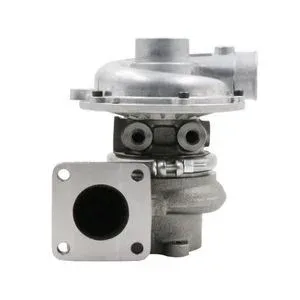
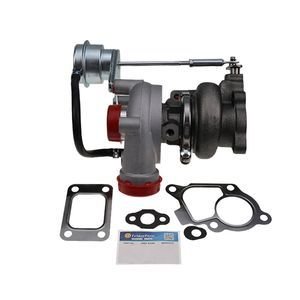
Matched Set Dispatch — every turbocharger kit ships with the gaskets and oil feed seals verified against the 4JJ1X block configuration.
Technical Specifications
| Parameter |
Value |
| Product Type |
Turbocharger & Kit |
| Part Number |
898185-1951 |
| Cross-Reference |
8981851951, 898185-1951 (reference only) |
| Model Designation |
RHF5 |
| Engine Compatibility |
Isuzu 4JJ1X |
| Machine Fitment |
Hitachi ZX110-3, ZX120-3, ZX130-3, ZX130-5 |
| Compressor Wheel Type |
Radial |
| Turbine Wheel Type |
Radial |
| Cooling Method |
Oil-cooled |
| Wastegate |
Internal |
| Actuator |
Pneumatic, pre-calibrated |
| Gasket and Seal Kit |
Included |
Application Suitability
| Engine System |
Related Components |
| Air Induction and Charge System |
Air filter element, intake ducting seals, intercooler hoses |
| Exhaust and Emission Path |
Exhaust manifold gasket, downpipe clamp, heat shield fasteners |
| Lubrication Feed and Drain |
Oil feed line, oil return hose, crankcase breather valve |
| Engine Overhaul Interface |
Piston ring set, main and rod bearings, cylinder head gasket |
Why a Complete Turbocharger Kit Matters After an Engine Rebuild
A turbocharger 898185-1951 RHF5 does not fail in isolation. When an Isuzu 4JJ1X comes in for a rebuild, the root cause often traces back to oil starvation, contaminated intake air, or excessive exhaust gas temperature upstream of the turbine housing. Swapping the unit without addressing the adjacent system invites a repeat failure within the first few hundred hours of operation [NEED_CITE: common causes of turbocharger failure in industrial diesel engines].
The failed turbo is the symptom; the oil feed and exhaust path hold the actual diagnosis.
Shops that replace only the rotating assembly frequently see the new turbo ingest debris from a reused oil feed line or choke on exhaust backpressure from a clogged particulate path. The repair cost effectively doubles because the second teardown falls outside warranty scope. Identifying and resolving the system-level fault before the new unit spins up is what separates a lasting repair from a costly repeat visit [NEED_CITE: diesel engine turbocharger diagnostic sequence best practices].

Where the RHF5 Sits Inside the 4JJ1X Air and Exhaust Loop
The RHF5 turbocharger sits at the intersection of the intake charge system and the exhaust energy recovery path on the Isuzu 4JJ1X. It converts exhaust gas enthalpy into boost pressure, directly governing the air-fuel ratio that the common-rail injection system depends on. When the turbine side is compromised by carbon buildup or shaft play exceeds tolerance, combustion efficiency drops across all four cylinders simultaneously. A turbocharger 898185-1951 replacement therefore should be evaluated alongside the condition of the injectors, the EGR valve seat, and the intercooler core integrity.
Oil Feed Contamination and the Case for a Full Seal Refresh
On the 4JJ1X platform, the turbo oil feed line runs directly from the engine block gallery, meaning any particulate generated during a piston ring or bearing replacement travels straight to the turbo journal bearing. Shops that reuse the old feed line or skip the inline filter element routinely encounter early shaft wear on the new unit. The turbocharger kit includes replacement gaskets and seals sized for this exact oil circuit, eliminating the guesswork of sourcing individual O-rings that may differ by half a millimeter in cross-section — a discrepancy enough to cause a slow leak that starves the bearing under sustained load [NEED_CITE: turbocharger lubrication feed line contamination control].
Interpreting the Core Specifications for Rebuild Planning
The RHF5 designation refers to the turbine housing frame size, which dictates the exhaust gas flow capacity and therefore the boost curve the 4JJ1X was calibrated around. Using a different frame size alters the compressor map and forces the ECU to operate outside its intended fueling logic, potentially elevating exhaust gas temperature beyond safe limits for the piston crowns. The internal wastegate is pre-calibrated to the factory boost target; modifying the actuator rod length during installation shifts the entire boost curve and should be avoided unless the engine control parameters are remapped simultaneously. Oil cooling relies entirely on engine oil pressure, making the condition of the oil pump and the cleanliness of the gallery network prerequisites for reliable turbo operation rather than optional checks.
The Hidden Cost of Skipping the Root-Cause Diagnosis
Replacing a failed turbocharger 898185-1951 without investigating why the original unit failed is the single most expensive shortcut in a 4JJ1X rebuild. If the previous failure was caused by oil coking from extended idle shutdowns, the new unit faces identical conditions unless an idle timer or post-lube procedure is implemented. If contaminated intake air eroded the compressor wheel, a new turbo behind a compromised air filter housing will suffer the same blade erosion within months [NEED_CITE: intake air filtration impact on turbocharger compressor wheel life].
The cost of a second teardown — labor, gaskets, fluids, machine downtime — consistently exceeds the cost of doing the system-level diagnosis upfront. Shops that adopt a checklist approach covering oil analysis, intake leak testing, and exhaust backpressure measurement before every turbo installation report meaningfully lower warranty claim rates on their rebuilds.
What This Supply Arrangement Covers
Our own production lines and qualified sourced supply carry identical QC protocols and warranty terms, so the turbocharger kit you receive meets the same specification regardless of which facility completed the machining. Eight core categories under one account mean the associated gaskets, oil feed seals, and exhaust clamps ship in the same consignment as the turbo itself, eliminating the split-delivery problem that leaves a machine on the hoist waiting for a secondary order. Part identification from a worn nameplate photograph or engine serial number avoids the mismatched variant issue that arises when superseded part numbers are ordered from generic catalogs. A sample unit is available for fitment confirmation before a fleet-level bulk commitment is placed. The technical team reviews the engine build history to confirm that the included gasket and seal set matches the specific block and head casting revision on your 4JJ1X.
Documentation & Verification
- Commercial invoice listing turbocharger kit line items with engine model and serial number
- Cross-reference sheet mapping 898185-1951 to superseded and alternate numbers (reference only)
- Dimensional inspection record covering flange bolt pattern and oil port thread specification
- Warranty terms covering manufacturing defects with claim procedure and duration stated
- Packing photographs documenting kit contents and protective packaging before crate closure
- HS code declaration and customs documentation formatted for destination country requirements
Installation & Rebuild Sequence
- Verify oil gallery cleanliness with a solvent flush and compressed air blow-through before connecting the new feed line to the turbocharger 898185-1951 RHF5.
- Pre-lube the journal bearing through the oil inlet port using clean engine oil to prevent dry-start scoring during initial cranking.
- Torque exhaust manifold and downpipe flange fasteners to the sequence specified in the engine service manual to avoid housing distortion.
- Confirm wastegate actuator rod length matches the factory setting before reattaching the vacuum reference hose.
- Run the engine at idle for several minutes to purge air from the oil feed circuit before applying load.
- Monitor boost pressure and exhaust gas temperature against baseline values during the first operating shift to validate the installation.
Requesting a Fitment-Confirmed Quotation
Provide the engine serial number and any rebuild history — such as oversize bore dimensions or previous bearing replacements — so the technical team can confirm the turbocharger kit contents match your specific 4JJ1X configuration. If the machine nameplate is worn or painted over, a photograph of the engine block casting number and the existing turbo data plate is sufficient to verify compatibility and cross-reference the correct variant.
Frequently Asked Questions
Q: Does the turbocharger kit include all seals needed for a complete installation on the 4JJ1X?
A: The kit includes the exhaust inlet and outlet gaskets plus the oil feed and return seals matched to the 4JJ1X block. If your engine has been previously rebuilt with non-standard fittings or aftermarket oil lines, provide the build details so we can verify seal compatibility or include alternate sizes.
Q: Can the RHF5 turbocharger be used on a 4JJ1 engine variant other than the 4JJ1X?
A: The 4JJ1 family has several variants with different boost targets and exhaust flange configurations. The RHF5 unit referenced here is configured for the 4JJ1X as fitted to Hitachi ZX110-3 through ZX130-5 machines. Share your engine serial number so we can confirm the variant match before dispatch.
Q: What information do you need to cross-reference a superseded turbocharger part number?
A: A photograph of the existing turbo data plate, the engine serial number, and the machine model are usually sufficient. We verify the cross-reference against superseded and alternate numbers and confirm flange orientation and oil port position before finalizing the order.
Q: Is a sample unit available before committing to a fleet-level order?
A: Yes. A single turbocharger kit can be supplied for fitment verification on one machine before a bulk commitment. This allows your workshop to confirm gasket alignment, oil port thread compatibility, and actuator calibration against your specific engine build.