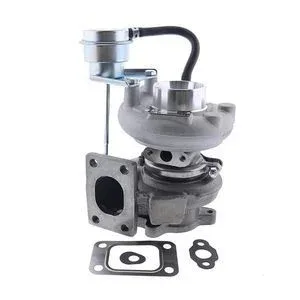
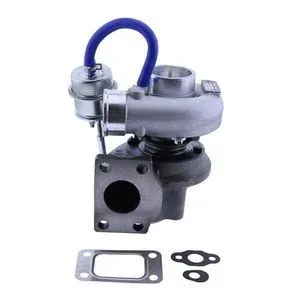
Engine serial variants verified — C3.8 turbocharger mapping confirmed against serial range to prevent intake mismatch on 272D2 and 299D3 loaders.
Technical Specifications
| Parameter |
Value |
| Part Number |
482-8480 |
| Cross-Reference |
CA482-8480, 4828480 (reference only) |
| Product Type |
Turbocharger |
| Engine Fitment |
CAT C3.8 Engine |
| Machine Fitment |
272D2, 272D3, 272D3 XHP, 297D2, 297D2 XHP, 299D2, 299D2 XHP, 299D3, 299D3 XE, 299D3 XHP |
| Condition |
New Aftermarket |
| Turbine Housing Material |
Ni-resist D5S ductile iron |
| Compressor Wheel |
7-blade forged aluminum alloy A380 |
| Bearing Type |
Dual ceramic ball bearings |
| Boost Pressure |
1.4 bar |
| Exhaust Gas Temperature Rating |
Exceeds 650°C |
| Turbine Housing Hardness |
HV 240–260 |
| Sealing Surface Roughness |
ISO 4287 Ra ≤ 0.8 μm |
| Warranty |
6 months against manufacturing defects |
| MOQ |
1 piece |
| Standards |
ISO 9001, ISO 4287 |
Application Suitability
| Engine System |
Related Components |
| Intake and boost circuit |
Oil feed line gasket, oil return gasket, air filter element |
| Exhaust and emission path |
Exhaust manifold gasket, turbine housing gasket |
| Engine management |
Boost pressure sensor, intake air temperature sensor |
| Crankcase ventilation |
CCV filter, breather hose |
| Lubrication supply |
Oil filter, turbo oil feed restrictor |
Why Engine Serial Variants Change the Turbocharger 482-8480 Selection
A turbo that bolts on but does not match the engine serial range will under-boost or surge within hours of startup.
When I worked through warehouse part verification in Southeast Asia, a C3.8 turbo swap on a 272D2 skid steer loader looked straightforward until the compressor flow curve turned out to be wrong for that specific engine build. The replacement unit mounted physically, but the waste-gate response lagged at low RPM and the machine never reached rated power. [NEED_CITE: turbocharger compressor map matching to engine displacement and serial variants]. The same situation appeared on a 299D3 XHP where the oil inlet flange pattern differed between early and late production engines.
Ordering a turbocharger 482-8480 by machine model alone leaves the critical serial-range variable unresolved, which is the exact gap that causes repeat teardowns in rebuild shops handling mixed fleets of CAT compact loaders.

C3.8 System Context and Adjacent Components
A turbocharger 482-8480 sits at the intersection of the intake, exhaust, and lubrication circuits on the C3.8. The compressor draws filtered air through the intake tract, so a degraded air filter element introduces abrasive dust that scores the compressor wheel blades. On the exhaust side, the turbine housing receives gas from the manifold, and any manifold gasket leak upstream reduces drive pressure, causing the turbo to spin below target speed. Oil feed and return gaskets complete the loop — oil coking from degraded supply lines is a frequent root cause of bearing failure in this engine family.
Serial Variant Differences That Affect Fitment
The C3.8 engine family spans multiple serial ranges across the 272D2, 297D2, and 299D2 series. Within these ranges, the oil inlet flange bolt pattern and the exhaust outlet stud spacing can shift between early and late production blocks. A turbo that physically mounts on the manifold may still present the wrong oil restrictor orifice size, leading to either oil starvation or excessive oil consumption through the compressor seal. [NEED_CITE: engine serial range verification for turbocharger oil feed compatibility in compact diesel platforms]. Confirming the engine serial number against the turbo flow map prevents mismatched boost curves that manifest only under load.
Reading the Specifications Against Real Operating Conditions
The Ni-resist D5S ductile iron turbine housing carries an HV 240–260 hardness rating, which resists thermal fatigue cracking under the sustained exhaust temperatures this engine produces during continuous loader cycles. The 7-blade forged A380 aluminum compressor wheel balances airflow delivery against inertial response — lighter wheel materials spool faster but sacrifice durability under dust ingestion events. Dual ceramic ball bearings reduce friction losses at sustained RPM while tolerating the oil film thinning that occurs during high-ambient-temperature operation common in tropical job sites. The ISO 4287 Ra ≤ 0.8 μm sealing surface finish on mating flanges prevents boost leaks that would otherwise erode turbine efficiency over time.
The Hidden Cost of Skipping Serial Verification
Fitting a turbo without confirming the C3.8 serial variant leads to two failure paths. The first is immediate: the oil inlet does not align, the exhaust studs do not match, and the unit goes back in the box while the loader sits idle. The second is delayed and more expensive: the unit runs but delivers the wrong boost profile, causing elevated exhaust temperatures that degrade piston crowns and valve seats over several hundred operating hours. [NEED_CITE: delayed turbo mismatch effects on piston and valve train thermal loading]. Both paths end with the machine back on the teardown bench, this time with a longer list of damaged components.
Why Rebuild Shops Source This Turbocharger Here
Production on selected turbo lines runs in our own facility with the same QC and warranty terms applied to sourced supply, so a Turbocharger 482-8480 ships with verified boost curve and balance records regardless of production origin. The eight-category catalog means the matching gasket set, oil feed line, and air filter element move under one account and one consignment, eliminating the split-freight problem that delays rebuild completion. Part identification from engine serial number, machine model, or nameplate photograph resolves the variant question before the order ships. Cross-reference verification covers superseded and alternate numbers, catching catalog errors that copied tables carry forward. Sample supply for fitment confirmation is available before bulk commitment, reducing the risk of a mismatched unit reaching the rebuild bay. Technical team support confirms compressor map compatibility and oil restrictor grade against the specific C3.8 build.
Documentation & Verification
- Commercial invoice and packing list with turbocharger serial and engine fitment cross-reference noted
- Compatibility sheet mapping C3.8 serial ranges to turbo variant (reference only for OEM numbers)
- Quality inspection record showing boost curve plot and turbine wheel balance test result
- Warranty terms covering manufacturing defects for six months from dispatch date
- Packing photographs documenting protective crating and flange cover installation before crate closure
- HS code and customs documentation support with correct emission system classification
Installation & Rebuild Sequence
- Clean all oil feed and return passages in the C3.8 block before mounting the turbocharger to prevent debris ingestion
- Verify oil restrictor orifice diameter matches the specific C3.8 serial range requirement
- Install new turbine housing gasket and exhaust manifold gasket as a matched set during assembly
- Torque turbine inlet studs and compressor outlet clamps to C3.8 service manual specifications
- Pre-lube bearing cavity with clean engine oil before first cranking to prevent dry-start scoring
- Run initial break-in at low idle and inspect all flange joints for boost or oil leaks
Requesting a Matched Quote
Provide the C3.8 engine serial number, any known rebuild history including previous oversize or undersize components, and the machine model to confirm the correct turbocharger variant and accompanying gasket set for your specific engine build.
Frequently Asked Questions
Q: What gaskets and seals should be replaced alongside the turbocharger during a C3.8 rebuild?
A: Replace the turbine housing gasket, oil inlet gasket, oil return gasket, and exhaust manifold gasket as a minimum set. The air filter element should also be changed, and the oil feed line inspected for internal coking. Running a new turbo on old gaskets risks boost leaks and oil starvation that cause early failure.
Q: Does the C3.8 engine have serial-number-specific turbocharger variants?
A: Yes. The C3.8 family spans multiple serial ranges across the 272D2 and 299D3 series, and oil inlet flange patterns plus compressor flow maps can differ between early and late builds. Providing the engine serial number allows correct variant selection before dispatch.
Q: What typically causes the original turbocharger to fail on these loaders?
A: Oil starvation from coked feed lines and dust ingestion from compromised air filtration are the two most common root causes. Replacing the turbo without addressing the underlying system fault leads to repeat failure within a short operating window.
Q: Is there a matched overhaul kit that includes this turbo and associated components?
A: Matched kits are assembled based on the specific C3.8 serial range and rebuild scope. The kit can include the turbocharger, gasket set, oil feed components, and filters. Confirm the engine build details to receive a kit that covers all items your particular engine requires.
Q: How do I confirm the correct turbocharger for my specific C3.8 engine build?
A: Share the engine serial number, the machine model, and any known rebuild history such as previous bearing or piston replacements. This information allows verification against the serial variant table and ensures the compressor map matches your engine configuration.