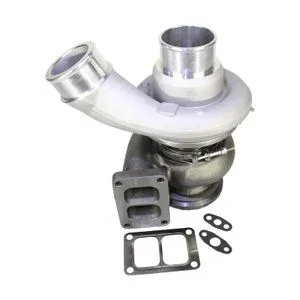
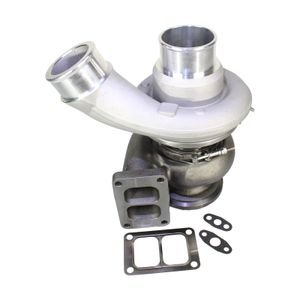
System-Level Match — Turbocharger matched to Mack AI427/E7 manifold and lubrication interfaces, shipped with verified cross-reference sheet.
Technical Specifications
| Parameter |
Value |
| Product Type |
Turbocharger |
| Part Number |
631GC5172M5 |
| Cross-Reference |
631GC5172M5 (reference only) |
| Machine Fitment |
Mack CV713 |
| Engine Compatibility |
Mack AI427, E7 |
| Turbo Model |
S300A113 |
| Turbine Wheel Material |
Inconel 718 |
| Maximum Operating Speed |
105,000 RPM |
| Shaft Surface Finish |
Ra ≤ 0.2 μm |
| Radial Clearance |
0.05–0.07 mm |
| Gasket Interface Tolerance |
±0.02 mm |
| Pressure Ratio |
3.2 ± 0.15 |
| Air Purity Standard (Compressor Housing) |
ISO 8573-1 Class 2 |
| Condition |
New Aftermarket |
| Warranty |
3–12 months against manufacturing defects |
Application Suitability
| Engine System |
Related Components |
| Exhaust & Emission (AI427/E7) |
Exhaust manifold gaskets, turbo oil feed and return lines, intake seals |
| Engine Overhaul (AI427/E7) |
Main bearing shells, piston ring sets, full gasket kit, oil pump |
| Scheduled Maintenance (CV713) |
Air filter element, oil filter, crankcase breather, boost pressure sensor |
| Distributor Stocking |
Turbo mounting hardware, seal kits for oil lines, manifold stud kits |
Why the Bottom-End Rebuild Fails Again if the Turbo Is Ignored
A turbocharger engine rebuild replacement must address the failure path, not just the failed component. Replacing pistons and bearings while leaving the degraded turbo oil feed line in place invites the same oil starvation event that destroyed the previous unit.
Engine shops frequently overhaul the block, install new bearings and rings, then reuse the existing turbocharger or its supply lines [NEED_CITE: diesel engine overhaul best practices for emission system renewal]. The residual carbon and varnish inside an aged oil feed restrict flow to the new turbo center housing within the first operating cycle. Shaft temperatures exceed the design envelope, the journal bearing scores, and radial play opens up. The engine then ingests oil through the compressor side, washing cylinder walls and contaminating the new rings. This cascade repeats the failure the rebuild was meant to cure. The same logic applies to exhaust manifold gaskets: a leak upstream of the turbine alters exhaust gas velocity, shifting the turbo off its intended operating map and causing surge or over-speed conditions that destroy the turbine wheel.

The Turbocharger as the Center of the Emission and Exhaust System
This turbocharger belongs to the emission and exhaust system of the Mack AI427 and E7 engine platform. During a turbocharger engine rebuild replacement, it functions as the pressure boundary between the exhaust manifold and the charge air system. The turbine housing receives high-temperature exhaust gas, converts thermal energy into shaft rotation, and passes the gas to the downstream aftertreatment. The compressor housing draws filtered air, pressurizes it, and delivers it to the intercooler and intake manifold. Every adjacent seal, gasket, and oil line in this path either protects the turbocharger or is protected by it. Replacing only the turbo while ignoring the manifold studs or the oil return line leaves the weakest link unchanged.
Engine Serial Variants and Oil Port Orientation
The AI427 and E7 platform was produced across multiple serial ranges, and the oil feed port position on the turbo center housing varies between these ranges. Some builds route the oil supply from the block gallery at a specific clock angle, while later revisions moved the port to accommodate revised block castings [NEED_CITE: Mack engine serial variant differences in turbo fitment]. Installing a turbocharger with the wrong port orientation forces the installer to bend the supply hose, introducing a kink that restricts flow. Equally, the oil return flange pattern changed across production years. Confirming the engine serial number and matching it against the turbo oil port layout prevents these forced-fitment errors that lead to premature center bearing failure.
Interpreting the Critical Specifications
The turbine wheel is manufactured from Inconel 718, a nickel-based superalloy that retains strength at the exhaust gas temperatures typical of heavy-duty diesel operation. This material resists creep and thermal fatigue across repeated heat cycles. The radial clearance of 0.05–0.07 mm represents the gap between the shaft and the journal bearing; clearance outside this band causes either excessive oil consumption through the center seal or shaft contact with the bearing surface. The shaft surface finish of Ra ≤ 0.2 μm ensures the floating journal bearing operates on a stable hydrodynamic film, preventing metal-to-metal contact at the maximum operating speed of 105,000 RPM. The gasket interface tolerance of ±0.02 mm controls the sealing face flatness between the turbine housing and the exhaust manifold, preventing exhaust leaks that would alter the pressure ratio delivered to the compressor.
The Hidden Cost of Skipping Root-Cause Diagnosis
Installing a new turbocharger without correcting the system fault that killed the old one guarantees a repeat failure. A contaminated oil sump, a failing oil pump, or a restricted crankcase breather each create conditions that destroy turbo bearings regardless of part quality [NEED_CITE: root cause analysis for turbocharger bearing failures in heavy duty diesel engines]. Shops that skip oil sample analysis and breath system inspection return the machine to service with the same contamination or pressure deficit in place. The replacement turbo then fails within the first operating cycle, forcing a second teardown, a second set of gaskets, and lost revenue from extended downtime.
Sourcing From a Single System Supplier
XUNPO produces selected turbocharger lines in its own Guangzhou facility and sources the remainder from ISO-certified manufacturing partners, with both paths carrying identical quality control and warranty terms. The eight core categories mean an engine overhaul order covering pistons, bearings, gaskets, and this turbocharger ships as one consignment under one account. Orders start from a single piece, so a workshop can obtain one turbo for an urgent rebuild without meeting a minimum quantity. Part identification proceeds from the part number, the machine model, or a photograph of the worn nameplate. A cross-reference verification covers superseded and alternate numbers, and sample units are available for fitment confirmation before a bulk commitment is made.
Documentation & Verification
- Commercial invoice listing turbocharger model S300A113 and engine compatibility AI427/E7.
- Cross-reference sheet mapping 631GC5172M5 (reference only) to superseded and alternate identifiers.
- Quality inspection record covering boost response curve and shaft radial play measurement.
- Warranty terms specifying coverage period for manufacturing defects on the turbo center assembly.
- Packing photographs showing anti-vibration foam protection around the compressor and turbine housings.
Installation & Rebuild Sequence
- Verify oil feed line internal diameter matches the center housing inlet to prevent flow restriction on the S300A113.
- Clean the oil return passage in the block before fitting the turbocharger to ensure gravity drain without backpressure.
- Torque turbine housing mounting nuts to specification and recheck after the first thermal cycle to maintain gasket interface tolerance.
- Pre-lube the journal bearing through the oil inlet port before initial cranking to avoid dry-start scoring at 105,000 RPM capability.
- Run the engine at idle and monitor boost pressure against the 3.2 ± 0.15 target before applying load to the CV713 powertrain.
Request a Fitment-Verified Quotation
Provide the engine serial number, any prior rebuild history, and the exact engine variant (AI427 or E7) so the correct oil port orientation and mounting pattern can be confirmed. Attach a photograph of the existing turbocharger nameplate if the part number is partially worn. Include a list of adjacent components required for the overhaul so the complete system order ships together.
Frequently Asked Questions
Q: What other emission and exhaust components should be replaced together with the turbo during an engine rebuild?
A: The exhaust manifold gaskets, turbo oil feed and return lines, intake duct seals, and air filter element should all be renewed during the rebuild. Reusing aged oil lines risks carbon restriction that starves the new turbo journal bearing. Fresh gaskets prevent exhaust leaks that shift the turbo off its intended pressure ratio map.
Q: How do different AI427/E7 engine serial ranges affect turbo fitment and oil port position?
A: The oil feed port clock angle and the oil return flange pattern vary across AI427 and E7 serial ranges. Providing the full engine serial number allows verification of the correct port orientation and flange match, preventing forced hose routing that causes flow restriction and early bearing failure.
Q: What system-level faults should be diagnosed before installing the replacement turbo?
A: Oil contamination, inadequate oil pressure at the turbo feed gallery, and exhaust back-pressure from a failing aftertreatment system must be corrected first. An oil sample analysis and a crankcase breather inspection identify contamination and ventilation faults that would destroy the new turbo bearing within the initial operating period.
Q: Does the overhaul gasket kit include the turbo mounting gaskets and oil line seals?
A: Standard overhaul kits often exclude turbo-specific gaskets and oil line O-rings. Confirm the kit contents against the turbo flange pattern and oil port seal dimensions before teardown. Ordering the turbo mounting gasket set and oil line seals separately ensures nothing is missing when the engine is ready for reassembly.
Q: How can I confirm the correct turbo variant when the engine has been previously rebuilt?
A: A prior rebuild may have introduced non-standard components or altered the block casting configuration. Provide the current engine serial number, the turbo nameplate photograph, and any rebuild documentation available. Cross-referencing these details against the engine variant database confirms the correct S300A113 variant for the existing block configuration.