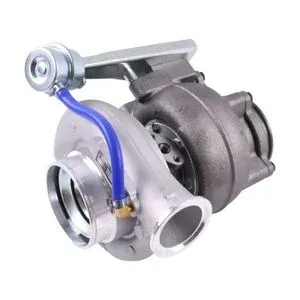
Engine System Matched Supply — This HX40W turbocharger for Cummins QSL, ISL, and ISC8.3 engines ships with verified cross-reference data and adjacent system components to support complete intake and exhaust rebuilds.
Technical Specifications
| Parameter |
Value |
| Part Number |
2839811 |
| Product Type |
Turbocharger |
| Cross-Reference |
3772607, 4037513, 4038989, 4042341, 4044082, 4089917 (reference only) |
| Machine Fitment |
Cummins QSL, ISL, ISC8.3 (2004–2011), Valmet 445 FXL Fellerbuncher |
| Turbo Model |
HX40W, HX40W-B85J71GL/C76L84FH18UD-W |
| Turbine Wheel Material |
Inconel 713C |
| Bearing Type |
Dual ceramic ball bearings |
| Dimensional Tolerance (Compressor Housing) |
±0.02 mm |
| Internal Seal Standard |
SAE J1927 |
| Condition |
New Aftermarket |
| Warranty |
6-month manufacturer defect warranty |
| Standards |
ISO 9001, ISO/TS 16949, SAE J1927 |
Application Suitability
| Engine System |
Related Components |
| Intake & Boost Delivery |
Intercooler seals, intake flange gaskets, V-band clamps, charge air piping |
| Lubrication Supply & Drain |
Oil feed line, oil drain gasket, crankcase breather, oil filter |
| Exhaust Interface |
Exhaust manifold-to-turbo gasket, manifold studs, exhaust clamp hardware |
| Emission & Crankcase |
Wastegate actuator, EGR cooler interfaces, crankcase ventilation hoses |
Why a New Turbo Fails Weeks After Installation
A replacement turbo often fails because the upstream root cause was never corrected.
In mining and heavy construction environments, it is common to see a fresh HX40W turbocharger installed on a Cummins QSL or ISL engine, only to suffer bearing or shaft failure within a short operating window. The turbo sits at the junction of three distinct engine systems: lubrication, intake, and exhaust. When oil feed line coking, restricted drain passages, or excessive crankcase pressure are left unaddressed, the new unit inherits the same destructive conditions as the old one. [NEED_CITE: common root causes of premature turbocharger failure in heavy duty diesel engines]
This pattern repeats across fleets where maintenance planning focuses on the failed component rather than the system that destroyed it. Engine rebuild shops and fleet maintenance teams that verify the full intake, lubrication, and exhaust circuit before installing a new turbocharger consistently achieve longer service intervals and fewer repeat teardowns.

The Turbocharger Within the Engine System Context
The HX40W turbocharger operates within a tightly coupled network of intake, lubrication, and exhaust subsystems on QSL, ISL, and ISC8.3 engines. Boost pressure, oil film stability on the shaft bearings, and exhaust gas temperature all influence one another in real time. When planning a turbo replacement or a full engine rebuild, treating this unit as an isolated part ignores the system interactions that determine its operating life. An HX40W turbocharger engine rebuild parts list that omits adjacent gaskets and seals invites early failure.
Oil Port Orientation and Engine Serial Variants
Production variations across the QSL, ISL, and ISC8.3 engine families affect oil port position, compressor housing flange configuration, and mounting stud patterns. A turbo that fits an early-production ISC8.3 may require a different oil supply hose routing or gasket profile than one built for a later run. Confirming the engine serial number and production year against the specific housing variant is essential before ordering. Superseded part numbers in the cross-reference list reflect these configuration changes over time. [NEED_CITE: Cummins QSL ISL ISC8.3 engine serial variant differences in turbo mounting]
Reading the Specifications for Real-World Impact
The Inconel 713C turbine wheel provides high-temperature creep resistance, which is critical in exhaust environments where gas temperatures cycle rapidly during load changes. The dual ceramic ball bearing arrangement reduces friction and heat generation compared to conventional journal bearings, extending the window before oil coking becomes a risk during high-load operation. The ±0.02 mm dimensional tolerance on the compressor housing ensures that the impeller tip clearance remains within design limits, preserving boost efficiency and preventing surge conditions. SAE J1927 compliance for internal seals means the unit meets established criteria for oil retention under the pressure and temperature profiles typical of these engine platforms. These specifications matter most when the engine operates under sustained load, such as in refuse collection or forestry applications where thermal cycling is constant.
The Cost of Skipping System-Level Diagnosis
Installing a new turbo without investigating the root cause of the previous failure is one of the most expensive shortcuts in engine maintenance. A blocked oil drain line or a deteriorated exhaust manifold gasket will destroy the replacement unit just as effectively as it destroyed the first. The cost is not only the second turbo but also the second teardown, the second gasket set, and the additional machine downtime while the repair is repeated. [NEED_CITE: total cost of repeat turbocharger failure including labor and downtime in heavy equipment]
Sourcing Engine System Components from One Account
Our selected production lines and qualified sourced supply operate under one warranty and one quality standard, covering turbochargers alongside gaskets, seals, and overhaul kit components. The eight core categories in our catalog allow a complete engine rebuild parts list to ship as a single consignment, reducing the coordination burden across multiple suppliers. Minimum order starts at one piece, supporting emergency replacements and sample fitment before bulk commitment. Part identification is supported through part number, engine model, photograph, or nameplate image, and our cross-reference verification covers superseded and alternate numbers. A technical team is available to confirm compatibility, size grade, and engine serial variant matching before dispatch.
Documentation & Verification
- Commercial invoice and packing list referencing turbocharger part number and engine application
- Compatibility and cross-reference sheet listing alternate numbers marked as reference only
- Quality inspection record covering dynamic balance and compressor housing dimensional check
- Warranty terms specifying coverage scope for turbocharger defect claims
- Packing photographs showing oil port protection and housing surface condition before crating
- HS code and customs documentation support for international turbocharger shipments
Installation & Rebuild Sequence
- Verify oil feed and drain line flow before installing the HX40W to prevent dry-start bearing damage
- Torque exhaust manifold-to-turbo fasteners to specification using new gaskets to ensure seal integrity
- Prime the turbocharger oil gallery with clean engine oil before initial cranking
- Confirm boost pressure and wastegate actuator response during first loaded run cycle
- Inspect all intake and exhaust flange seals for correct seating after thermal expansion
Preparing Your Turbocharger Inquiry
To receive an accurate compatibility confirmation, provide the Cummins engine model, engine serial number, and any previous rebuild history. If the nameplate is unreadable, a photograph of the existing turbocharger housing, oil port position, and mounting flange allows our technical team to verify the correct variant. For fleet-level overhaul planning, share the engine build date and application type so we can confirm the matched gasket and seal kit contents for your specific configuration.
Frequently Asked Questions
Q: What gaskets and seals should be replaced together with the turbocharger?
A: The exhaust manifold-to-turbo gasket, oil supply and drain gaskets, intake flange seals, and V-band or bolted clamp hardware should all be replaced as a matched set. Reusing old gaskets risks boost leaks and oil seepage that compromise the new unit. We supply verified gasket kits matched to the specific compressor housing variant of your QSL, ISL, or ISC8.3 engine build.
Q: How do engine serial variants affect turbo fitment on QSL, ISL, and ISC8.3?
A: Production changes across these engine families affect oil port orientation, compressor housing flange shape, and mounting stud spacing. A turbo that fits one serial range may not seal correctly on another without the correct gasket profile. Confirming your engine serial number allows us to cross-reference the correct housing variant and superseded part numbers before shipment.
Q: What upstream engine conditions cause premature turbo failure?
A: Oil coking from delayed oil changes, restricted oil drain lines, excessive crankcase pressure, and deteriorated intercooler seals are common root causes. These conditions destroy the shaft bearings and internal seals of a new turbocharger just as they did the original. Addressing these upstream issues during replacement is essential for achieving the expected service life of the unit.
Q: Are superseded part numbers still valid for ordering the correct replacement?
A: Yes, superseded and alternate numbers in our cross-reference list reflect configuration changes over production years. A number that replaced an earlier designation is still valid for identifying the correct turbocharger variant. Our verification process maps these changes against your engine serial number to confirm the match.
Q: How is compatibility confirmed when only the engine model is known?
A: A photograph of the existing turbocharger housing, oil port layout, and nameplate provides enough information for our technical team to identify the correct variant. Engine model alone narrows the range, but visual confirmation of the flange and port configuration ensures the replacement unit fits without modification or return.