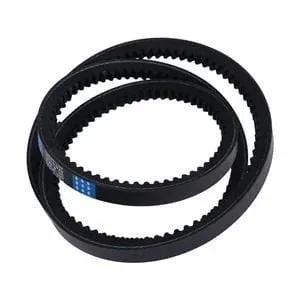
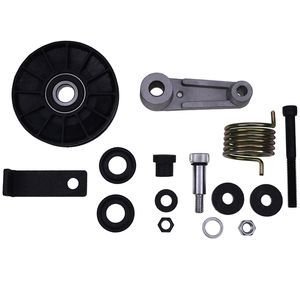
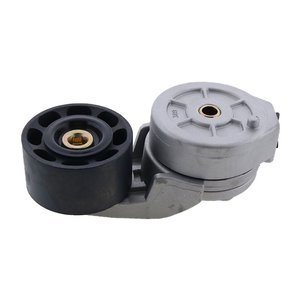
System-Level Supply — Every drive pump belt ships with verified tensioner and pulley cross-references to prevent accessory drive system mismatch during engine rebuild.
Technical Specifications
| Parameter |
Value |
| Part Number |
6736775 |
| Product Type |
Belt |
| Cross-Reference |
6736775 (reference only) |
| Machine Fitment |
Bobcat 753, S130, S150, S160, S175, S185, S205, T140, T180, T190, Toolcat 5600 |
| Dimensions |
58.15 inches length, 1.19 inches width |
| Groove Design |
Variable cog design with 3 grooves |
| Backing Material |
Fiber-loaded backing with additional cord support |
| Manufacturing Standard |
ISO-certified manufacturing |
| Warranty |
3-12 months against manufacturing defects |
Application Suitability
| Engine System |
Related Components |
| Accessory drive / hydraulic pump drive |
Tensioner assembly, idler pulleys |
| Engine cooling fan drive |
Fan hub bearings, drive pulley |
| Power transfer to hydraulic pump |
Pump coupling, shaft seals |
| Alternator and auxiliary drive |
Serpentine routing components |
What Causes a Drive Pump Belt to Fail Before Its Time
The belt is usually the victim, not the cause. A seized tensioner bearing or a misaligned pump pulley will destroy a replacement belt within operating hours, forcing a second teardown on the same engine accessory drive system.
I have stood next to a silent skid steer in the Saudi heat because the drive pump belt snapped on day two after a fresh install. The real fault sat in the tensioner assembly — the bearing was already binding, but nobody replaced it during the belt swap. When the rebuild plan treats the belt as an isolated line item, the root cause survives the repair. [NEED_CITE: belt drive system failure root cause analysis for mobile hydraulic equipment]

The Belt Inside the Engine Accessory Drive System
This drive pump belt transfers crankshaft rotation to the hydraulic pump on Bobcat loaders and Toolcat units, sitting within a network of tensioners, idler pulleys, and shaft couplings. The accessory drive system operates under continuous load, and every component in that loop shares the same thermal and mechanical stress environment. Addressing the belt without inspecting the rest of the loop leaves latent failure points that will surface again during the next work cycle.
Matched Component Sets Prevent Rebuild Comebacks
When a belt is ordered alongside its tensioner assembly, idler pulleys, and adjacent engine cover gaskets, the entire accessory drive system is refreshed in one teardown. This eliminates the scenario where the belt arrives but the matching tensioner is still on a different lead time from another supplier. Rebuild shops that source the full belt drive system as one matched set avoid the dimensional mismatch problems that occur when components from separate batches are combined — a lesson I learned the hard way when piston and liner sets arrived in conflicting grades on a desert site. [NEED_CITE: engine accessory drive system overhaul sequencing and matched set tolerance]
Reading the Specs That Determine Field Performance
The 58.15-inch effective length and 1.19-inch width define the belt's routing geometry across the crankshaft, tensioner, and hydraulic pump pulleys. Any deviation in these dimensions shifts the belt's tracking position on the pulley grooves, accelerating edge wear. The variable cog design with 3 grooves allows the belt to flex around smaller-diameter pulleys without internal cord damage, which is common on compact loader engine compartments where routing space is constrained. The fiber-loaded backing with additional cord support manages the heat buildup generated by continuous hydraulic pump load, resisting the glazing and cracking that plague belts with standard rubber compounds. These material choices directly address the two primary failure modes: thermal degradation and flex fatigue.
The Cost of Skipping the Adjacent Components
Replacing only the belt while leaving a worn tensioner in place often results in a second failure before the next scheduled service interval. The machine goes down again, the crew pulls the guards a second time, and the labor cost of the repeat teardown eclipses what the tensioner would have cost in the first order. In remote job sites where I have worked across the Middle East, that second downtime event means waiting for the next flight into camp rather than finishing the shift. [NEED_CITE: repeat failure cost analysis for belt drive system component replacement]
How We Support System-Level Procurement
Our production and sourcing lines operate under a single warranty account, so the belt, tensioner, and pulleys all carry identical coverage terms. Eight core categories across the engine system mean your belt drive components ship consolidated with overhaul gaskets and seals from the same Guangzhou warehouse. One-piece minimum order quantities allow emergency single-belt purchases alongside full rebuild kits. Part identification works from a part number, machine model, photograph, or nameplate image — useful when the original belt markings have degraded. Cross-reference verification covers superseded numbers to catch catalog errors before shipment. Our technical team confirms accessory drive compatibility and tensioner grade before dispatch.
Documentation & Verification
- Commercial invoice listing each belt drive component with individual line-item traceability
- Cross-reference sheet mapping 6736775 interchange numbers (reference only) against superseded variants
- Dimensional inspection record confirming belt length, width, and groove count before dispatch
- Warranty terms covering the full matched set — belt, tensioner, and pulleys together
- Packing photographs documenting belt packaging condition at the point of crate closure
- HS code and customs classification support for belt drive system shipments
Installation & Rebuild Sequence
- Route the belt across all pulleys before applying tensioner load to avoid cord pinch damage
- Verify tensioner bearing rotation is smooth with no axial play before belt installation
- Confirm pulley groove alignment using a straightedge across the accessory drive plane
- Torque all pulley mounting bolts to engine specification before the first startup
- Run the engine at idle for a break-in period and re-check belt tracking position
- Inspect belt edges after the first operating hour for signs of misalignment wear
Confirming the Right Belt for Your Engine Build
To ensure accurate fitment, provide your engine model, serial number, and any known rebuild history so we can verify whether the accessory drive configuration on your unit matches the standard routing or a documented variant. This allows us to confirm the correct belt length and tensioner pairing before the order is released.
Frequently Asked Questions
Q: What other belt drive system components should I replace during the same service event?
A: The tensioner assembly, idler pulleys, and any shaft seals in the accessory drive loop should be evaluated and typically replaced alongside the belt. These components share the same wear environment, and replacing them together prevents a secondary failure that would require another teardown. Our matched sets bundle these items for a single system refresh.
Q: How do I confirm the correct belt variant for my specific engine serial number?
A: Provide the engine model and full serial number so we can cross-reference the accessory drive configuration. Bobcat units across the S130 to S205 and T140 to T190 range may carry different pulley arrangements depending on production date and engine variant. We verify the routing against your exact serial before confirming the order.
Q: Is the failure caused by the belt itself or by another component in the drive system?
A: Premature belt failure usually points to a seized tensioner bearing, a misaligned pulley, or hydraulic pump drag rather than a belt defect. Inspect the tensioner for smooth rotation and check pulley alignment before concluding the belt is at fault. We can guide you through the diagnostic checklist during the inquiry.
Q: Can I order the belt together with tensioners, pulleys, and gaskets as one matched set?
A: Yes. We supply the complete accessory drive system as a consolidated set under one account and one warranty. This ensures all components are dimensionally compatible and ship together, eliminating the split-delivery delays that occur when sourcing from multiple suppliers across different categories.
Q: What engine serial information do I need to provide for accurate fitment verification?
A: The engine model designation and full serial number from the nameplate or engine data tag are required. If the nameplate is worn or painted over, a photograph of the engine block casting number or the machine model plate allows us to trace the correct accessory drive configuration through our cross-reference records.