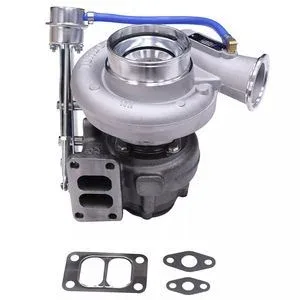
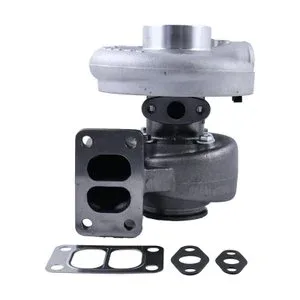
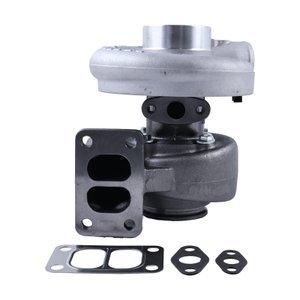
Complete Turbocharger Assembly — Supplied as a matched unit with verified port positions and flange orientation for Cummins QSB6.7 Tier-3 rebuilds
Technical Specifications
| Parameter |
Value |
| Part Number |
4038597 4955156 |
| Product Type |
Turbocharger |
| Cross-Reference |
4955156, 4038597, 4042667, 4038597R, 4038597RX, 4038209, 4044890, 4033681, 4044890H, 4629082, 495515600, 4955156NX, 4955156RX, 5452082, 5452082NX, 5452082RX, 3802879, 3802878 (cross-reference only) |
| Turbo Model |
HX35W-A77J70GM/A70Q86FE14PB-W, HX35W |
| Compatible Engine Brand |
Cummins |
| Engine Number |
QSB6.7, QSB Tier-3 |
| Condition |
New Aftermarket |
| Warranty |
3-12 months against manufacturing defects |
| Assembly State |
Complete turbocharger assembly |
| Factory Standard |
ISO 9001 referenced certification |
| Machine Fitment |
Truck, Industrial with QSB Tier-3 Engine (2004-), Grader with QSB Tier-3 Engine (2004-) |
Application Suitability
| Engine System |
Related Components |
| Intake & Boost System |
Intake manifold gaskets, charge air cooler seals, boost pressure sensor |
| Lubrication Feed to Turbo |
Oil supply line, oil return line, restrictor fitting, oil filter |
| Exhaust Discharge |
Exhaust manifold gasket, V-band clamp or flange fasteners, heat shield |
| Crankcase Ventilation |
Crankcase breather, oil separator elements |
| Engine Overhaul Kit |
Full gasket set, main and rod bearings, piston ring sets |
Why Turbochargers Fail Again Within Weeks of a Fresh Swap
Replacing the turbocharger without tracing the system fault that killed the last one is the most common reason for repeat failures on QSB6.7 rebuilds.
When a HX35W turbocharger engine replacement goes wrong, the damaged unit is usually a symptom. Oil starvation from a clogged supply line, exhaust gas leaks past a warped manifold flange, or contaminated oil from a failing crankcase breather all destroy new units quickly. I have seen a freshly installed turbo on a QSB Tier-3 machine fail before the first oil change interval because the workshop did not flush the oil feed restrictor. The system around the turbo has to be addressed at the same time [NEED_CITE: diesel engine turbocharger failure root cause analysis methodology].
The Turbo's Place Inside the QSB6.7 Air and Oil Circuits
The turbocharger sits at the junction of three engine systems: exhaust energy collection, pressurized air delivery, and high-temperature oil lubrication. On the Cummins QSB6.7, the unit bolts to the exhaust manifold outlet and feeds compressed air to the charge air cooler. Oil enters through a restricted supply fitting and returns by gravity to the block. Any disruption in these three circuits transfers stress directly to the journal bearings inside the HX35W assembly.
Engine Serial Variants and Flange Geometry Differences
The QSB Tier-3 family spans multiple serial breaks, and the turbo mounting flange orientation can differ between early and late production blocks. The oil drain port clocking and the exhaust inlet gasket profile must match your specific engine build. Before shipping, we cross-check the engine serial number against the flange pattern and port positions. An HX35W turbocharger engine replacement that physically bolts on but has the oil drain rotated slightly upward will pool oil in the center housing and smoke heavily under load [NEED_CITE: Cummins QSB6.7 turbo drain orientation by serial range].
Interpreting the HX35W Compressor and Turbine Specifications
The HX35W designation refers to the turbine wheel frame size, which governs exhaust flow capacity and boost response curve. The A77J70GM trim code identifies the compressor wheel inducer diameter and exducer geometry, matched to the QSB6.7 displacement and target boost pressure. The wastegate actuator calibration controls maximum boost; if the replacement unit has a different actuator spring rate, the engine may overboost or run sluggish. These internal specifications must align with the fuel map programmed into the engine control module for Tier-3 emissions compliance.

The Cost of Skipping the Adjacent Component Check
A new turbo installed against a scored exhaust manifold face will leak hot gas into the bearing housing. Oil coking follows, blocking the oil return passage, and the center housing floods. The operator sees blue smoke, assumes the turbo is defective, and orders another one. This cycle repeats until the gasket surface is corrected. The expense is not just the second turbocharger; it is the labor hours, the machine downtime, and the lost confidence in the parts supply [NEED_CITE: turbocharger oil coking and exhaust manifold surface condition].
Sourcing This Part Through a System-Aware Supplier
Our own production lines and qualified sourced supply operate under one account and one warranty, so a turbocharger and its mating gaskets carry consistent terms. We cover eight categories, meaning the turbo, oil feed line, exhaust gasket, and charge air cooler seals ship as one consignment rather than arriving from separate vendors on different schedules. Minimum order is one piece, so a single emergency turbo order is not blocked by quantity thresholds. The Guangzhou warehouse holds stock on common failure items for fast dispatch. Identification works from a part number, machine model, photograph, or a nameplate image, and our cross-reference verification covers superseded and alternate numbers across the QSB Tier-3 range. A sample can be supplied for fitment confirmation before a bulk fleet order is committed.
Documentation & Verification
- Commercial invoice and packing list itemizing turbocharger assembly and matched gasket set
- Part compatibility sheet confirming QSB6.7 engine serial match and cross-reference numbers marked reference only
- Dimensional inspection record covering flange bolt pattern and oil port clocking
- Warranty terms covering manufacturing defects for 3-12 months
- Packing photographs showing protective caps on all open ports before crating
- HS code and customs classification support for turbocharger assemblies
Installation & Rebuild Sequence
- Verify oil supply restrictor is clear and flow-tested before connecting the new HX35W center housing
- Prime the turbo bearing cavity with clean engine oil through the top oil inlet before first crank
- Torque exhaust manifold and turbo inlet flange fasteners to specification in the correct sequence
- Confirm oil return line has continuous downward slope with no kinks or restriction points
- Run the engine at idle with no load for the initial break-in period to seat bearing surfaces
- Check for boost pressure stability and absence of oil mist at the compressor outlet after warm-up
Request a System-Matched Quote
Send us your Cummins QSB6.7 engine serial number, any previous rebuild records, and the part number from the old turbocharger nameplate if it is still legible. We will confirm the correct flange variant, verify the cross-reference match, and quote the turbocharger along with the gaskets, oil lines, and seals needed for a complete system-level repair.
Frequently Asked Questions
Q: What gaskets and seals should I replace along with the turbocharger?
A: The exhaust inlet gasket, oil supply line crush washers or O-rings, oil return flange gasket, and compressor outlet clamp seal should all be renewed. Reusing old seals on a QSB6.7 risks exhaust leaks that overheat the turbo center housing and oil leaks that starve the bearings. We supply these as a matched set with the turbocharger.
Q: Are turbochargers interchangeable across different QSB6.7 serial numbers?
A: Not always. The oil drain port orientation and exhaust flange bolt pattern can change across engine serial breaks within the Tier-3 family. Installing a turbo with the wrong drain clocking causes oil pooling and smoking. Provide your engine serial number so we can confirm the correct variant before shipping.
Q: What system faults cause repeated turbocharger failures?
A: Restricted oil supply lines, contaminated engine oil, exhaust manifold warpage, crankcase pressure buildup, and charge air cooler leaks all transfer destructive loads to the turbo bearings. Replacing the turbo without diagnosing these root causes leads to rapid repeat failure. A full system check is essential during every turbo swap.
Q: How do I confirm my engine is a QSB Tier-3 and not a later tier?
A: Check the engine data plate for the emission tier designation and the engine serial number prefix. Tier-3 engines were produced from 2004 onward and have specific fuel system and aftertreatment configurations. Send us a photo of the data plate and we will verify the tier and confirm the matching turbocharger variant.
Q: Can you quote the turbocharger together with all related intake and exhaust seals?
A: Yes. We consolidate the turbocharger assembly, exhaust gaskets, oil feed and return seals, charge air cooler O-rings, and any adjacent fasteners into a single line-item quote. This ensures one shipment covers the entire job and avoids split deliveries that delay the engine rebuild.