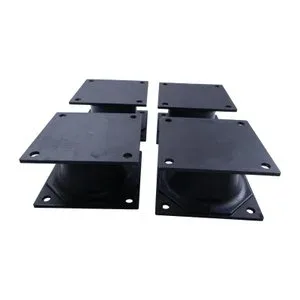
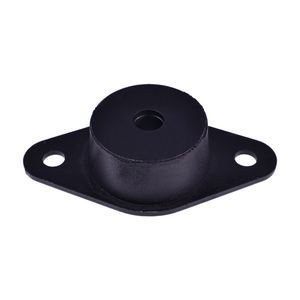
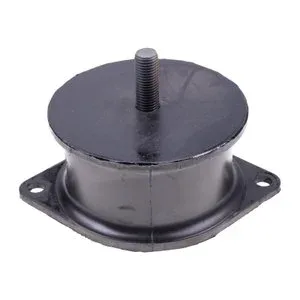
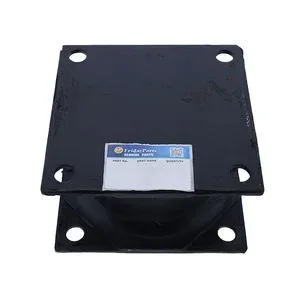
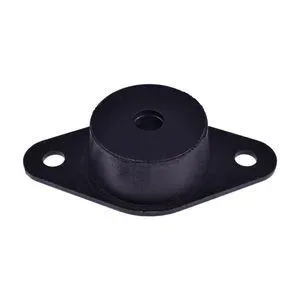
Matched Set Dispatch — Every rubber shock mount in this batch is verified against engine serial variants so your compactor rebuild ships with correctly matched damping components.
Technical Specifications
| Parameter |
Value |
| Part Number |
TRSA000008038 |
| Cross-Reference |
SW-180100, SW180100 (reference only) |
| Machine Fitment |
HS6000, HS6019, HS6100, HSX6, HS8000, HS11000, HSX11, PCF64 |
| Brand Compatibility |
Stanley, Bobcat, Doosan (compatible with) |
| Material |
Rubber |
| Type |
Shock Mount |
| Condition |
New Aftermarket |
| Standard |
ISO 9001 |
| Warranty |
3–12 months against manufacturing defects |
| Minimum Order |
1 piece |
Application Suitability
| Engine System |
Related Components |
| Vibration Isolation Subsystem |
Engine mount brackets, retaining bolts, adjacent cushion dampers |
| Engine Overhaul Auxiliary |
Gasket sets, crankshaft seals, oil pump assembly |
| Compaction Drive System |
Exciter shaft bearings, drive belt, tensioner assembly |
| Preventive Maintenance Cycle |
All mounting-point isolators, fastener hardware, vibration inspection |
Why a Worn Cushion Damper Wrecks a Fresh Engine Rebuild
Replacing internals without refreshing the vibration isolation system invites repeat failure within the first operating season.
I have seen rebuilt engines on vibratory plate compactors come back with bearing shell fretting and cracked oil pickup tubes, and the root cause traced straight back to degraded rubber isolators still bolted to the frame. When the cushion damper loses its damping stiffness, harmonic vibration transmits directly into the block, undoing the careful clearances you just set during overhaul [NEED_CITE: vibration-induced secondary engine failures in plate compactors]. A Rubber Shock Mount engine overhaul rebuild strategy must treat isolators as system-critical, not as optional hardware you reuse because they "look fine." The compaction cycle generates sustained high-frequency excitation that fatigues rubber compounds progressively, and by the time cracking is visible, the internal damping characteristics have already shifted well outside design tolerance.

The Vibration Isolation Subsystem in Plate Compactor Engines
The cushion damper sits at the junction where the engine transfers power to the compactor frame while remaining mechanically isolated from it. In machines like the HS6000 and HS6019, the Rubber Shock Mount engine overhaul rebuild plan should address all mounting points simultaneously because uneven damping across positions creates torsional loads that the crankshaft main bearings were never designed to absorb. When one corner of the engine sags on a degraded mount, the angular misalignment propagates through the coupling into the exciter mechanism.
Rubber Compound Behavior Under Compaction Duty Cycles
Vibratory plate compactors operate in conditions that push rubber isolators beyond what typical automotive or industrial mounts endure. The compound must resist hydraulic oil mist, diesel fuel splash, and ambient temperature extremes while maintaining consistent Shore hardness across thousands of operating hours [NEED_CITE: rubber compound degradation standards for construction equipment isolators]. A cushion damper that has hardened beyond its specified durometer range no longer absorbs the target frequency band, meaning the engine block and adjacent components carry the full vibrational load. Matched set replacement ensures all mounting points share identical damping characteristics, preventing the torsional imbalance that accelerates wear on crankshaft journals and connecting rod bearings.
Reading the Specs That Matter for Compactor Isolators
The material designation of rubber encompasses a range of compounds, and the specific formulation determines oil resistance, temperature tolerance, and load-deflection behavior. For machines in the HS6000 through HS11000 range, the shock mount must handle the static engine weight plus dynamic loads from the compaction cycle without bottoming out or losing resilience. The shock mount type designation indicates this component is designed for shear or compression loading depending on installation orientation, and mixing orientations across mounting points creates asymmetric stiffness. ISO 9001 manufacturing oversight covers dimensional consistency and compound verification, which matters because even small variance in mounting height across positions introduces the angular offset that frets main bearing shells [NEED_CITE: dimensional tolerance requirements for engine mounting systems].
The Hidden Cost of Reusing Old Isolators During Overhaul
A builder who installs fresh pistons, rings, and bearings but reuses the original cushion dampers is betting that rubber which survived several thousand hours of vibration still performs within specification. In practice, the hardened compound transmits excitation frequencies directly into the block, causing accelerated wear on the very components that were just replaced. This pattern shows up as unexplained oil consumption increases, main bearing noise within the first season after rebuild, and fatigue cracks around mounting bolt holes [NEED_CITE: fatigue crack propagation patterns in vibratory equipment engine blocks]. The cost of a full isolator set is marginal compared to a second teardown.
Why Sourcing Engine Auxiliary Components Here Works
Our own production lines and qualified sourced partners operate under identical QC and warranty terms, so the cushion damper you receive carries the same defect coverage regardless of which facility produced it. Eight product categories under one account means your overhaul kit contents—pistons, gaskets, seals, and rubber shock mounts—ship as a single consignment rather than arriving on staggered timelines. Single-piece minimum order quantities let you replace just the failed isolator on a field repair without padding an order. Cross-reference verification covers superseded numbers like SW-180100 so you get the correct variant for your specific machine generation. Technical support confirms mounting pattern compatibility from your engine serial number before anything ships. Sample supply is available when you need to verify fitment on the bench before committing to fleet quantities.
Documentation & Verification
- Commercial invoice listing each cushion damper position and quantity for customs clearance
- Cross-reference sheet mapping TRSA000008038 to SW-180100 variants with reference only notation
- Quality inspection record confirming rubber hardness and dimensional tolerance per batch
- Warranty terms covering manufacturing defects for the stated coverage period
- Packing photographs showing mount orientation and protective wrapping before crate closure
- HS code documentation support for engine auxiliary component import classification
Installation & Rebuild Sequence
- Remove all existing isolators and inspect mounting bracket surfaces for corrosion or deformation before fitting the new cushion damper set
- Clean mounting bolt holes and verify thread condition, as vibration loosens and damages threads over service life
- Torque retaining hardware to specification in the correct sequence to avoid pre-loading any single rubber shock mount unevenly
- Verify engine alignment to the compactor frame using straightedge across mounting planes after all cushion dampers are seated
- Run initial break-in at reduced compaction amplitude to allow rubber mounts to settle into their operating deflection range
- Re-check all mounting fasteners after the first operating cycle, as rubber compression under load may require re-torquing
Requesting a Matched Quote for Your Rebuild
Provide the engine model, serial number, and any previous overhaul history so we can confirm the correct cushion damper variant and identify whether superseded numbers apply to your machine generation. If the nameplate is worn or painted over, a photograph of the existing isolator alongside a ruler gives us enough to cross-reference the mounting pattern and rubber specification.
Frequently Asked Questions
Q: What other engine auxiliary components should be replaced alongside the shock mounts during overhaul?
A: Alongside the cushion damper set, inspect engine mount brackets for fatigue cracking, replace all retaining bolts that show thread deformation, and check the coupling between the engine output and the exciter mechanism for wear. Gasket sets and crankshaft seals should be refreshed during any teardown that exposes the vibration isolation subsystem to ensure the full repair holds together.
Q: How do I confirm the correct isolator variant for my specific compactor model?
A: Provide the machine model designation and engine serial number so we can verify the mounting pattern, bolt spacing, and rubber specification against our cross-reference database. Machines within the same model family may use different cushion damper variants across production years, and superseded part numbers like SW-180100 require verification to ensure the replacement fits your specific build.
Q: Can degraded shock mounts cause secondary damage to engine or hydraulic components?
A: Hardened or collapsed rubber isolators transmit compaction vibration directly into the engine block, accelerating wear on main bearings, cracking oil pickup tubes, and loosening hydraulic fittings that were not designed for sustained harmonic excitation. Secondary damage from a failed cushion damper often presents as unexplained oil leaks or bearing noise that appears weeks after what seemed like an unrelated repair.
Q: Do different machine generations within the same model family use different mount specifications?
A: Production revisions across the HS6000 through HS11000 range have introduced changes in mounting bracket geometry, bolt patterns, and rubber compound specifications. Always verify your specific machine serial against the cross-reference sheet rather than assuming interchangeability, as a cushion damper that physically bolts on may still have the wrong load-deflection curve for your engine weight and compaction frequency.
Q: How do I verify the engine serial number when the nameplate is worn or painted over?
A: Check the engine block casting for a stamped serial number near the oil filter housing or flywheel end, as most manufacturers stamp a secondary identification point. If both locations are illegible, photograph the existing cushion damper, mounting bracket, and any visible casting numbers so our technical team can cross-reference against known configurations for your machine family.