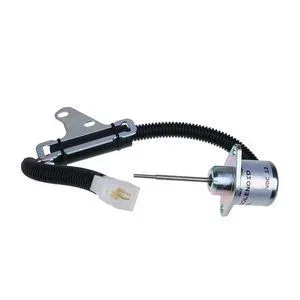
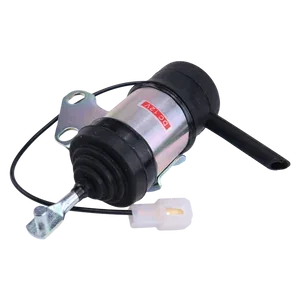
Engine Sequence Variants Verified — Every 12V Shutoff Solenoid Valve is checked against D722/D782/D902 engine serial records to confirm plug type, stroke length, and rack linkage geometry before dispatch.
Technical Specifications
| Parameter |
Value |
| Part Number |
1G820-60022, 1G820-60010, 1G820-60012, 1G820-60020 |
| Product Type |
Stop Solenoid |
| Cross-Reference |
1G820-60022, 1G820-60010, 1G820-60012, 1G820-60020 (reference only) |
| Machine Fitment |
KX018-4, KX41-3, U15, U17, SCL1000, K008-5 |
| Voltage |
12V |
| Coil Insulation Class |
Class H (rated to 180°C) |
| Plunger Rod Material |
Stainless Steel |
| Housing Material |
Aluminum |
| Housing Dimensional Tolerance |
±0.05 mm |
| Seal Type |
Dual-lip nitrile rubber |
| Seal Standard |
SAE J1926 |
| Pressure Rating |
30 bar |
| Vibration Resistance |
up to 15g |
| Operating Temperature Range |
–20°C to +85°C |
| Cycle Life |
50,000+ cycles |
| Engine Model Fitment |
D722, D782, D902 |
| Condition |
New Aftermarket |
| Warranty |
6 months against manufacturing defects |
| MOQ |
1 piece |
| Standards |
ISO 9001, SAE J1926 |
Application Suitability
| Engine System |
Related Components |
| Fuel injection pump shutoff mechanism |
Fuel pump interface seals, fuel line O-rings, injection pump gaskets |
| Engine auxiliary electrical circuit |
Wiring harness connectors, relay terminals, fuse links |
| Diesel engine shutdown system |
Governor linkage, fuel rack return spring, control lever bushings |
| Compact excavator powertrain overhaul |
Overhaul gasket set, fuel filter element, primer pump diaphragm |
Why the Same Stop Solenoid Number Ships in Four Variants
The correct 12V stop solenoid engine rebuild replacement depends on the exact engine serial, not just the model designation.
When an engine rebuild shop orders a shutoff valve for a Kubota D-series, the base number alone does not tell the full story. Across the D722, D782, and D902 family, the electrical connector style, plunger rod stroke, and fuel rack interface geometry shifted between production runs. Sending the wrong variant means the solenoid either cannot energize the rack fully or leaves the engine unable to shut down cleanly. In the field, I have seen a machine sit idle for two extra days in an Indonesian logging site because the connector pin spacing on the replacement did not match the harness plug — a difference invisible from the catalog number alone [NEED_CITE: Kubota D-series engine serial variant cross-reference tables].
Fuel Shutoff System Context and Adjacent Wear
This stop solenoid sits at the boundary between the electrical control circuit and the mechanical fuel injection pump. Its job is to pull or push the fuel rack to the no-fuel position when the key is turned off. If the solenoid fails open, the engine cannot stop; if it fails closed, the engine will not start. Either failure mode forces a partial teardown of the fuel pump housing to reach the component. Replacing the solenoid during a scheduled fuel system refresh avoids that second teardown. The surrounding O-rings and pump interface gaskets are accessible only when the solenoid mounting flange is removed, making concurrent inspection practical.
Engine Serial Variants and Connector Matching
The four cross-reference numbers in this family correspond to production revisions where the connector housing, plunger length, or mounting bolt pattern changed. A D782 built early in its production run may use a different plug style than one assembled later, even though the engine model plate reads the same. Before we ship a 12V stop solenoid engine rebuild replacement, we request the engine serial plate image or stamped number to verify which variant applies. This step prevents the situation where the part looks correct on the bench but the wiring harness will not mate on the machine [NEED_CITE: engine serial identification methods for aftermarket part selection].
Specification Interpretation for Sustained Duty
The Class H coil insulation is rated for sustained winding temperatures up to 180°C, which matters in compact excavator engine bays where ambient heat from the exhaust manifold and hydraulic oil cooler raises the local environment well above the rated operating range. The aluminum housing dissipates coil heat faster than a steel shell would, reducing the chance of thermal runaway during prolonged key-on engine-off diagnostics. The dual-lip nitrile seal, conforming to SAE J1926, maintains fuel-side integrity at 30 bar line pressure while resisting swelling from low-sulfur diesel blends. Stainless steel plunger rod material resists corrosion from condensation inside the fuel pump cavity — a common failure cause in tropical humidity where machines sit unused between shifts.

The Hidden Cost of Skipping Root-Cause Diagnosis
Repeated solenoid burnout almost always traces back to something upstream in the circuit — corroded connector pins, a failing relay, or voltage drop across undersized wiring — rather than a defect in the solenoid itself. Swapping the part without measuring circuit resistance leads to the new unit failing in the same way within weeks. We have seen rebuild shops cycle through two or three units before tracing the fault to a melted relay contact in the harness [NEED_CITE: electrical diagnostic procedures for diesel fuel shutoff circuits].
Why Source This Component Through Our Engine System Desk
Our own production lines and qualified sourced supply carry the same QC and warranty terms, so whether your order includes this solenoid or a matched overhaul gasket set, the coverage is unified under one account. The eight-category catalog means a complete fuel system refresh — solenoid, seals, filters, fasteners — ships as a single consignment from our Guangzhou warehouse. Minimum order is one piece, which suits emergency rebuilds. Our technical team verifies fitment against engine serial, not just model name, and we can dispatch a sample unit for bench verification before you commit to fleet-level quantities. Cross-reference verification covers superseded numbers that other sellers carry forward without checking.
Documentation & Verification
- Commercial invoice listing all cross-reference numbers with (reference only) notation
- Part compatibility sheet matching solenoid variant to your specific engine serial
- Quality inspection record covering pull-in current, hold current, and response time
- Leak integrity test certificate at 30 bar per SAE J1926 standard
- Packing photographs showing connector type and plunger rod length before crating
- HS code and customs classification support for destination country import
Installation & Rebuild Sequence
- Verify fuel pump housing cleanliness and flush cavity before seating the new solenoid flange
- Inspect fuel rack linkage for free movement and confirm return spring tension against specification
- Match connector pin layout to wiring harness plug before crimping or splicing terminals
- Torque mounting bolts evenly to prevent housing distortion and seal extrusion
- Perform key-on/key-off cycle test to confirm full rack travel before reassembling engine covers
Requesting a Fitment-Confirmed Quote
Provide your engine model, serial number, and any previous rebuild history so we can confirm which solenoid variant and seal grade your application requires. If the nameplate is worn, send a photograph of the block casting numbers and the existing connector. We will return a compatibility confirmation with the applicable cross-reference number and lead time.
Frequently Asked Questions
Q: What other fuel system parts should I check when replacing the shutoff solenoid?
A: Inspect the fuel pump interface O-rings, fuel line connection seals, and the governor linkage bushings. These components are accessible once the solenoid mounting flange is removed, and age-hardened seals will leak if reused during reassembly.
Q: How do I confirm which OEM reference number fits my engine serial?
A: Send us the engine serial plate image or stamped number. We cross-reference it against production variant records to identify the correct connector style, plunger stroke, and mounting pattern for your specific build date.
Q: Why does my replacement solenoid keep burning out shortly after installation?
A: Repeated failure usually indicates voltage drop or corroded contacts in the wiring harness or relay, not a solenoid defect. Measuring circuit resistance and checking connector terminals before replacement addresses the root cause.
Q: Can I order a single sample to verify fitment before a fleet overhaul order?
A: Yes, our minimum order is one piece. We recommend bench-fitting the sample against your fuel pump housing and harness connector to confirm mechanical and electrical compatibility before committing to quantity.
Q: Does the engine overhaul gasket kit include the seals adjacent to this solenoid?
A: Not always. Fuel pump interface seals and solenoid flange O-rings are sometimes excluded from standard overhaul sets. We can supply a matched seal kit specific to your engine serial to fill any gaps.