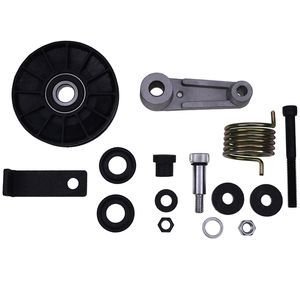
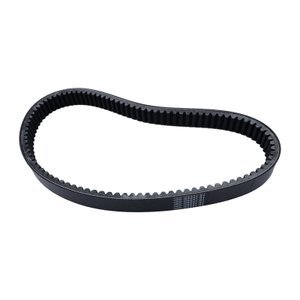
Verified Engine Serial Variants — Cross-reference 6662855 confirmed against Bobcat loader service manuals covering multiple engine configurations.
Technical Specifications
| Parameter |
Value |
| Product Type |
Belt |
| Part Number |
6662855 |
| Cross-Reference |
6662855 (reference only) |
| Machine Fitment |
853, 863, 864, 873, 883, A220, A300, S220, S250, S300, T200, T250, T300 |
| Brand Compatibility |
Compatible with Bobcat |
| Configuration |
4 ribs × 10mm pitch |
| Effective Length |
1760La |
| Material |
Chloroprene Rubber (CR) + High-Tensile Polyester Cord |
| Key Features |
Oil-resistant, heat-resistant, anti-static, wear-resistant |
| Condition |
New Aftermarket |
| Warranty |
3–12 months against manufacturing defects |
Application Suitability
| Engine System |
Related Components |
| Engine-driven hydraulic pump drive |
Drive pump pulley, belt tensioner assembly |
| Auxiliary power transmission |
Idler pulleys, pump shaft seal, crankshaft pulley |
| Loader engine overhaul service |
Complete accessory drive kit, tensioner bearings |
| Scheduled drive system maintenance |
Hydraulic line seals adjacent to belt routing path |
Why a New Drive Pump Belt engine rebuild replacement Fails Within Weeks
The belt is rarely the root cause. A replacement that snaps after minimal operating hours typically indicates unresolved issues in the adjacent tensioner, pulley alignment, or contamination from leaking hydraulic fittings.
Workshops across the Middle East frequently report recurring failures on Bobcat loaders where only the belt was swapped during service. I have walked onto job sites where a fresh belt was destroyed because the tensioner spring had lost calibration or a minor hydraulic weep was spraying oil directly onto the ribbed surface. Rebuild shops that treat the Drive Pump Belt engine rebuild replacement as an isolated component rather than part of an integrated accessory system end up absorbing the cost of repeated warranty claims [NEED_CITE: accessory drive system failure analysis in mobile hydraulic equipment].

The Belt's Position Within the Accessory Drive Ecosystem
This component transfers rotational energy from the crankshaft to the hydraulic drive pump, forming the critical link between engine output and machine function. When planning an engine bay service, the Drive Pump Belt engine rebuild replacement must be evaluated alongside the tensioner arm, idler bearings, and pump shaft condition. Ignoring these adjacent wear points turns a straightforward maintenance task into a recurring failure pattern that erodes fleet uptime.
Matching Specifications to Engine Serial Variants
Different production runs of the compatible Bobcat loaders utilize varied pulley groove profiles and tensioner configurations. Confirming the exact engine serial number ensures the 4-rib, 10mm pitch configuration aligns with the installed pulleys. We verify these dimensional requirements against service documentation before dispatch, preventing situations where a physically similar but dimensionally incorrect belt causes accelerated groove wear or tracking issues [NEED_CITE: belt tracking and groove wear standards for industrial V-ribbed belts].
Decoding the Material Compound for Real-World Conditions
The Chloroprene Rubber (CR) compound provides essential resistance to oil mist and hydraulic fluid contamination, which are prevalent in the confined engine bays of skid steer loaders. The high-tensile polyester cord reinforcement maintains dimensional stability across the thermal cycling experienced during continuous loading cycles. The 1760La effective length must be held within tight tolerances to ensure proper tensioner engagement without over-stressing the automatic adjustment mechanism. Anti-static properties prevent charge buildup that could interfere with nearby electronic control modules.
The Hidden Cost of Skipping System Diagnostics
Installing a new belt without addressing the underlying cause of the previous failure guarantees premature re-failure. A worn tensioner bearing that was ignored during the last service will quickly destroy the new belt's rib structure. Hydraulic leaks that were dismissed as minor weeps will degrade the CR compound, leading to sudden delamination under load. Rebuild shops that skip the comprehensive system check absorb the labor cost of multiple installations and damage their reputation with equipment owners [NEED_CITE: root cause analysis methodology for recurring belt failures].
Securing Verified Fitment From a Technical Supplier
Our technical team cross-references part numbers against specific machine serial numbers and engine build codes, not just generic model lists. We supply the Drive Pump Belt engine rebuild replacement alongside matched tensioner assemblies and pulley kits from a single account with unified warranty terms. Guangzhou warehouse stock enables rapid dispatch for common configurations, while sample supply allows fitment verification before bulk commitment on fleet-wide overhaul programs. Our inspection records document dimensional verification of rib pitch and effective length tolerances prior to shipment.
Documentation & Verification
- Commercial invoice specifying belt configuration and compatible machine serial ranges
- Cross-reference sheet mapping 6662855 (reference only) to alternate industry numbers
- Dimensional inspection report confirming 4-rib pitch and 1760La effective length
- Warranty documentation covering manufacturing defects under defined operating parameters
- Packing photographs showing belt condition and protective packaging before sealing
- HS code classification support for customs clearance in destination markets
Installation & Rebuild Sequence
- Inspect pulley grooves for wear and alignment before installing the new 4-rib belt
- Verify tensioner arm movement and spring pressure against service manual specifications
- Check pump shaft seal for hydraulic weeping that could contaminate the CR compound
- Route the 1760La belt following the exact diagram for the specific engine variant
- Run the engine at idle to allow the automatic tensioner to seat the polyester cord
- Re-check tension after the initial thermal cycle and adjust if required
Requesting a Quotation With Technical Verification
Provide the specific Bobcat loader model, engine serial number, and any previous rebuild history. This information allows us to confirm the correct pulley configuration and identify any superseded part numbers that may affect fitment. Include details of adjacent components you plan to service simultaneously for consolidated kit pricing.
Frequently Asked Questions
Q: What other components should I inspect or replace when changing the drive pump belt?
A: Beyond the belt itself, inspect the tensioner assembly for proper spring pressure and bearing condition. Check all idler pulleys for free rotation and groove wear. Examine the hydraulic pump shaft seal for any fluid weeping that could contaminate the new belt. Verify the crankshaft pulley is secure and undamaged. These adjacent components directly influence the service life of the replacement belt.
Q: How do I confirm the correct belt for my specific Bobcat engine serial variant?
A: Provide the complete machine model designation along with the engine serial number from the identification plate. Different production batches use varied pulley configurations that require specific belt profiles. We cross-reference this data against service documentation to verify the 4-rib, 10mm pitch, 1760La specification matches your exact installation, preventing dimensional mismatches that cause tracking issues or premature wear.
Q: What causes premature belt failure beyond normal wear, and how do I address the root cause?
A: Common root causes include hydraulic fluid contamination from leaking fittings or pump seals, misaligned pulleys from worn bearings, and tensioner springs that have lost calibration. Oil degradation of the rubber compound and improper routing during installation also contribute. Addressing these system-level issues during the replacement procedure prevents the new belt from experiencing the same failure mode within weeks of installation.
Q: Is this belt included in a complete drive system overhaul kit, or ordered separately?
A: The belt can be supplied as a standalone component or consolidated with matched tensioner assemblies, idler pulleys, and associated seals into a complete drive system kit. Consolidating these items ensures dimensional compatibility and simplifies procurement for overhaul programs. Specify your preference and machine details when requesting a quotation to receive the appropriate package configuration.