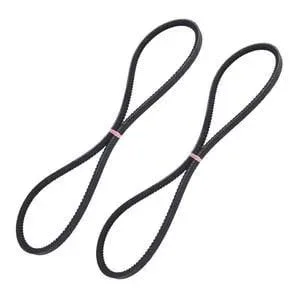
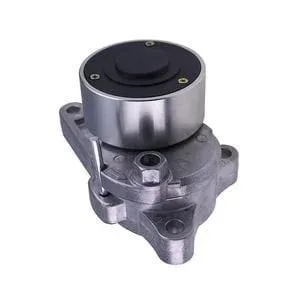
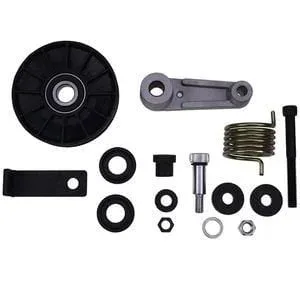
Matched belt-drive overhaul kits — Every tensioner, idler, and seal verified against the specific engine variant before this Drive Belt engine replacement ships from our Guangzhou facility.
Technical Specifications
| Parameter |
Value |
| Part Number |
607400, 603907 |
| Cross-Reference (reference only) |
607400, 603907 |
| Product Type |
Belt |
| Machine Fitment |
Hustler Raptor SD (932541, 932558, 932566, 933119, 933127, 934547US, 934570–934612, 934760–939405), Raptor SDX (936476, 936484, 938530–939264), Raptor, Raptor Limited, Raptor Flip-UP; BigDog Alpha (936575, 939124), Alpha MP (932921–932947, 934620–939157), Allpha MPX (938506–938522) |
| Cord Reinforcement |
High-modulus aramid cord |
| Rubber Compound |
Neoprene-rubber |
| Pitch Length Tolerance |
±0.15 mm |
| Hardness |
Shore A 72–76 |
| Operating Life |
1,200+ operating hours |
| Operating Temperature |
0°C to 55°C |
| Standards Compliance |
ISO 4184, SAE J1459, ISO 9001 |
| Condition |
New Aftermarket |
| Warranty |
3–12 months against manufacturing defects |
| MOQ |
1 piece |
Application Suitability
| Engine System |
Related Components |
| Crankshaft-to-deck torque transmission (Kawasaki FR651/FR691/FR730 variants) |
Tensioner assembly 603907, idler pulleys, spindle bearings |
| Crankshaft-to-deck torque transmission (Kohler KT725/KT740/KT745 variants) |
Tensioner assembly, clutch drum, deck belt guides |
| High-load continuous mowing fleet operations |
Matched overhaul kit: belt, tensioner, idler pulley set, hardware |
| Commercial landscape and municipal turf maintenance |
Deck engagement clutch, pulley alignment shims, fastener kit |
The Belt Snapped Again — But the Belt Was Never the Problem
A replacement belt that fails within weeks almost always points to a worn tensioner or misaligned pulley left untouched during the repair.
I spent years managing a parts warehouse serving commercial mowing contractors across Southeast Asia, and the pattern was relentless: a machine comes in for a broken drive belt, the workshop swaps the belt alone, and the same machine returns with another snapped belt before the month is out. The real culprit sits in the tensioner bearing or the idler pulley spindle, quietly destroying every new belt that passes over it. Addressing the Drive Belt engine replacement without inspecting the full belt-drive system is treating the symptom, not the failure root cause [NEED_CITE: belt drive system cascade failure diagnostics in commercial turf equipment].

The Belt-Drive System Is a Chain — Every Link Must Match
This belt sits at the heart of the engine accessory drive system, transferring crankshaft output to the cutting deck spindle and hydraulic pump drives on Raptor SD and SDX platforms. It works in constant engagement with the tensioner assembly (cross-reference 603907 for identification purposes), multiple idler pulleys, and the deck clutch drum. When any one of these adjacent components carries accumulated wear, the belt absorbs the misalignment as localized heat and edge abrasion, shortening its service life regardless of its own material quality.
Aramid Cord and Neoprene: Built for Thermal Cycling Under Load
The high-modulus aramid cord reinforcement resists tensile stretch under the continuous shock loads of blade engagement, while the neoprene-rubber compound maintains grip across the 0°C to 55°C operating window typical of outdoor turf work. Pitch length tolerance held to ±0.15 mm ensures the belt meshes cleanly with pulley grooves without the slippage that generates destructive heat at the cord-rubber interface [NEED_CITE: aramid cord tensile fatigue standards for agricultural drive belts]. Shore A 72–76 hardness balances flexibility around small-diameter idlers with resistance to groove-bottom deformation under sustained load.
Reading the Specs That Actually Matter in the Field
Aramid cord selection directly addresses the number-one field failure mode: tensile rupture when the deck clutch engages under heavy grass load. Neoprene compound hardness at Shore A 72–76 prevents the belt from bottoming out in pulley grooves, which would otherwise accelerate sidewall wear and generate enough heat to delaminate the cord from the rubber body. The ±0.15 mm pitch length tolerance eliminates the micro-slippage that manifests as a high-frequency squeal during blade engagement, a sound that signals energy loss and premature wear at every pulley contact point.
The Cost of Replacing Only the Belt
Sending a machine back to work with a new belt on a worn tensioner guarantees a return visit, often within the first hundred operating hours. The workshop absorbs the warranty labor, the customer absorbs the downtime, and the fleet schedule absorbs the delay. Systematic belt-drive overhaul — belt, tensioner, idlers, and hardware replaced as one matched set — eliminates the repeat failure pattern and consolidates the repair into a single downtime window [NEED_CITE: matched component replacement intervals for commercial mower belt drive systems].
Why This Supply Chain Works for Engine System Overhauls
Own production on selected belt-drive lines and qualified sourced supply under one account means the belt, tensioner, and pulley set all carry the same QC documentation and warranty terms. Eight product categories allow a complete engine accessory overhaul — belts, seals, gaskets, fasteners — to ship as one consolidated consignment from our Guangzhou warehouse. Minimum order from one piece supports emergency single-machine repairs without blocking the purchase. Part identification works from the OEM reference number, machine serial, or a photograph of the worn belt and nameplate. Cross-reference verification covers superseded and alternate numbers across Hustler and BigDog model generations. Technical confirmation of engine variant compatibility is available before order placement.
Documentation & Verification
- Commercial invoice listing each belt-drive component with individual HS codes
- Compatibility sheet mapping OEM references 607400 and 603907 to specific machine serial ranges (reference only)
- Dimensional inspection record confirming pitch length within ±0.15 mm tolerance
- Warranty terms covering manufacturing defects for 3–12 months from delivery
- Packing photographs showing belt coil protection and kit contents before crate closure
Installation & Rebuild Sequence
- Verify engine variant (Kawasaki FR-series or Kohler KT-series) before routing the belt, as pulley count differs
- Inspect tensioner bearing for axial play; replace if any lateral movement is detectable by hand
- Route the new belt following the deck-specific diagram, confirming engagement with all idler grooves
- Apply manufacturer-specified tension, then rotate the deck spindle by hand to confirm smooth meshing
- Run the engine at idle for initial bedding-in before applying full deck load
Request a System-Matched Quote
Provide your engine model designation, engine serial number, and any prior rebuild history so we can confirm which OEM reference applies and whether a full belt-drive overhaul kit or a single belt suits the repair scope. Include a photograph of the existing belt routing and tensioner condition for technical assessment before dispatch.
Frequently Asked Questions
Q: What other belt-drive components should be replaced alongside this belt?
A: The tensioner assembly, idler pulleys, and any worn belt guides should be evaluated as a set. A belt failing prematurely almost always traces back to a seized idler bearing or a tensioner spring that has lost calibration. Replacing only the belt leaves the root cause in place and guarantees early repeat failure.
Q: How do I determine which engine variant my Raptor SDX has?
A: Check the engine nameplate mounted on the blower housing for the model and specification number. Kawasaki FR651, FR691, and FR730 variants share the same deck platform but differ in pulley count and belt routing. Kohler KT725, KT740, and KT745 engines follow a different accessory drive layout. Provide both numbers for cross-reference confirmation.
Q: Is repeated belt failure caused by the belt or another component?
A: In the majority of cases, repeat failure within the first few hundred hours points to a system-level issue: a worn tensioner, a misaligned idler pulley, or debris ingress damaging the cord structure. Belt material defects typically appear as uniform cracking across the entire production batch, not isolated single-machine failures.
Q: What does a complete belt-drive overhaul kit include?
A: A system-level kit typically includes the drive belt, tensioner assembly, idler pulley set, mounting hardware, and any model-specific belt guides or shields. Exact contents depend on the engine variant and deck configuration. Confirm your machine serial number to receive the correct kit bill of materials.
Q: How do I confirm fitment when my engine serial differs from the standard build?
A: Engine manufacturers occasionally change accessory drive configurations mid-production, affecting pulley diameter and belt length. Provide your full engine serial number and a photograph of the current belt routing. Our technical team verifies the correct reference against production records before confirming the order.