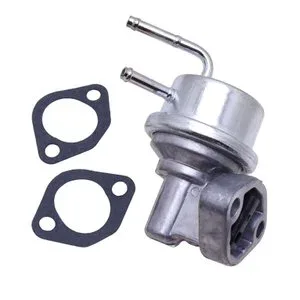
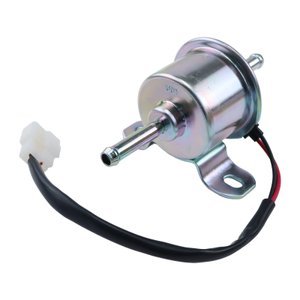
Engine Serial Variants Verified — every RE68345 fuel pump order is cross-checked against the specific 6068 build code before dispatch to prevent flange or port mismatch.
Technical Specifications
| Parameter |
Value |
| Part Number |
RE68345 |
| Cross-Reference |
RE68345 (reference only) |
| Product Type |
Fuel Pump |
| Machine Fitment |
Tractors: 5085M, 5095M, 5095MH, 5105M, 5105ML, 6400SP, 6403, 6603, 7210, 7405, 7410, 7500, 7510, 7610, 7710, 7810 / Wheel Loaders: 324H, 344H / Motor Graders: 670C, 670CH, 672CH / Loaders: L512, L514, L524, L534 / Telescopic Handlers: 3200, 3215, 3400, 3415, 3800 / Combines: 1165, 1175, 1175H, 1450, 1170, 2254, 2256, 2258 / Forwarders: 1010D, 810D / Harvesters: 770D, 2254, 2256, 2258 |
| Engine Model Fitment |
3029, 4039, 4045, 6068, 6068D, 6068H, 6400, CD3029, CD4039, CD4045, CD6068 and related variants |
| Condition |
New Aftermarket |
| Flow Rate |
≥ 120 L/h at 2,500 rpm |
| Pressure Stability |
±2 bar at 1,000–3,000 rpm |
| Leak Integrity |
0.00 mL/min at 5 bar |
| Sealing Tolerance |
SAE J1926 |
| Vacuum Prime Retention |
up to 25 kPa |
| Housing Dimensional Tolerance |
±0.05 mm |
| Elastomer Standard |
ASTM D2000 |
| Operating Temperature Range |
–25°C to +110°C |
| Shaft Journal Surface Finish |
Ra ≤ 0.4 μm |
| Internal Gear Material |
Hardened alloy steel |
| Warranty |
3–12 months against manufacturing defects |
| MOQ |
1 piece |
Application Suitability
| Engine System |
Related Components |
| Fuel delivery — 6068 family overhaul |
Injectors, fuel filter head, return hoses, mounting seals |
| Fuel delivery — 4045 / 4039 rebuild |
Fuel lines, primer pump, filter element, tank breather |
| Fuel delivery — 3029 / CD3029 service |
Transfer pump gaskets, fuel shut-off solenoid, sediment bowl |
| Fuel system diagnostic — pressure loss |
Fuel pressure gauge, leak-back test kit, injector leak-off bottles |
Why a New Fuel Pump Fails Weeks After an Engine Rebuild
Swapping the pump without tracing the upstream contamination or injector leak-back that killed the first one guarantees a repeat visit to the bench.
In repair bays across West African mining sites and East African farms, I have watched freshly overhauled John Deere 6068 engines come back with low rail pressure within the first hundred hours. The fuel pump engine overhaul rebuild conversation usually starts with the assumption that the replacement unit was defective. More often, the root cause lives elsewhere in the system — a cracked return hose drawing air, a filter head bypassing dirty fuel, or an injector leaking back excessively and starving the pump of lubrication [NEED_CITE: common root causes of fuel transfer pump failure in diesel engines]. Treating the pump as an isolated replacement rather than part of a pressurised loop is the single most expensive mistake in a diesel rebuild.

The Fuel Delivery Loop That This Pump Must Survive
This Fuel Pump sits at the suction side of the John Deere 3029, 4039, 4045, and 6068 fuel system, pulling diesel from the tank through the primary filter and pushing it toward the injection pump or high-pressure common rail. During any fuel pump engine overhaul rebuild, the condition of the upstream filter head, the integrity of every suction-side hose clamp, and the leak-back volume from each injector all determine how long the new pump will last. A pump installed behind a contaminated filter or a pinched return line is working against restrictions it was never designed to handle.
Serial Variants Within the 6068 Family That Change the Physical Fit
The 6068, 6068D, and 6068H designations cover a wide spread of internal configurations, and port orientation on the fuel pump housing can differ between early and late production serial ranges. I once shipped a standard-flange unit to a site in Nigeria where the engine was a late-tier variant with a rotated port layout — the bolt holes aligned but the fuel outlet pointed into the engine block casting. Three days of machine downtime followed while a corrected unit was flown in. Every order now goes through a serial-number-level check before release, because the part number alone does not capture these variant-level differences [NEED_CITE: John Deere 6068 engine serial breakpoint variations in fuel system layout].
What the Specification Sheet Actually Means on the Bench
The flow rate of ≥ 120 L/h at 2,500 rpm ensures the pump can keep the injection system fed under full-load harvesting or loading conditions where fuel demand peaks. Pressure stability within ±2 bar across the 1,000–3,000 rpm band matters because the injection pump or common-rail pump downstream relies on a steady supply pressure to maintain accurate delivery — fluctuation here shows up as rough idle or hesitation under load. The hardened alloy steel internal gears resist the abrasive wear that contaminated diesel accelerates, and the Ra ≤ 0.4 μm shaft journal finish keeps the lip seal from scoring during break-in. Housing dimensional tolerance of ±0.05 mm means the pump mates to the engine block without shimming or force, which is critical when the block face has been machined during a previous rebuild.
The Cost of Replacing the Pump Without Fixing the System
An engine rebuild shop that installs a new Fuel Pump behind the same degraded filter head or cracked suction hose that destroyed the original unit will see the replacement fail in a fraction of the expected service life. The cost is not just the second pump — it is the labour to tear down again, the customer confidence lost, and the diagnostic time spent chasing a fault that was never in the pump itself [NEED_CITE: cost impact of repeat diesel fuel system failures in heavy equipment]. Addressing root cause is cheaper than addressing recurrence.
Why Rebuild Shops Source This Fuel Pump Through Us
Own production lines and qualified partner facilities operate under one warranty account, so whether the Fuel Pump ships from our Guangzhou line or a partner plant, the QC standard is identical. Eight product categories under one order number mean the injectors, filter head, seal kit, and fuel lines arrive in the same consignment — no split freight, no partial deliveries holding up the rebuild. Minimum order of one piece supports the emergency single-engine job, while cross-reference verification catches superseded numbers and serial-variant differences before the box leaves the warehouse. A pre-shipment flow and pressure test record accompanies every unit so the receiving shop can confirm specification compliance before tearing down the engine. Technical staff are available to confirm grade, port orientation, and seal compatibility against the specific engine serial number provided at inquiry stage.
Documentation & Verification
- Commercial invoice and packing list listing each Fuel Pump with engine serial cross-reference.
- Part compatibility sheet marking RE68345 as reference only alongside verified alternate numbers.
- Pre-shipment flow and pressure test record confirming the unit meets specification.
- Warranty terms covering manufacturing defects for the stated coverage period.
- Packing photographs showing pump condition and protective packaging before crate closure.
- HS code and customs documentation support for destination-country import clearance.
Installation & Rebuild Sequence
- Flush all fuel lines and replace suction-side hoses before installing the Fuel Pump to prevent inherited contamination.
- Verify port orientation against the engine block casting before applying sealant to the mounting flange.
- Torque mounting bolts to the engine manufacturer's specification in a star pattern to avoid housing distortion.
- Prime the pump manually through the primer port or bleed screw before cranking to prevent dry-run gear scoring.
- Run the engine at idle and check all connections for leaks before applying load or returning the machine to service.
Confirm Your Engine Build Before Ordering
Provide the full engine model, serial number, and any previous rebuild history so the correct port variant and seal grade can be confirmed. Photos of the existing pump flange and the engine nameplate speed up identification when stamps are worn or painted over.
Frequently Asked Questions
Q: What other fuel system parts should be replaced alongside this pump during a rebuild?
A: Inspect the fuel filter head for bypass valve wear, replace all suction and return hoses, and test injector leak-back volume. Any injector returning excessive fuel starves the new pump of lubrication. A matched set of mounting seals and a fresh primary filter element should ship with the pump to avoid partial reassembly.
Q: Are fuel pumps interchangeable across all 6068 serial variants?
A: No. Port orientation, flange bolt pattern, and outlet position can change between early and late production serial ranges within the 6068, 6068D, and 6068H families. Providing the engine serial number allows verification of the exact variant before dispatch, preventing bolt-hole or port-alignment mismatch on the bench.
Q: How do I identify the root cause that destroyed the previous pump?
A: Check for contaminated fuel by draining the tank and inspecting the primary filter element. Test injector leak-back with graduated bottles — excessive return volume indicates worn injector internals. Examine suction hoses for cracks that allow air ingress, which causes cavitation and accelerates internal gear wear.
Q: Does the overhaul gasket kit include the fuel pump mounting seals?
A: Most standard overhaul kits cover cylinder head and block gaskets but exclude fuel-system-specific seals. Confirm the contents list against the engine service manual. If mounting seals are absent, order them separately with the pump to avoid delaying reassembly while waiting for a second shipment.
Q: How do I confirm my exact engine model from a worn nameplate?
A: Locate the engine serial stamp on the block — typically on the side or rear flange — and cross-reference it against the manufacturer's build records. A clear photograph of any remaining stamp characters allows the technical team to narrow the serial range and confirm the correct fuel pump variant.