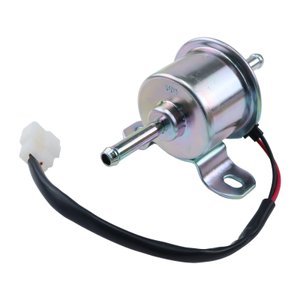
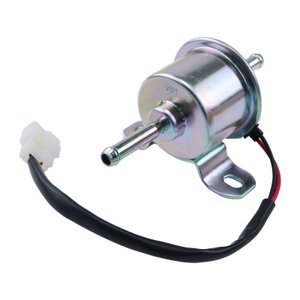
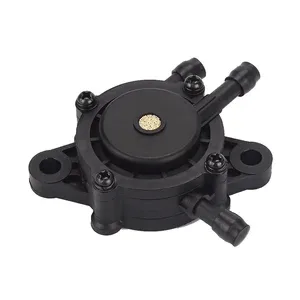
Matched set shipped together — Fuel filter, pump and air filter verified as a system for Onan KY series generators, dispatched as one consignment to prevent partial rebuilds.
Technical Specifications
| Parameter |
Value |
| Product Type |
Fuel Filter, Fuel Pump & Air Filter Kit |
| Part Number |
149-2457, 149-2311, 140-3280 |
| Cross-Reference |
149-2457, 1492457, 149-2311, 1492311, 140-3280, 1403280, E11006, E11007 (reference only) |
| Machine Fitment |
KY 3600 Series, KY 4000 Series, Camp Power KYD, Microlite RV QG, Camp Power/QG RV |
| Brand Compatibility |
Onan (Cummins), MicroQuiet, MicroLite, Camp Power |
| Fuel Filter Media |
Multi-layer cellulose-synthetic, 10-micron nominal filtration |
| Fuel Filter Housing |
Aluminum |
| Fuel Filter Standard Compliance |
SAE J1838 |
| Fuel Pump Impeller |
Precision-machined brass |
| Fuel Pump Seal |
Dual-seal design |
| Fuel Pump Output Pressure |
3.5–4.2 PSI |
| Fuel Pump Operating Temperature |
-20°C to +60°C |
| Fuel Pump Voltage |
12V DC |
| Air Filter Media |
Oiled cotton gauze with reinforced pleat geometry |
| Air Filter Efficiency |
99.2% at 15 microns |
| Air Filter Restriction |
<2.5 kPa at 200 L/min |
| Dimensional Tolerance |
±0.15 mm |
| Warranty |
6-month warranty against manufacturing defects |
| MOQ |
1 set |
Application Suitability
| Engine System |
Related Components |
| Fuel delivery and filtration |
Fuel lines, fuel tank pickup screen, carburetor inlet |
| Intake air filtration |
Intake hose, carburetor throat, throttle plate assembly |
| Engine overhaul preparation |
Gasket set, crankcase breather, fuel shut-off solenoid |
| Preventive maintenance cycle |
Spark plug, oil filter, governor linkage inspection |
Why Replacing Only the Failed Component Brings the Generator Back to the Bench
The fuel system fails as a chain, not as isolated parts. A clogged filter forces the pump into continuous overload until the impeller seizes or the dual seal gives way. An aging air filter passes silica and carbon past the intake, contaminating combustion surfaces and accelerating ring wear.
In my early years sourcing for a fleet operation, I ordered a replacement fuel pump for an Onan KY 4000 generator without checking the upstream filter state. The new pump locked up within weeks because contaminated fuel had been destroying components all along. [NEED_CITE: fuel system contamination cascade effects in small displacement generators] Replacing the complete Onan KY 4000 generator fuel filter fuel pump air filter engine rebuild kit together eliminates that pattern. The matched filtration ratings across the 149-2457 filter and the 140-3280 air filter prevent contaminant stacking that would otherwise reach the combustion chamber.

How Fuel, Air and Pump Interact Inside the KY Series Engine
The Onan KY 4000 generator fuel filter fuel pump air filter engine rebuild kit addresses three interdependent subsystems that share a single failure pathway. The fuel pump draws from the tank through the filter; if the filter media has collapsed or bypassed, debris reaches the brass impeller directly. Simultaneously, the air filter protects the intake tract from particulate that would otherwise score cylinder walls and foul the carburetor jet. Treating these three as one system, rather than as separate line items, ensures the generator returns to service with all filtration and delivery surfaces at verified tolerances.
Sizing, Filtration Ratings and What the Numbers Mean for Rebuild Shops
The 10-micron nominal rating on the 149-2457 filter captures the particle range most damaging to the pump impeller and carburetor needle valve. Paired with the 140-3280 air filter holding 99.2% efficiency at 15 microns, the two elements create a contamination ceiling that protects downstream surfaces during normal RV and job-site operation. The pump's dual-seal design maintains 3.5–4.2 PSI across the full -20°C to +60°C operating window, which prevents vapor lock during hot-weather high-load running. [NEED_CITE: SAE J1838 filtration standards for small engine fuel systems] Dimensional tolerance held to ±0.15 mm means the housing mates directly to the KY series mounting pattern without adapter plates that could introduce leak paths.
What Happens When the Root Cause Is Never Addressed
A workshop that swaps only the fuel pump without inspecting the filter and air intake often sees the same unit return with a seized impeller or a lean-running condition. The contamination that killed the first pump is still present in the lines and tank pickup. Rebuild shops absorb that cost in warranty labor and customer confidence. The systematic approach — replacing filter, pump and air element together — breaks the failure loop and gives the engine a clean baseline for the next service interval. [NEED_CITE: repeated fuel pump failure root cause analysis in auxiliary generator sets]
Interpreting the Specifications That Matter Most
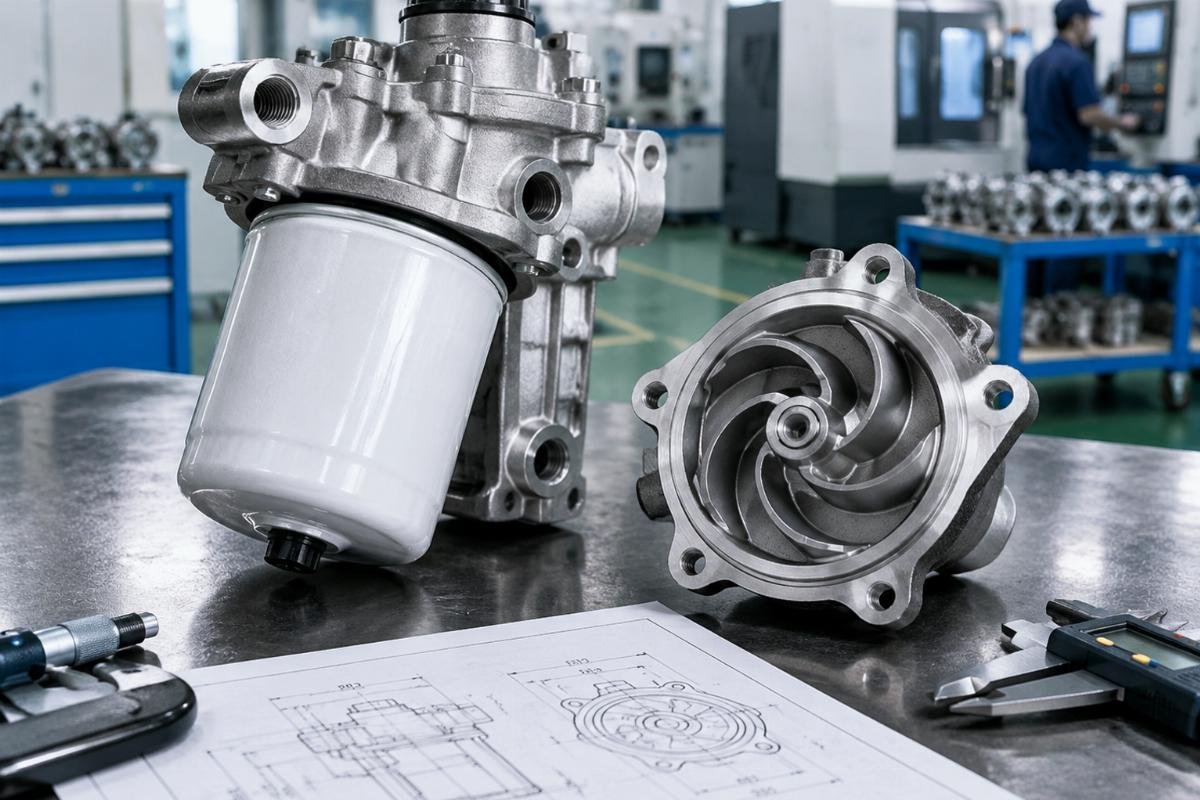
The brass impeller in the 149-2311 pump resists corrosion from ethanol-blended fuels common in RV and marine applications, where aluminum or stamped-steel impellers pit and lose volumetric efficiency over successive seasons. The aluminum filter housing dissipates heat from the fuel stream, reducing the chance of vapor formation inside the canister during sustained high-ambient operation. Oiled cotton gauze in the 140-3280 air filter offers lower restriction than paper media at the same efficiency, which matters when the KY 4000 runs under continuous load at altitude where air density drops. The <2.5 kPa restriction figure at 200 L/min ensures the engine does not run rich from intake choking, a common cause of carbon buildup on exhaust valves.
Why Source This Kit Through XUNPO
Our own production lines and qualified sourced supply operate under one warranty account, so the filter, pump and air element carry identical coverage terms. Eight product categories ship under a single order reference, which means a complete KY series maintenance job consolidates into one dispatch. Minimum order starts at one set, supporting emergency single-unit repairs without forcing surplus inventory. Guangzhou warehouse stock on common items enables fast dispatch when a generator is already down. Part identification is available from cross-reference number, machine model, photograph or nameplate image, reducing the chance of ordering the wrong variant. Our technical team confirms compatibility and filtration grade before the order ships, drawing on cross-reference verification that covers superseded and alternate numbers.
Documentation & Verification
- Commercial invoice and packing list matched to kit contents and cross-reference numbers
- Part compatibility sheet listing all verified interchange references marked reference only
- Quality inspection record covering flow test, differential pressure and dimensional check
- Six-month warranty terms covering the full kit as a matched system
- Packing photographs confirming kit completeness before crate closure
- HS code and customs documentation support for cross-border shipment
Installation & Rebuild Sequence
- Drain residual fuel and disconnect battery before removing the existing pump and filter assembly
- Inspect fuel tank pickup screen and lines for debris that could defeat the new 149-2457 filter
- Verify pump mounting gasket seats flat against the ±0.15 mm tolerance surface
- Torque fuel line fittings to specification and check for weepage before re-energizing the 12V DC circuit
- Install the 140-3280 air filter with oiled gauze facing the intake direction, confirm hose clamp seal
- Run the generator at no-load for initial prime, then step through 25%, 50% and full load to validate 3.5–4.2 PSI delivery
Before You Place the Order
Provide your generator model designation, engine serial prefix and any previous rebuild history so we can confirm variant-specific compatibility across the KY 3600 and KY 4000 series. If the nameplate is worn or painted over, a photograph of the existing filter housing and pump mounting pattern is sufficient for our technical team to verify fitment. Let us know whether the unit has operated on ethanol-blended or diesel-contaminated fuel so we can flag any additional system checks before the kit ships.
Frequently Asked Questions
Q: Do I need to replace all three components together or can I replace just the failed one?
A: Replacing only the failed component leaves the root cause unaddressed. A clogged 149-2457 filter that starved the original pump will destroy the replacement within weeks. The air filter element may have already passed contaminants downstream. Installing the complete kit gives the engine a clean baseline across fuel delivery and intake filtration, which is why we supply and warranty these as a matched system.
Q: How do I confirm these parts fit my specific Onan KY generator variant?
A: The KY 3600 and KY 4000 series include multiple sub-variants with different mounting patterns and hose routings. Provide your generator model suffix and engine serial prefix so we can cross-check against our fitment database. If the nameplate is illegible, a photograph of the existing pump mounting face and filter housing lets our team verify compatibility before dispatch.
Q: What caused my previous fuel pump to fail and how does this kit address that?
A: Premature pump failure usually traces to upstream contamination — a collapsed or bypassed filter sending debris into the brass impeller, or intake particulate reaching the combustion chamber through a degraded air filter. This kit replaces all three elements simultaneously, so the new pump operates against clean fuel and the engine breathes through verified filtration from first start.
Q: Are the cross-reference numbers 149-2457, 149-2311, and 140-3280 still current?
A: These numbers remain active for identification purposes across most KY series variants, though some applications have seen superseded references issued over successive production runs. We verify cross-reference validity against your specific serial range at the time of order, and we flag any revised specifications that could affect fitment or filtration rating before the kit ships.
Q: How do I verify the engine serial number on my KY 4000 unit before ordering?
A: The serial number is typically stamped on the engine block near the oil fill cap or on a metal tag riveted to the generator frame. If paint or corrosion obscures the stamping, photograph the area under angled light and send the image to our team. We can often identify the serial range from adjacent casting marks and mounting hardware configurations specific to each production batch.