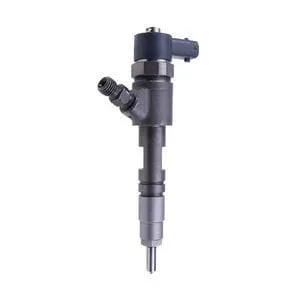
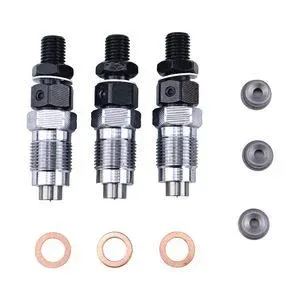
Engine Serial Variants Verified — Every injector set is checked against the specific D1803 or V2403 sub-variant calibration code before dispatch to prevent flow mismatch.
Technical Specifications
| Parameter |
Value |
| Part Number |
1J808-53050, 1J808-53052, 0445110775, 1J808-53051, 0445110711 |
| Product Type |
Injector |
| Cross-Reference |
1J808-53050, 1J808-53052, 0445110775, 0 445 110 775, 1J808-53051, 0445110711 (cross-reference only) |
| Machine Fitment |
Kubota R430, R430CA |
| Engine Model Fitment |
Kubota D1803, V2403, D1803-CR-TIE4, V2403-CR-TIE4, D1803-CR-TIE4B-KEA-1, V2403-CR-TIE4BG-KEA1 |
| Condition |
New Aftermarket |
| Material |
Heat-treated 42CrMo alloy steel |
| Hardness |
≥58 HRC |
| Nozzle Orifice Tolerance |
±0.5 μm |
| Spray Cone Angle |
120° |
| Sealing Surface Roughness |
Ra ≤0.2 μm |
| Max System Pressure |
200 MPa |
| Flow Rate Deviation |
< ±2.5% |
| Warranty |
6-month standard warranty against manufacturing defects |
| Standards |
ISO 9001, ISO 8536-4 |
Application Suitability
| Engine System |
Related Components |
| High-pressure common rail injection |
Fuel rail pressure sensor, fuel return line, rail pressure limiter |
| Combustion chamber sealing |
Cylinder head gasket, valve cover gasket, injector copper sleeve |
| Fuel delivery and filtration |
Primary fuel filter, water separator, fuel feed pump |
| Engine overhaul assembly |
Overhaul gasket kit, piston ring set, main and conrod bearing shells |
Why Injectors Must Be Replaced as a Matched Set During Kubota D1803 V2403 Engine Rebuild
Mixing new and worn injectors across cylinders causes uneven fuel delivery, leading to cylinder washdown, localized overheating, and repeat teardowns within weeks.
In Southeast Asian mining sites where I spent years managing parts inventory, I watched a repair crew replace only the two visibly failing injectors on a V2403-CR-TIE4 engine. The machine returned to grading duty, but within two weeks the remaining worn injectors created enough flow imbalance to trigger misfire codes and dilute the engine oil with unburned diesel. The engine was pulled apart a second time. The root cause was never the individual injector — it was system-wide wear masked by a partial fix [NEED_CITE: common rail injector flow matching requirements during engine overhaul].
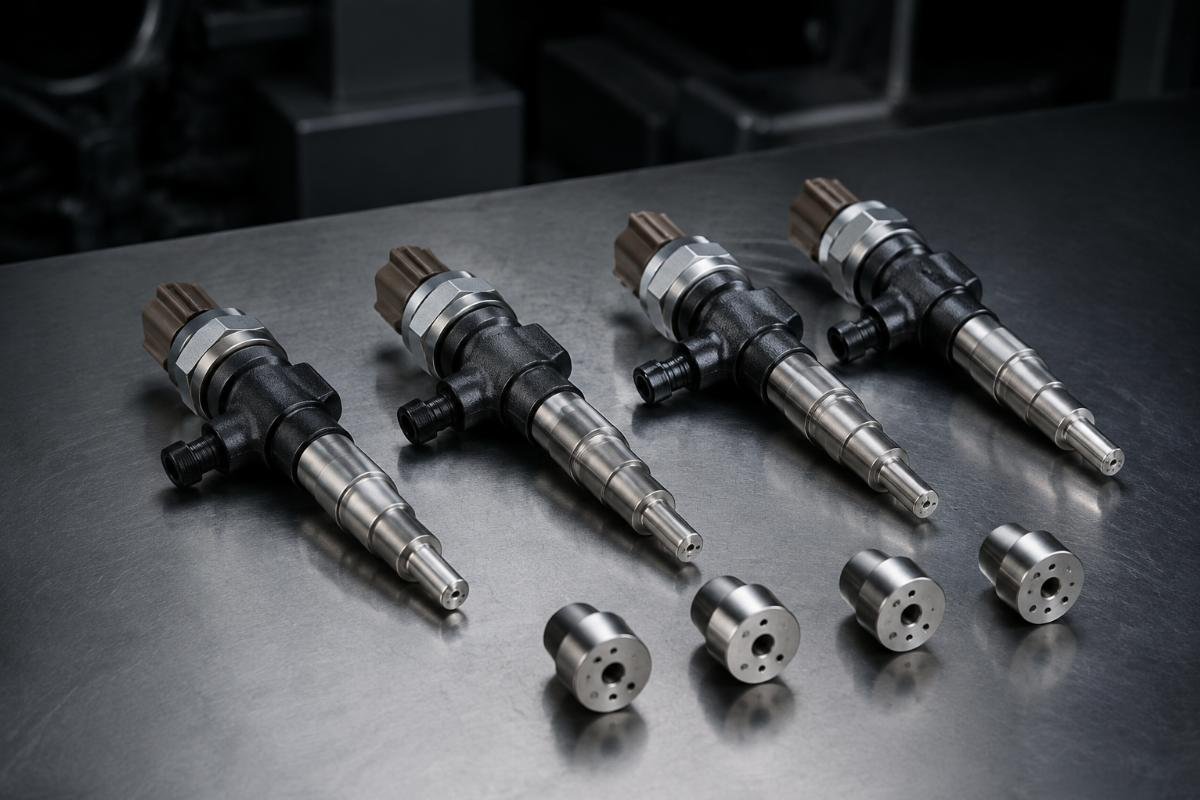
Every fuel injector for Kubota D1803 V2403 engine rebuild that leaves our bench is tested as a group for opening pressure, flow rate deviation, and spray pattern integrity. Cylinder-to-cylinder balance matters more than any single unit's spec sheet. When one injector in a four-cylinder engine delivers noticeably more fuel than its neighbors, the affected cylinder runs rich, washes oil off the liner, and accelerates ring wear. A matched set eliminates that variable entirely.
The Common Rail System Behind Each Injector
This fuel injector for Kubota D1803 V2403 engine rebuild sits at the terminal end of a high-pressure common rail circuit. Fuel is pressurized by the supply pump, stored in the rail, and metered through each injector's solenoid-controlled nozzle. When an injector fails, the failure signature often points upstream — restricted return lines raise backpressure, contaminated fuel erodes orifice edges, and worn pump plungers fail to maintain rail pressure during high-load cycles. Replacing injectors without diagnosing these upstream faults sets the stage for the new set to fail in the same pattern [NEED_CITE: diesel common rail system fault diagnosis and root cause analysis].
Engine Serial Variants That Change Injector Calibration
Kubota D1803 and V2403 engines carry sub-variant designations like D1803-CR-TIE4B-KEA-1 and V2403-CR-TIE4BG-KEA1. These suffixes are not cosmetic. They encode calibration maps that govern injection timing, pilot injection quantity, and rail pressure targets. An injector calibrated for the KEA-1 variant may operate within tolerance on a TIE4 base engine under light load, but under sustained grading or loading cycles the timing offset produces elevated exhaust gas temperatures and soot accumulation. Before we ship any fuel injector for Kubota D1803 V2403 engine rebuild, we confirm the exact engine serial number and cross-check it against the calibration variant to ensure the flow profile matches the ECU map [NEED_CITE: Kubota engine serial variant identification for fuel system components].
Reading the Specifications That Matter in the Workshop
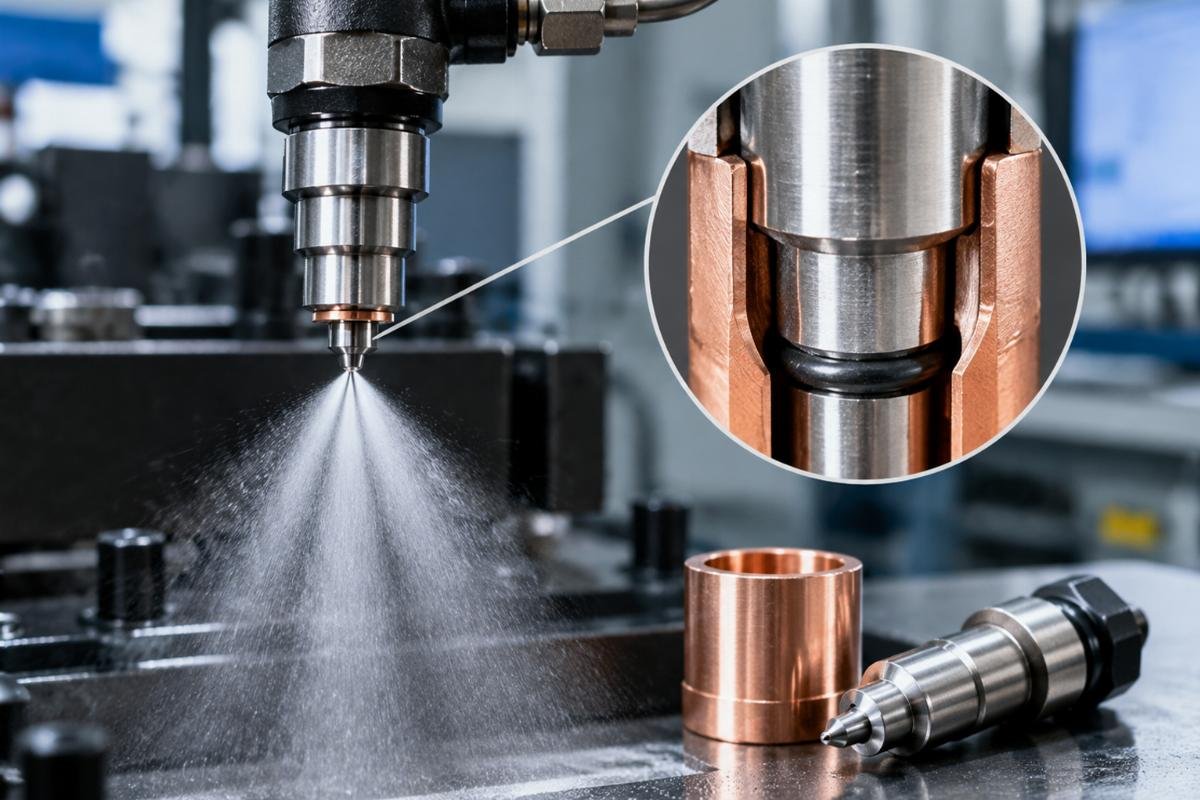
The nozzle orifice tolerance of ±0.5 μm governs how precisely each injector meters fuel per injection event. In a common rail system operating at up to 200 MPa, even marginal orifice variation across cylinders compounds into noticeable combustion imbalance at rated speed. The 120° spray cone angle is engineered to position the fuel plume within the piston bowl geometry of D1803 and V2403 combustion chambers — a narrower cone would concentrate fuel on the bowl floor, while a wider cone would impinge on cylinder walls and wash lubricant from the liner. The sealing surface roughness of Ra ≤0.2 μm ensures the injector-to-cylinder-head interface maintains a gas-tight seal under combustion pressure, preventing blow-by that carbonizes the injector bore over time. Flow rate deviation below ±2.5% across the set means no single cylinder runs lean or rich enough to shift exhaust temperature beyond the thermal margin of adjacent components.
The Hidden Cost of Skipping System-Level Diagnosis
I have seen overhaul shops install fresh injector sets into engines with contaminated fuel tanks and degraded return hoses. The new injectors lasted just long enough to pass the initial break-in, then began sticking as abrasive particles scored the solenoid valves. The warranty claim pointed at the injectors, but teardown revealed scoring patterns identical across all four units — a signature of upstream contamination, not a manufacturing defect. Replacing injectors without renewing the fuel filter, inspecting the feed pump, and flushing the lines is an expensive way to confirm that the root cause was never addressed [NEED_CITE: diesel fuel contamination effects on common rail injector service life].
Why Source This Injector Set Through Our Supply Chain
We produce selected fuel system lines in our own facility and source complementary components from ISO-certified partners, so both categories carry identical quality control and warranty terms. A single account covers injectors, overhaul gaskets, bearing shells, and filtration components — meaning one consignment arrives together rather than in staggered shipments. Our technical team verifies cross-reference numbers including superseded references such as 0445110775 and 1J808-53052 against the specific engine build you provide. Minimum order is one set, so a single machine down in the field does not require a bulk commitment. We supply pre-shipment test records covering opening pressure, flow deviation, and spray pattern for every injector in the set. Sample sets are available for bench fitment confirmation before you commit to stocking quantities.
Documentation & Verification
- Commercial invoice listing each injector by part number and matched set ID
- Cross-reference sheet mapping OEM numbers 1J808-53050, 0445110775, and variants (reference only)
- Inspection record with opening pressure, flow rate, and spray pattern per unit
- Warranty terms covering the full matched set as a single warranted assembly
- Packing photographs showing injector protective caps and individual cavity packaging
- HS code classification and customs documentation support for destination country
Installation & Rebuild Sequence
- Clean injector bores and verify copper sleeve seating before installing the new injector set
- Torque injector clamp bolts to engine manual specification to prevent combustion gas blow-by
- Renew fuel return hoses and O-rings to eliminate backpressure that shortens injector life
- Prime the fuel system and verify rail pressure buildup before cranking the engine
- Run initial break-in at moderate load and monitor for misfire codes or uneven exhaust temperatures
Request a Matched Set Quotation
Provide your engine model, serial number including sub-variant designation, and any overhaul history such as previous bore or crankshaft regrind sizes. If the nameplate is worn, send a photograph of the engine block casting number or the existing injector body markings. We will confirm calibration match, cross-reference the applicable part numbers, and return a system-level quotation covering the injector set and any adjacent fuel system components needed for a complete rebuild.
Frequently Asked Questions
Q: Why must all injectors be replaced as a set rather than one at a time?
A: Common rail engines depend on uniform flow rates across all cylinders for balanced combustion. A single new injector paired with worn units creates a flow mismatch that causes the new unit to compensate, leading to localized overheating, oil dilution, and accelerated wear. Matched set replacement restores cylinder-to-cylinder balance and prevents repeat teardowns within the first service interval.
Q: How do engine serial sub-variants affect injector selection?
A: Sub-variants like D1803-CR-TIE4B-KEA-1 carry different ECU calibration maps that adjust injection timing and rail pressure targets. An injector calibrated for a base variant may operate out of its intended window on a sub-variant engine, causing elevated exhaust temperatures and soot buildup under sustained load. Confirming the exact serial number ensures the correct flow profile is supplied.
Q: What upstream fuel system issues should be checked before installing new injectors?
A: Fuel tank contamination, degraded primary filters, restricted return lines, and worn feed pump components all contribute to injector failure. Flushing the fuel circuit, replacing filtration elements, and verifying return line flow before installing a new injector set prevents the root cause from destroying the replacement units within weeks of installation.
Q: Can I get a sample set for bench testing before committing to bulk orders?
A: Yes. We supply sample injector sets for fitment and bench flow testing so you can verify dimensional compatibility, spray pattern, and opening pressure against your workshop standards before placing a stocking order. This eliminates the risk of committing to bulk quantities that do not match your engine population's calibration requirements.
Q: How do I confirm the correct cross-reference number for my specific engine build?
A: Send us the engine model, full serial number, and any markings from the existing injector body. We cross-check OEM references including 1J808-53050, 1J808-53052, and 0445110775 against the specific engine variant and production batch to verify compatibility, returning a documented reference sheet with the quotation.