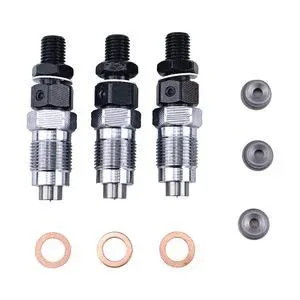
Engine Serial Variants Confirmed — cross-reference verification against D902 and Z602 sub-builds ensures correct injector body length and nozzle specification before dispatch.
Technical Specifications
| Parameter |
Value |
| Part Number |
16001-53904 |
| Product Type |
Fuel Injector |
| Cross-Reference |
16001-53904, 1600153904, 16001-53900, 1600153900 (reference only) |
| Machine Fitment |
Kubota D722, D782, D902, Z402, Z482, Z602, B7400HSD, B7410D, BX1500D–BX25 series, G2160, GR2100–GR2110, KX41-3, U15, U17, RTV900 series, ZD18–ZD323 |
| Condition |
New Aftermarket |
| Material |
Heat-treated alloy steel (HRC 58–62), stainless steel nozzle tip |
| Seal Material |
Viton (FKM) |
| Operating Temperature |
Up to 200°C |
| Injection Pressure |
250 bar ±5 (source value — verify against manufacturer catalog) |
| Tolerance |
±0.002 mm on plunger diameter (source value — verify against manufacturer catalog) |
| Flow Rate Deviation |
< ±3% (source value — verify against manufacturer catalog) |
| Warranty |
6 months against manufacturing defects |
| MOQ |
1 piece |
| Standards |
ISO 9001, ISO 8528-3, SAE J1939 |
Application Suitability
| Engine System |
Related Components |
| High-pressure injection circuit |
Injection pump, fuel lines, return fittings, pressure relief valve |
| Combustion chamber sealing |
Injector sleeve O-rings, copper crush washers, heat shield gaskets |
| Fuel filtration upstream |
Primary and secondary fuel filters, water separator, fuel tank breather |
| Engine overhaul assembly |
Overhaul gasket kit, piston rings, bearing shells, cylinder head bolts |
Why One Bad Injector Wrecks a Full Kubota D-Series Rebuild
A mismatched Fuel Injector for Kubota D722 D902 engine rebuild undoes weeks of workshop labor in the first hour of run-in.
I once watched a D902 come back to the bench three weeks after a clean rebuild. The owner had replaced a single cylinder's injector without checking whether the nozzle orifice count matched the others. The result was uneven combustion across cylinders, visible smoke at idle, and accelerated bore wear on the over-fueled side. The engine didn't fail — the fuel system did. Root-cause fuel contamination or return-line blockage often kills a replacement injector before it reaches its first service interval [NEED_CITE: diesel injector failure root cause analysis for compact industrial engines]. A Fuel Injector for Kubota D722 D902 engine rebuild only succeeds when the entire injection circuit — pump output pressure, line condition, return path resistance — is confirmed before the new units go in.

System Context: Where This Injector Sits in the Fuel Circuit
The fuel injector operates at the terminal end of a high-pressure circuit that begins at the injection pump and passes through rigid fuel lines before reaching the nozzle tip. Pump output pressure must match the injector's rated opening pressure — a weak pump causes late injection and incomplete atomization, while excessive pressure forces the needle off its seat prematurely. When sourcing a Fuel Injector for Kubota D722 D902 engine rebuild, verify that the injection pump has been bench-tested and that fuel line flare fittings are free of cracks. Return-line backpressure above specification causes fuel to pool around the injector body, degrading the Viton seals and allowing combustion gases to migrate upward into the cylinder head gallery.
Serial Variants and Matched-Set Logic for D/Z Engines
Kubota D and Z-series engines carry sub-variants that differ in injector body length, nozzle orifice count, and return port position. A D722-E2B may require a different injector configuration than a D722-E3B, even though the base engine family is identical. Always confirm against the engine serial plate — specifically the suffix group after the displacement code. For multi-cylinder engines like the 3-cylinder D902 or D782, replacing all injectors as a matched set maintains balanced cylinder contribution. A single new injector beside two worn units creates unequal injection timing and flow volume, producing a detectable power imbalance that accelerates bearing wear on the overworked cylinder [NEED_CITE: matched injector set requirements for multi-cylinder diesel engines].
Spec Interpretation: What the Numbers Mean at the Bench
The heat-treated alloy steel body at HRC 58–62 resizes the injector's ability to withstand repeated thermal cycling without body distortion — a softer housing expands unevenly under combustion heat, altering the needle-to-seat clearance and degrading spray pattern over time. The stainless steel nozzle tip tolerates the sulfur-depleted lubricity of modern ULSD fuel, where conventional carbon steel tips experience accelerated erosive wear at the orifice edges. Viton (FKM) seals maintain elasticity in the presence of biodiesel blends up to B5, which dissolve standard nitrile seals within a single service interval. The ±0.002 mm plunger diameter tolerance controls fuel metering precision — even slight oversize allows fuel bypass past the plunger, reducing effective delivery volume and causing the ECU or governor to compensate with longer injection duration.
The Cost of Skipping System-Level Diagnosis
Replacing injectors without addressing upstream contamination means the new units inherit the same particulate load that destroyed the originals. Workshop experience with D722 and Z602 engines shows that coked injector tips often trace back to degraded fuel filters or water ingress at the tank breather, not to injector quality. A workshop that installs a fresh Fuel Injector for Kubota D722 D902 engine rebuild without flushing fuel lines or replacing the secondary filter will typically see repeat nozzle blockage within the first operating season [NEED_CITE: fuel system contamination control standards for compact diesel engines]. The hidden cost is not the injector itself — it is the second teardown, the second set of cylinder head gaskets, and the customer relationship damage from a machine that returns with the same complaint.
Why Source This Injector Through XUNPO
XUNPO produces selected fuel system components in-house and sources remainder lines from ISO-certified manufacturing partners, with both streams carrying identical QC protocols and the same warranty terms. A single account covers injectors alongside overhaul gasket kits, piston ring sets, and fuel system seals — consolidating the entire rebuild parts list under one order and one dispatch. Minimum order is one piece, so a workshop replacing a single failed injector on a Z482 can order without hitting quantity thresholds. Cross-reference verification covers superseded numbers like 16001-53900 versus 16001-53904, confirming interchangeability against your specific engine serial. The Guangzhou warehouse holds stock on high-turnover D and Z-series fuel components for fast dispatch on common configurations. Technical support is available to confirm injector body variant, nozzle specification, and seal kit contents before you commit to bulk.
Documentation & Verification
- Commercial invoice and packing list with line-item part numbers for customs clearance
- Cross-reference sheet mapping 16001-53904 to superseded and alternate numbers (reference only)
- Bench test record showing injection pressure and spray pattern for each unit
- Six-month warranty terms covering manufacturing defects from installation date
- Packing photographs documenting anti-static foam protection and sealed retail boxing
- HS code classification and customs documentation support for destination-country import
Installation & Rebuild Sequence
- Verify engine serial plate suffix to confirm injector body variant before unboxing
- Flush all fuel lines and replace secondary filter before installing new injectors
- Install copper crush washers new — reusing work-hardened washers causes combustion gas blow-by
- Torque injector clamp bolts to engine manual specification in two-stage sequence
- Bleed return lines completely and check for backpressure before first cranking
- Run initial break-in at governed idle for the manufacturer-specified duration before loading
Request a Compatibility Quote
Provide your engine model, serial number suffix, and rebuild scope so we can confirm injector body variant and matched-set requirements. If you are quoting a full overhaul, include the engine build sheet so we can align injector specification with piston grade and bearing clearance. Workshops replacing a single unit should send the old injector or a photograph of the nameplate for cross-reference verification.
Frequently Asked Questions
Q: What else should be replaced when servicing fuel injectors on a Kubota D-series engine?
A: Replace injector sleeve O-rings, copper crush washers, and return-line seals every time injectors are removed. The secondary fuel filter should be changed simultaneously, and fuel lines should be flushed to remove particulate that damaged the original units. Overlooked return-line seals cause fuel pooling around the injector body and premature Viton degradation.
Q: Should I replace all injectors as a matched set or only the faulty one?
A: For multi-cylinder engines like the D782 or D902, replacing all injectors as a matched set prevents cross-cylinder flow imbalance. A single new injector beside worn units creates unequal combustion pressure, accelerating bore and bearing wear. Single-cylinder replacement is acceptable only on emergency breakdowns, with a matched-set replacement scheduled at the next service window.
Q: What system-level faults cause premature injector failure?
A: Fuel contamination from degraded filters, water ingress through tank breathers, and return-line blockage are the most common upstream causes. Injection pump wear causing pressure drift also shortens injector life. Addressing only the injector without correcting these system faults leads to repeat failure within one operating season.
Q: Are OEM reference numbers 16001-53904 and 16001-53900 fully interchangeable?
A: These numbers appear in cross-reference tables as alternate identifiers (reference only), but interchangeability depends on engine serial variant and production date. Kubota revised injector specifications across engine generations. Confirm your exact engine serial suffix before ordering to ensure correct nozzle orifice count and body length.
Q: How do I confirm the correct injector variant for my engine serial number?
A: Provide the full engine serial plate data, including the suffix group after the displacement code. Sub-variants such as D722-E2B versus D722-E3B may differ in injector body length, return port position, or nozzle specification. A photograph of the nameplate enables cross-reference verification before dispatch.