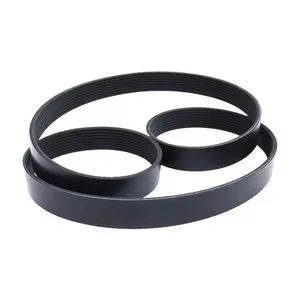
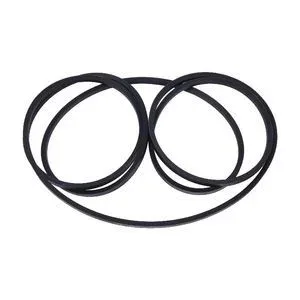
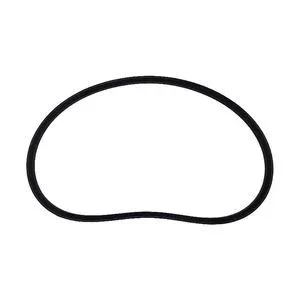
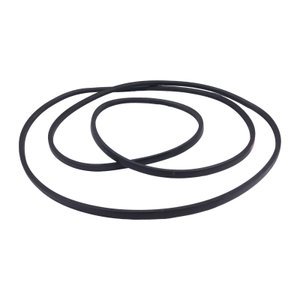
Matched Set Dispatch — Every J911559 fan belt ships with verified cross-reference mapping so adjacent tensioner and pulley components align before the crate leaves Guangzhou.
Technical Specifications
| Parameter |
Value |
| Part Number |
J911559 |
| Product Type |
Belt |
| Cross-Reference (reference only) |
J911559-A, J911559A, 90500580, 73162121, J902309, J903099, J911570 |
| Machine Fitment |
Loader: 1840, 1845C, 40XT, 480E, 480E LL, 480F, 480F LL, 580K, 580SK, 590, 60XT, 621, 680K, 680L, 70XT, 750K, 75XT, 780C, 780D, 85XT, 90XT, 95XT, 580E, 580SE; Tractor: 1150E, 1150G, 1150H, 1150H_IND, 1155E, 650, 650G, 750H, 850D, 850E, 850G, 850H, 850K, 855D, 855E, 1896, 2096; Drilling: 6030; Forklift: 584E, 585E, 586E; Sprayer: 3185, SPX3150, SPX3185, SPX3200B; Motor Grader: 845; New Holland Motor Grader: RG140 |
| Brand Compatibility |
Fits CASE, New Holland equipment |
| Material |
High-tensile synthetic rubber with polyester-cord reinforcement |
| Condition |
New Aftermarket |
| Continuous Operating Temperature Rating |
Up to 120°C |
| Dimensional Tolerance |
±0.3 mm across length and width |
| Dynamic Flex-Cycle Validation |
50,000+ cycles at 3,200 RPM |
| Warranty |
3–12 months against manufacturing defects |
| Standards |
ISO 9001, ISO 4184 |
Application Suitability
| Engine System |
Related Components |
| Engine cooling drive — water pump circulation |
Fan pulley, tensioner assembly, water pump bearing seal |
| Alternator charging circuit drive |
Alternator pulley, belt guard hardware, tensioner spring |
| Auxiliary front-end accessory drive |
Idler pulley, harmonic balancer, crankshaft pulley keyway |
| High-temperature agricultural fan circuit |
Thermostat housing gasket, coolant hose clamps, radiator shroud fasteners |
Why a New Belt Fails Before the Next Oil Change
A belt that snaps early is almost never the belt's fault — it is the surrounding drive system telling you something you missed.
I have watched repair shops swap a Fan Belt engine replacement on a CASE 40XT and have the machine back on a flatbed within the week. The old belt showed diagonal cracking on one flank, which should have pointed to a misaligned fan pulley or a tensioner bearing that was already making noise at idle. Without inspecting those neighbors, the replacement belt absorbs the same abuse and fails just as quickly. [NEED_CITE: belt drive misalignment failure modes in mobile diesel engines]
This pattern repeats across loader and tractor engines in the CASE lineup. The belt is the cheapest part in the entire cooling drive loop, yet it carries the visible consequence of every other component's wear. A rebuild that addresses only the belt is a rebuild that has not actually started.

Where This Belt Sits Inside the Cooling Drive Loop
The J911559 sits at the front of the engine, wrapping around the crankshaft pulley, water pump pulley, and fan hub. It transmits rotational force that keeps coolant moving and the radiator fan spinning under load. When an engine rebuild includes a cooling system refresh, this Fan Belt engine replacement is the connective thread between every rotating accessory on the front cover.
Skip it during an overhaul and you risk a coolant temperature spike on the first hard shift cycle. Replace it without checking pulley run-out and you inherit the previous owner's vibration problem. The belt is a system component, not a standalone spare.
Engine Serial Variants and the Length Trap
Engines sharing the same machine model — a 580SK built in consecutive serial ranges, for instance — can carry different front-cover castings that shift pulley center-to-center distances by a few millimeters. The J902309 and J903099 cross-reference numbers exist because earlier builds used slightly different routing paths. Ordering by machine model alone invites a belt that is either too tight, overloading the water pump bearing, or too loose, slipping under fan load. [NEED_CITE: engine serial variant belt length differences in loader powertrains]
Always confirm the engine serial plate before locking in the part number. When the original number has been superseded, the cross-reference table tells you which current number maps to your specific build — but verification against the actual pulley layout removes the last layer of doubt.
What the Specs Actually Mean on the Engine
The high-tensile synthetic rubber compound is formulated to resist heat soaking from the radiator airflow path, where ambient bay temperatures routinely exceed the coolant set point. The polyester-cord reinforcement carries the tensile load so the rubber body handles only flex and friction — a separation of duties that matters when the fan kicks in against a clogged radiator screen.
Dimensional tolerance held to ±0.3 mm means the belt seats fully in the pulley grooves without riding high or bottoming out. A belt that rides high transfers less torque to the water pump; one that bottoms out generates internal heat through sidewall compression. The 50,000-cycle flex validation at 3,200 RPM simulates sustained high-speed operation, the condition where micro-cracks initiate and propagate fastest. [NEED_CITE: elastomeric belt fatigue testing standards for off-highway engines]
Continuous temperature rating to 120°C covers the worst-case scenario: a hot-soak event after shutdown, where residual engine heat radiates into a stationary belt with no cooling airflow.
The Repeat-Failure Pattern Nobody Invoices For
A shop that replaces only the belt on a CASE 90XT cooling system, ignores the tensioner bearing growl, and sends the machine back to a quarry is guaranteeing a second visit. The new belt absorbs the same radial vibration, develops the same asymmetric wear, and fails within a fraction of the expected service window. The customer pays for two belts, two labor charges, and two downtime events. [NEED_CITE: total cost of repeat belt failure including secondary labor and machine idle time]
Root-cause thinking costs nothing at the teardown stage. Spin every idler by hand. Check pulley faces for glazing. Measure tensioner arm travel against the spec range. Address the system and the belt lasts its full design life.
Why Sourcing Through This Channel Works
Selected belt lines are produced in our own facility while remaining SKUs come from qualified ISO-certified partners — both carry identical QC protocols and the same warranty terms on a single account. Eight product categories covering engine, hydraulic, electrical, undercarriage, cabin, seals, tools, and general spares mean a complete cooling-system refresh ships as one consignment rather than fragments from four vendors.
One-piece minimum order removes the barrier when a single emergency belt is all the job needs. Guangzhou warehouse stock on fast-moving drive components enables same-day or next-day dispatch for common applications. Part identification is accepted from a number, a machine model, a photograph of the nameplate, or an image of the old belt — whichever is available on site. Cross-reference verification covers superseded and alternate numbers before the order is confirmed, and a sample unit can be dispatched for fitment validation before any bulk commitment. The technical team remains available for grade and compatibility confirmation against specific engine serial plates.
Documentation & Verification
- Commercial invoice and packing list referencing J911559 with full cross-reference chain
- Compatibility sheet confirming engine serial variant match, marked reference only
- Dimensional inspection record covering belt length, width, and profile tolerance
- Warranty terms specifying coverage period and defect claim procedure
- Packing photographs showing individual polybag and rigid box condition before sealing
- HS code declaration and customs documentation formatted for destination country requirements
Installation & Rebuild Sequence
- Route the belt over the crankshaft pulley first, then water pump, then fan hub — avoids pinching the polyester cords against a sharp flange edge.
- Release the tensioner fully and verify spring return pressure before sliding the J911559 into the final groove.
- Inspect every pulley face for glazing, rust pitting, or groove wear that would accelerate the new belt's sidewall abrasion.
- Rotate the crankshaft two full revolutions by hand to seat the belt and confirm no tracking drift on any pulley.
- Torque the tensioner lock bolt to the engine manual specification and re-check belt deflection at the longest unsupported span.
- Run the engine to operating temperature and observe the belt at idle and rated RPM for flutter, chirp, or lateral walk.
Send the Right Details, Get the Right Belt
Provide the engine serial number from the nameplate or stamped block location so we can confirm the correct belt length against your specific front-cover configuration. If the original part tag is illegible, a clear photograph of the old belt alongside a ruler, plus a shot of the pulley routing path, allows our team to cross-verify fitment before anything ships. For fleet operators planning a batch cooling-system refresh, send the machine model list and we will map each unit to its correct belt variant along with matching tensioner and pulley part numbers.
Frequently Asked Questions
Q: What other drive components should I inspect or replace when changing this belt?
A: Spin every idler and tensioner pulley by hand to check for bearing roughness or axial play. Inspect pulley groove faces for glazing or rust pitting. Examine the tensioner spring for fatigue or loss of return force. Addressing these items during the belt swap prevents the new belt from inheriting the same wear pattern that destroyed the old one.
Q: How do engine serial variants affect belt fitment on the same machine model?
A: Engines built in different serial ranges can use different front-cover castings, shifting pulley center distances by several millimeters. A belt that is correct for one build may be too tight or too loose on the next. Always confirm the engine serial plate and verify against the cross-reference table before ordering.
Q: What root causes in the cooling system lead to premature belt failure?
A: Coolant leaks onto the belt degrade the rubber compound. A misaligned fan pulley forces the belt to track against one groove flank. A failing tensioner bearing introduces vibration that fatigues the polyester cords. Each of these conditions must be resolved during the belt swap or the replacement will fail prematurely.
Q: Is the tensioner included or do I need to order it separately?
A: The J911559 listing covers the belt only. The tensioner assembly, idler pulleys, and related hardware are separate line items. Request them together for consolidated dispatch and to ensure all components arrive before the teardown begins.
Q: How do I confirm the correct belt when the original part number has been superseded?
A: Provide the machine model and engine serial number. Our team maps superseded references — including J902309, J903099, and J911570 — to the current correct number and verifies dimensional compatibility before the order is confirmed.